


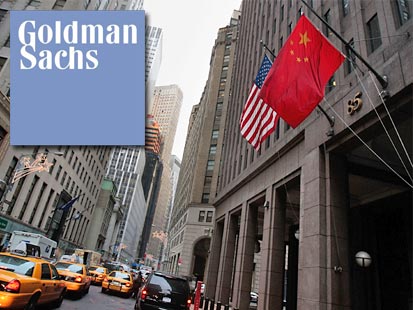
One driver in 2013 was that Goldman Sachs was added as a member of the DJIA. This move was surprising when you consider that this is a bank holding company that has no street-level retail banking operations to speak of.
There are many macroeconomic and industry factors to consider for this non-bank bank. Wall Street strategists are forecasting higher price targets for the S&P 500 in 2014, but Goldman Sachs’ stock price now trades above its consensus analyst price target. The firm also has an embarrassing low dividend yield of 1.2%.
The Federal Reserve is about to get a new chairman, and it is generally expected that interest rates will rise further in 2014. The rest of the world economies are exiting recessions at the same time that U.S. gross domestic product is expected to tick up.
The Goldman Sachs specific outlook for 2014 needs to be watched closely. Many investors have decided that the Volcker Rule limitations will not apply to its own vast trading operations because it is effectively not a depository institution. Our concern is that the regulatory grasp reaches far and wide today.
After closing out the year at $177.26, the stock has risen and challenged the $180 handles. The consensus analyst price target is down closer to $173, and the 52-week trading range is $132.70 to $181.13. Goldman Sachs also is now worth about $82 billion in market cap.
A bullish case for Goldman Sachs is that it gets to keep swinging at the fences with trading, and one where it limits bonus payouts to drive earnings per share higher. Another help here is that Goldman Sachs would have to rise to more than $220 before challenging its all-time highs, and other banks have already recovered to the point that some are back at all-time highs. The stock also trades at 12 times earnings.
The bearish scenario is one in which Goldman Sachs gets dragged down by the regulatory soup as well. We still have many outstanding lawsuits and regulatory actions with no outcome. Thomson Reuters shows very little earnings growth expected in 2014, and revenue growth is expected to be less than 1% after a likely contraction in 2013.
If we had to guess, Goldman Sachs will do better than the DJIA in a bull market and worse in a bear market. Sentiment remains negative against financial institutions, but there may be some comfort here in that Goldman Sachs is where the wealthy go to invest.






 Top Gaining Stocks
 Top Losing Stocks