


 The rise in March domestic car and light truck sales was attributed largely to two factors. The first is that American’s need more fuel-efficient cars because of high gas prices. The second is that people own cars so old that they are forced to replace them. But there is a wider set of reasons sales were robust, and they say a great deal about the American economy.
The first and most extraordinary aspect of high vehicle sales is that Americans can afford new cars at all. A typical car sold in the U.S. averages $25,000, which makes it the second-largest purchase for most people after their houses. And several research firms reported that incentives are at nearly all-time lows. People have enough money to buy cars despite the fact that they are fully priced. Zero-percent financing still exists, but mostly as a means to sell unpopular inventory.
Gas prices were certainly a reason for some new cars sales. General Motors (NYSE: GM) reported that more than 100,000 of its 231,00 sales in March were vehicles that get over 30 miles per gallon. The figures are a mixed blessing for manufacturers, though, because small cars are mostly less profitable than larger, more fully featured ones. Car sales may be up, but that does not mean profits are. The move toward fuel efficiency actually may drive down auto company margins. There is a cause for GM and Ford (NYSE: F) to trade well below their 52-week highs. Among them may be slow sales in Europe. But the domestic market may not be as big a profit generator as its seems at first.
Another reason that the car sales figures are important is that an additional job at a car company means another two or three in the economy. The Center for Automotive Research released a study in 2008 of the effects of auto manufacturer layoffs on the economy. The report became famous because, when the industry was contemplating nearly one million job cuts, the research operation predicted it would mean three million lost American jobs. The math works in the other direction. Car company suppliers have regained some of their financial health, and thus their ability to hire.
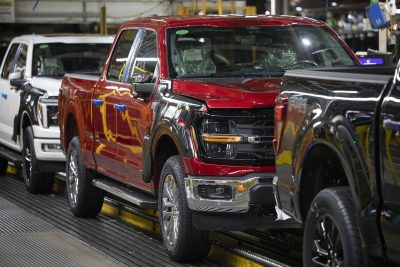
The last, and among the most important, factor of improved car sales is that the U.S. manufacturing system and workforce have been reengaged. There was a time not so long ago when it was feared the car makers would turn to plants in Mexico or China to build new cars. That prediction is no longer valid. Car companies have added jobs in the United States. That may not be entirely positive. Assembly line workers make less now than they did five years ago. The UAW has lost much of its bargaining power. But a job usually is better than no job, even if the wages for the work are much less than they were recently. The car industry has helped to demonstrate that factories in the U.S. can turn out products at competitive prices. That bodes well for jobs additions at other American manufacturers.
Car sales have become a proxy for many other parts of the economy. In most cases, the wider effects are good ones.
Douglas A. McIntyre







 Top Gaining Stocks
 Top Losing Stocks