


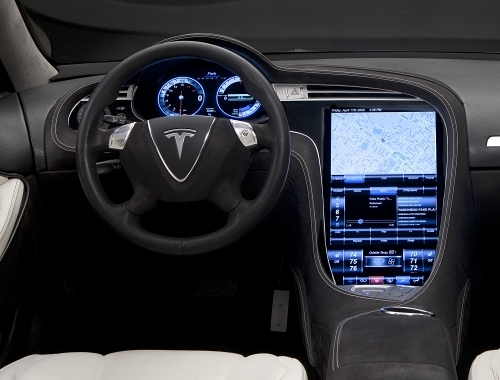
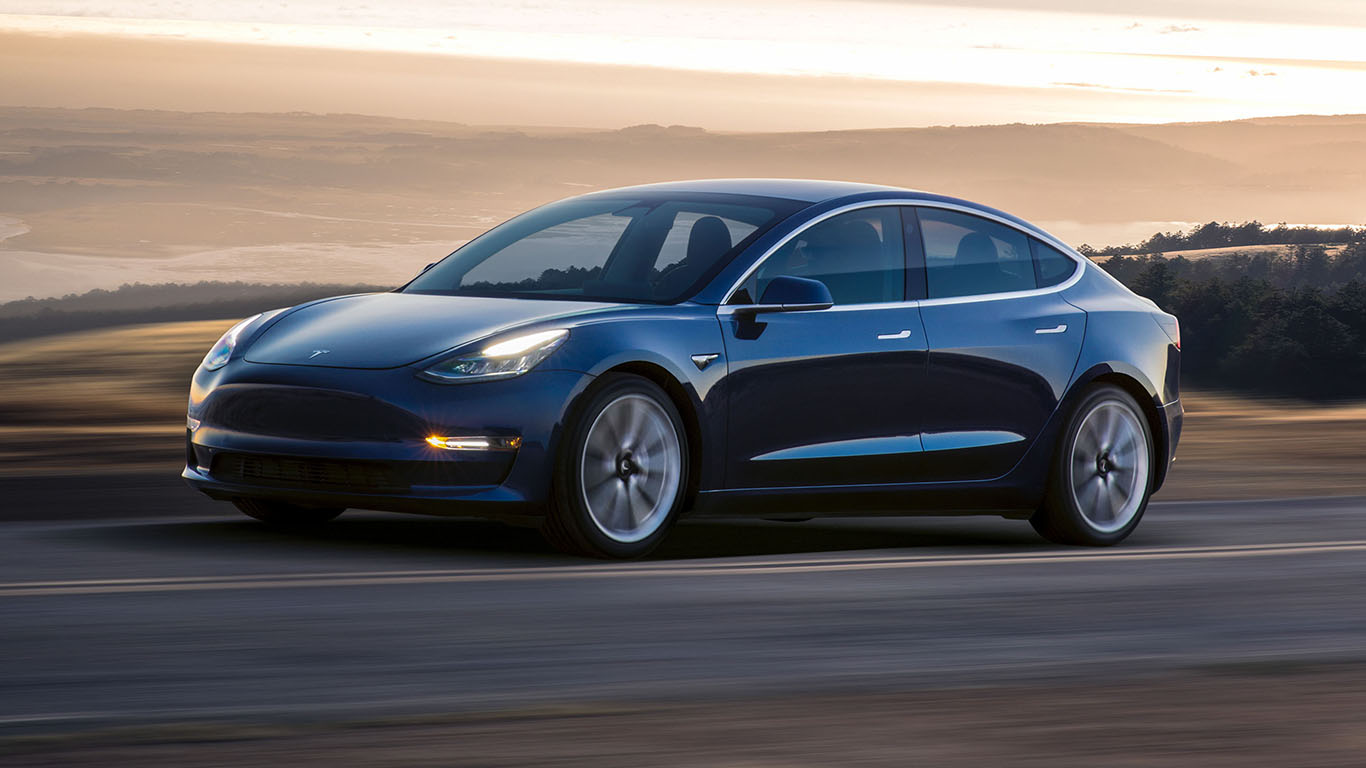
 The latest Tesla Motors Inc. (NASDAQ: TSLA) model will likely top the Consumer Reports list of best cars, best reliability and perhaps best zero-to-60 time. The trouble is that the car may be unsafe because of its speed, which goes from zero to 60 in 3.2 seconds. (According to Tesla, the new car does have some driver aid features built into it.)
To put its acceleration in context, it is as fast a Nissan GTR super car, a BMW i8 hybrid (which costs $136,000) or a Porsche Panamera Turbo ($180,000).
As many auto writers have said, not everyone can get into a superfast car with the skills to control its phenomenal acceleration, high speeds on sharp turns and the suddenness at which the vehicle can reach 100 mph. As car research website Edmunds.com points out:
You’ve recently become the proud owner of the high-performance car that you have dreamed about for years. But it dawns on you that you might not ever get the chance to see what it can really do. Or worse, years of watching action movies have given you the false belief that driving a car fast is easy. (Trust us, it’s not.)
Driving schools have as one of their main objectives the ability to teach drivers how to react rapidly at high speeds. Behind this goal is the knowledge that drivers of slow cars do not need these skills, particularly. Slow, in and of itself, is a protection against many accidents. Or, if drivers do crash, a car driven at slow speed may be better than a very fast one, simply based on force at impact.
There is a reason most accident simulations are based on speeds of about 35 mph. The primary National Highway Traffic Safety Administration (NHTSA) rating for safety is done at this rate:
Crash test dummies representing an average-sized adult male and a small-sized adult female are placed in the driver and front passenger seats, respectively, and are secured with seat belts. Vehicles are crashed into a fixed barrier at 35 miles per hour (mph), which is equivalent to a head-on collision between two similar vehicles each moving at 35 mph.
However, superfast cars like the new Tesla and similarly quick ones are controlled by people, and not crash dummies.




 Top Gaining Stocks
 Top Losing Stocks