


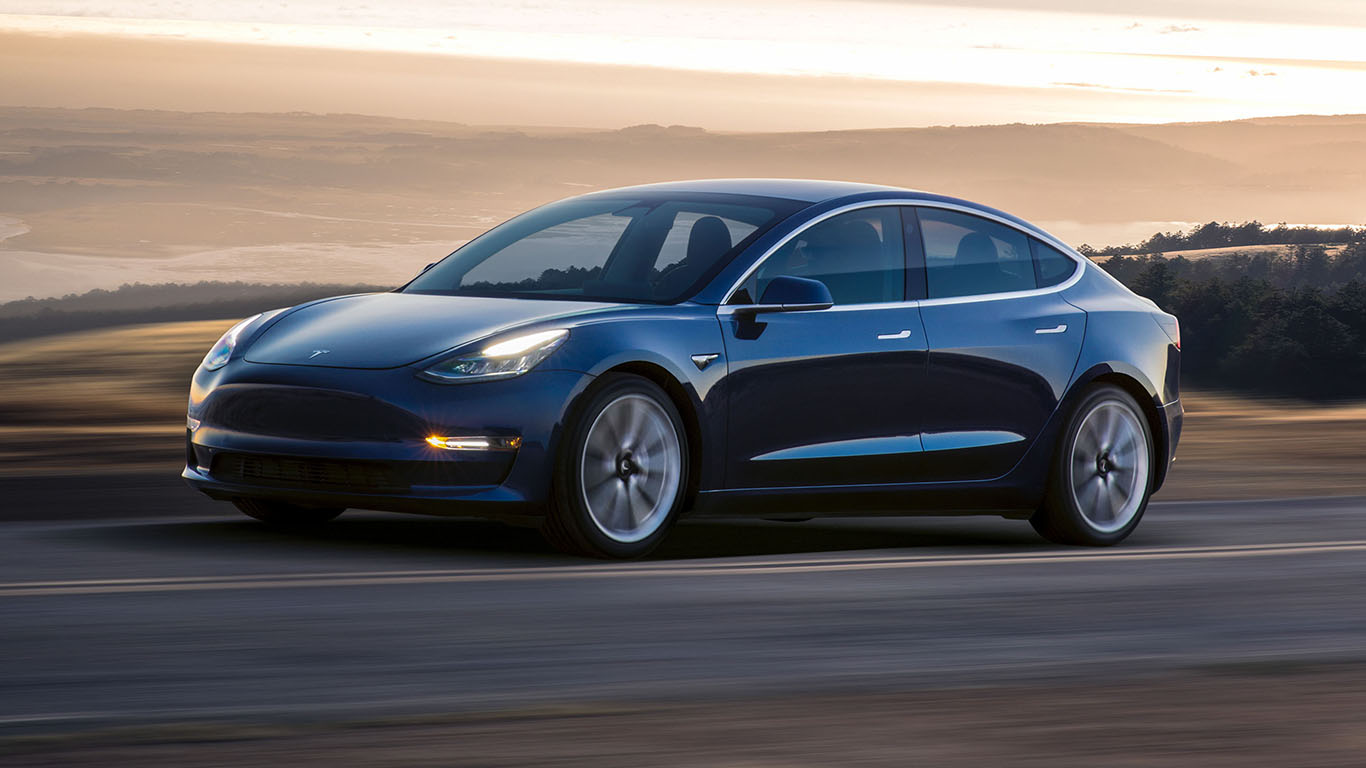
In a post on the company’s official blog Thursday, Tesla Inc. (NASDAQ: TSLA) reported that the company’s vehicles were involved in one accident or “crash-like” event for every 3.34 million miles driven by Tesla owners with Autopilot engaged. A crash-like event, as defined by Tesla, includes near misses as well as actual crashes.
For crash-like events involving the company’s cars when Autopilot was not engaged, Tesla reported one incident for every 1.92 million miles driven. Tesla cites National Highway Traffic Safety Administration (NHTSA) indicating a national average of one crash (no near misses) for every 492,000 miles driven.
While the law of large numbers eventually may catch up with Tesla’s Autopilot, the report is pretty impressive. With Autopilot engaged, a Tesla vehicle is about seven times less likely to be involved in a crash-like event measured against actual NHTSA-recorded crashes only.
Tesla gathers the data through its network connection with every one of its cars. The company is notified “immediately when a Tesla vehicle has been involved in a crash” according to the blog post.
[nativounit]
In a test conducted by Consumer Reports magazine and posted on Thursday, Tesla’s Autopilot was ranked as Average on the editors’ five-point scale, trailing Cadillac’s Super Cruise automated driving technology. Autopilot received Consumer Reports’ lowest score (Worse) for failing to keep drivers engaged, that is, keeping their hands on the steering wheel and paying attention to the traffic around them.
GM chairman and CEO Mary Barra, writing in Axios this week, said her company’s goal is zero crashes, zero emissions, and zero congestion, and that vision can only be fully realized when self-driving cars are deployed in large numbers and people feel safe operating those vehicles. Barra argues that the federal government through the NHTSA needs to expedite updated safety regulations for self-driving cars. Pending federal regulation could bridge the period between now and when car makers “prove their self-driving cars are as safe as human drivers.”
Automakers are making progress, but there are still years of development work ahead to bring self-driving systems up to the same skill level as most human drivers.
[recirclink id=497143]
[wallst_email_signup]





 Top Gaining Stocks
 Top Losing Stocks