


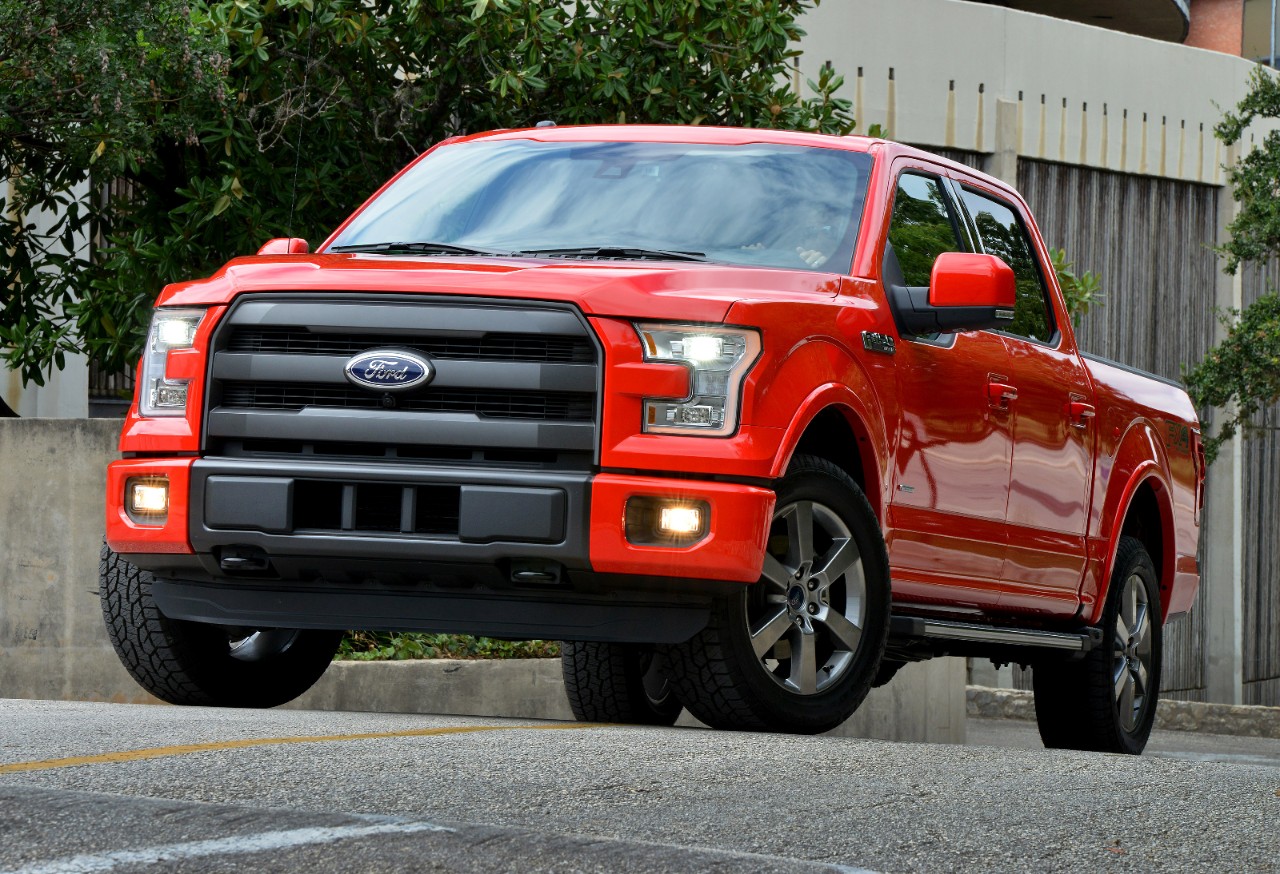
Ford did not have an outstanding year in 2014. Passenger car unit sales were down 3.8% year-over-year and truck sales were down 0.7%. The company’s best-selling F-150 pickup suffered through a transition year as the company had to clear inventory to make way for the all-new aluminum-bodied 2015 pickup on dealer lots. That transition has gone relatively smoothly and truck sales rose 4% in the month of December as the new F-150s spent an average of just five days on the lot before being sold.
The company managed to avoid the massive recalls that plagued General Motors Co. (NYSE: GM) in 2014. GM recalled nearly 27 million vehicles in the United States last year, out of the more than 60 million U.S. recalls for the year. Ford did not escape, and Wednesday announced a recall of more than 220,000 vehicles, including the company’s Police Interceptors manufactured between 2009 and 2012 to fix a defective spring in the interior door handle that could cause the door to pop open in a side-impact crash.
Analysts are lukewarm on Ford, with a mean recommendation that averages around Hold. Since mid-December, both Citigroup and Deutsche Bank have reduced their ratings on the company from Buy to Hold/Neutral.
Ford’s forward price-to-earnings ratio is 9.06 and its price-to-book ratio is 2.16. The stock’s 50-day moving average is $15.06 and the 200-day moving average is $15.72. Over the past 12 months, Ford’s shares are down more than 4%, compared with a gain on the S&P 500 of 13% in the same period.
The stock traded at $14.63, down about 0.5%, in the late morning on Wednesday, in a 52-week range of $13.26 to $18.12. The consensus price target on the stock is $16.91, and Ford’s market cap is around $56.2 billion.






 Top Gaining Stocks
 Top Losing Stocks