


[cnxvideo id=”625493″ placement=”ros”]The inauguration of President Donald Trump last Friday and the next day’s demonstration may have obscured action on one of the new president’s most often mentioned campaign promises. The president issued a statement on Friday announcing that the United States is withdrawing from the Trans-Pacific Partnership (TPP) trade deal and that President Trump “is committed to renegotiating NAFTA.”
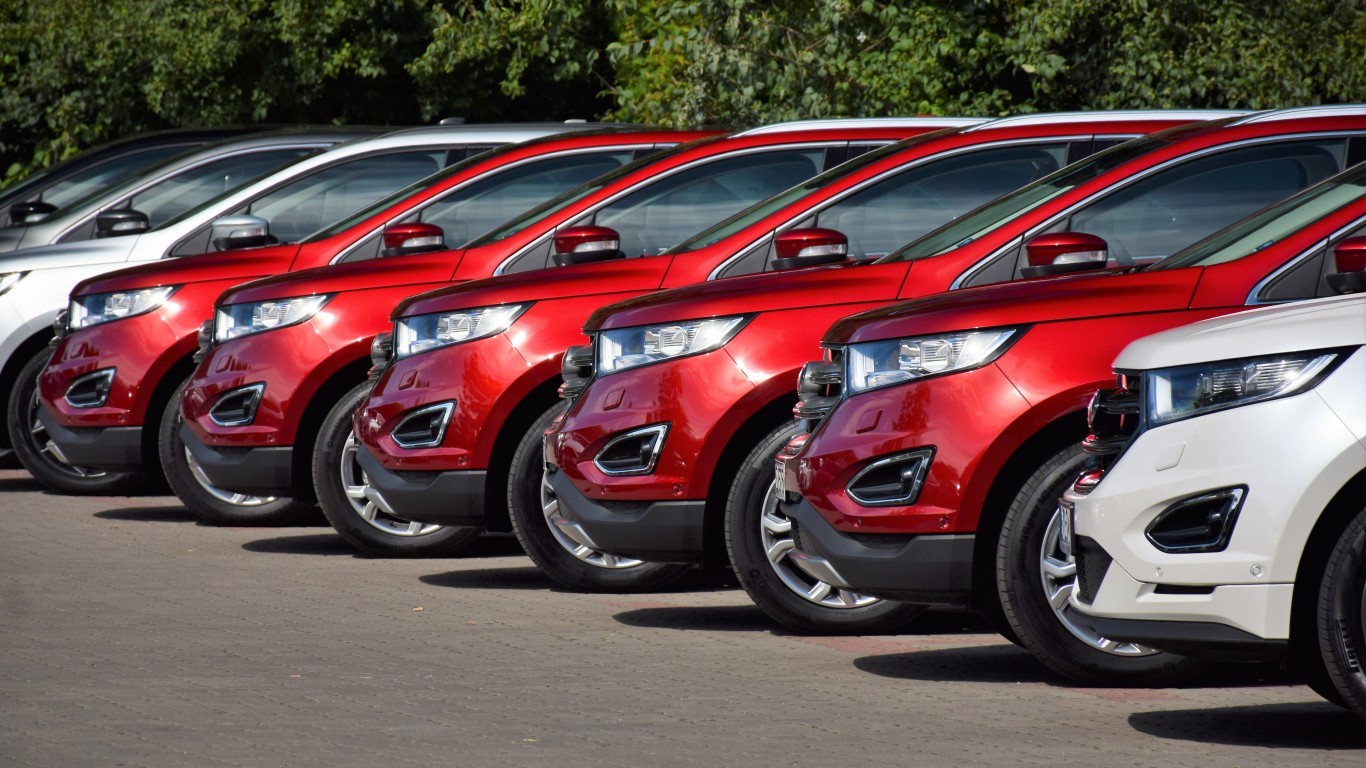
Neither of these decisions is particularly friendly to the auto industry. The threat to NAFTA comes in the form of a threatened 35% tariff on all vehicles built in Mexico and shipped to the United States for sale. Ford Motor Co. (NYSE: F) already has cancelled plans to build a new plant in Mexico, and General Motors Co. (NYSE: GM) announced last week that it plans to invest another $1 billion in U.S. operations, move some 450 jobs from Mexico to the United States, and add 5,000 U.S. jobs over the next several years. Fiat Chrysler Automobiles N.V. (NYSE: FCAU) has also said a U.S. investment of $1 billion to create up to 2,000 jobs in existing plants in Michigan and Ohio.
While Trump’s recent statement on NAFTA says only that the United States will renegotiate, a consistent campaign theme was withdrawing from the agreement. A recent study by the nonprofit Center for Automotive Research (CAR) estimates that terminating U.S. participation in NAFTA and implementing a 35% tariff on imported vehicles will generate a spike in auto prices and cost at least 31,000 U.S. manufacturing jobs as a result of lower sales.
[nativounit]
The impact of the U.S. withdrawal from the TPP is more difficult to quantify. The most often-cited objection to withdrawing from the 12-nation pact is that walking away from TPP cedes to China a leadership position in the Pacific Rim economic sphere. Michael Froman, the U.S. Trade Representative (USTR) in the Obama administration, called pulling out of the TPP the “biggest gift” a U.S. president could give to China.
In his final speech as USTR, Froman said:
I can’t imagine why any president would want to abdicate our leadership in the Asia-Pacific, to be responsible for handing the keys of the castle to China, for driving our historic allies and China’s historic rivals into China’s arms. It would be a strategic miscalculation of enormous proportions.
Last Thursday, the day before the Trump inauguration, a group of Democratic U.S. Senators including Tammy Baldwin (D-WI), Elizabeth Warren (D-MA), Jeff Merkley (D- OR), Debbie Stabenow (D-MI) and Ed Markey (D-MA) introduced legislation requiring the United States to pull out of the TPP. Senator Warren commented:
Working families have been on the losing side of America’s trade deals for too long. From weak labor standards to toothless enforcement provisions and special private courts for multinational corporations, TPP was a lousy deal. Throwing out the TPP is a first step in resetting our trade agenda.
Trump’s nominee for Secretary of Commerce, Wilbur Ross, spoke specifically about the auto industry in his confirmation hearing last Wednesday:
The concept of TPP was to build a wall around the countries that were participants, but in automotive, for example, they permit more than 60 percent of the content of a car to come from outside TPP and yet have all the tariff benefits. That didn’t strike me as the world’s best idea.
According to CAR, the biggest danger to withdrawing from NAFTA are “the unintended consequences that would constrain future growth of the U.S. automotive industry.” Similar unintended consequences also shadow the TPP withdrawal.
[wallst_email_signup]











 Top Gaining Stocks
 Top Losing Stocks