


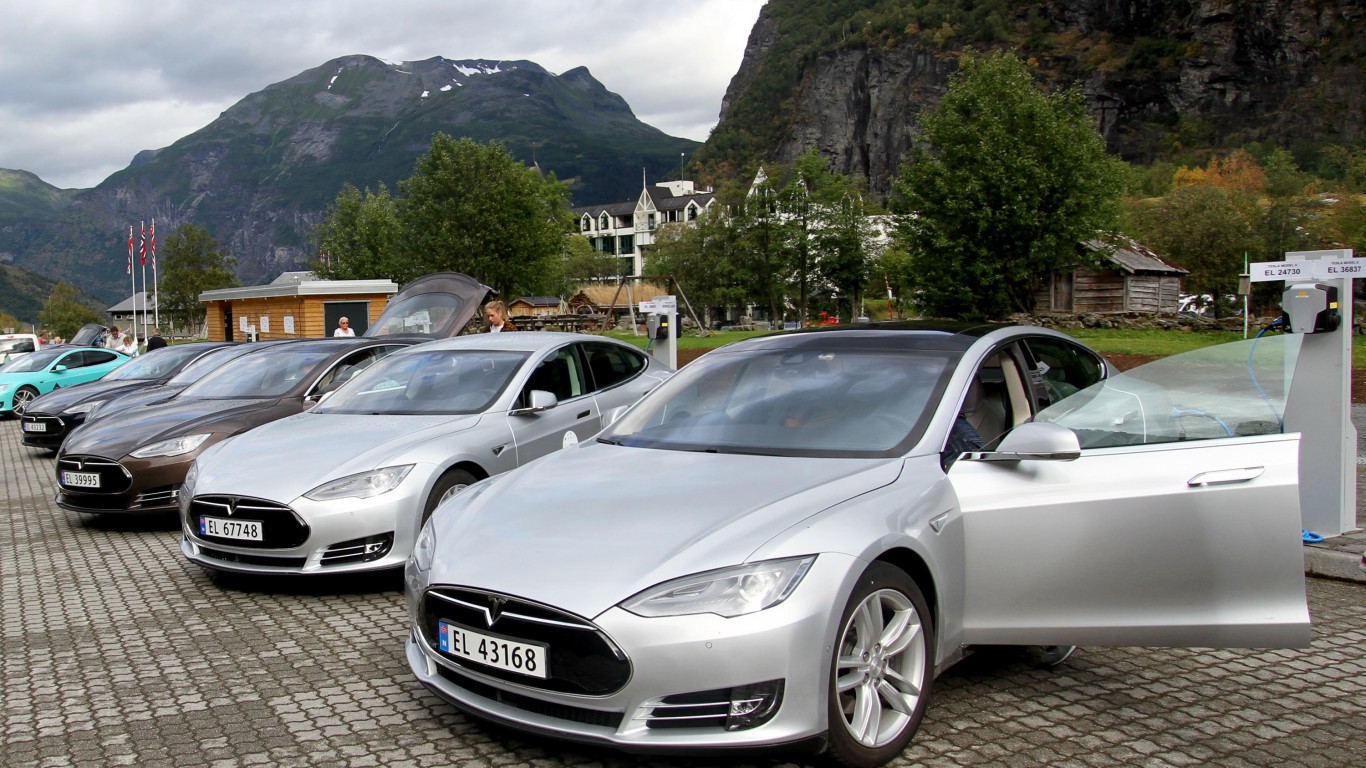
The handwriting was on the wall last July when Tesla Inc. (NASDAQ: TSLA) reached the milestone delivery of its 200,000th all-electric vehicle. That was the good news.
The less-good news was that the company’s federal tax credit to buyers of $7,500 would be cut in half (to $3,750) on January 1, 2019, cut in half again (to $1,875) on July 1, and disappear altogether on January 1, 2020.
On the company’s website this morning, this note appears on the page related to the all three of its models:
All orders placed by October 15, 2018 will be delivered by the end of the year and eligible for the full $7,500 Federal Tax Credit.
[nativounit]
Tesla is just the first electric car maker to feel the impact of the reduction in the tax incentives that were passed into law in December 2010 for plug-in vehicles (hybrids like most Toyota Prius models don’t qualify). A bill was introduced in the U.S. Senate earlier this week that would end the tax incentives immediately for all automakers. The legislation also includes imposing an unspecified user fee on alternative fuel vehicles to mitigate the effect of their non-payment on the federal tax on gasoline.
A competing bill was introduced in the U.S. House last July that eliminates the delivery threshold for plug-in vehicles and replaces it with a 10-year period during which the incentive is paid for every car made. Even that wouldn’t help Tesla much. The company delivered its first all-electric Roadster in June 2009.
The smart thing to do, of course, would be to raise the gasoline tax to pay for the carbon emissions of the internal combustion engines. The average passenger car on U.S. roads and highways emits 4.6 metric tons of carbon dioxide per year, according to the U.S. Environmental Protection Agency. Depending on the targeted temperature change to meet the climate goals set out in the latest report from the Intergovernmental Panel on Climate Change, American consumers would have to pay between $10 and $5,500 per metric ton of carbon dioxide emissions. That’s an essentially meaningless range of $46 to $27,000, or, in cost per gallon, $0.09 to $240. Good luck with that.
The most significant question, of course, is what will Tesla CEO Elon Musk have to say (tweet) about the loss of the incentive. Neither bill in Congress does much, if anything, to return the federal incentive to Tesla buyers. That puts Tesla at a distinct disadvantage to BMW, Mercedes, GM and the rest when it comes to the price of a plug-in electric vehicle. Predicting what Musk might say is a fool’s game, but he almost has to say something. We can’t wait.
[recirclink id=498172]
[wallst_email_signup]






 Top Gaining Stocks
 Top Losing Stocks