


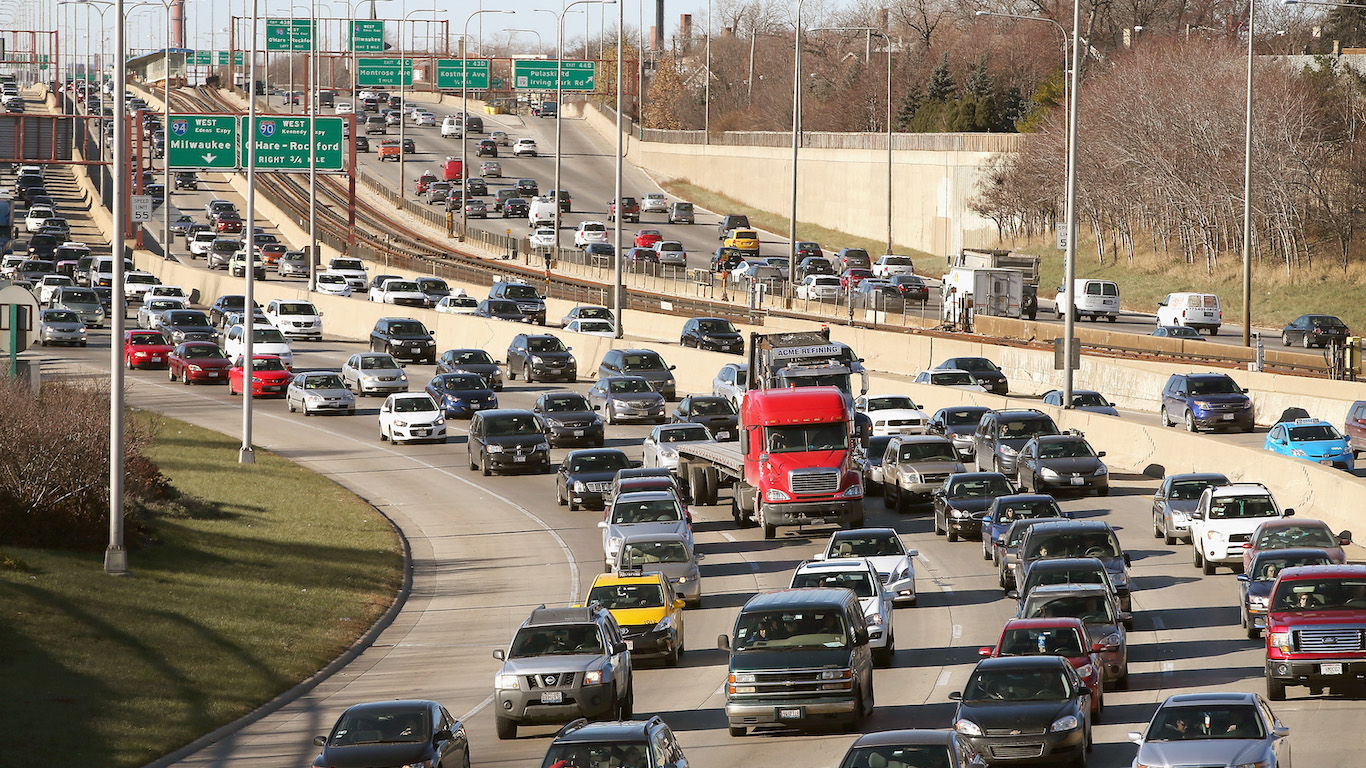
The U.S. auto industry has started to show cracks in what has been five years of sales of over 17 million cars and light trucks annually. It is an extraordinary run after sales dropped to under 10 million in 2009, at the bottom of the Great Recession. Low interest rates and high consumer confidence have driven the trend. The threat to the industry may not be a slowing of the economy as much as the fact that Americans are keeping their cars longer and longer.
The average age of a car is almost 12 years, according to research firm IHS Markit. That figure is expected to grow ahead. The quality of American cars is the reason often given for the trend. Very simply, a functioning car lasts longer than it did 20 or 30 years ago. That means that the average car on the road in America was sold in 2008.
Although the electronics in cars and light trucks have changed in the past decade, most other features have not. New cars have safety features that enhance many driver functions. Cars can automatically brake when they get to close to the car ahead of them. They have mapping systems that can reroute when there are traffic backups. However, a car made in 2008 has anti-lock brakes, airbags and, in many cases, a rear camera. Crumple zones, which are parts of a car that collapse to protect the passengers, have been part of the manufacture of most cars for years. Most product lines included hybrids as well.
The only real leap forward in the newest generation of cars is the electronic vehicle, particularly Tesla. Yet, the number of electric cars on the road is still dwarfed by cars with traditional engines. Some studies show that drivers worry about the range of electric cars and whether there are enough charging stations. There is also no longer-term data about how durable the engines in electric cars will be. If they persist, they could become the norm down the road. Here is a list of America’s most eco-friendly vehicles.
[nativounit]
The primary worry of many car dealers today is that when people step into showrooms, the cars are not substantially different from those they marketed in 2008. So the 17 million cars sold in the United States annually could end this year. Based on current trends, sales levels may drop well below that figure in 2020. A decline in consumer confidence may be part of the problem. However, worried consumers almost always can keep their current cars until next year. These are the cars Americans don’t want to buy.
[recirclink id=571379]
[wallst_email_signup]







 Top Gaining Stocks
 Top Losing Stocks