


Over the past decade, people have owned cars longer than at any time in the past. Research firm R.L. Polk reported a year ago that Americans owned new cars for an average of 74.1 months — 6.2 years. At the same time, the average age of cars and light trucks, regardless of how many owners they had, reached 10.8 years.
One of the causes of longer car ownership has been the recession. Many people could not buy new cars because they could not afford them. However, another important trend emerged about the same time. Cars and trucks were better built and less likely to break down a year or two after purchase. In addition, what Polk did not say, is that futuristic features like antilock brakes, cruise control and all-wheel drive became commonplace.
Car sales have accelerated in the past two years, and with that the average age of cars likely has dropped. Many people bought new cars because they could, financially. Many bought them because their current vehicles had finally become too old to drive. Car sales in the United States probably will reach 16 million this year, which will approach the records set before the recession. However, many analysts expect the growth to level out. Once again, millions of Americans will own new cars that they can drive for years without replacement. And the current generation of improvements to cars and light trucks eventually will reach another plateau. There are only so many people who want another generation of software-controlled vehicles, electric and hybrid engines, and heated seats. How much can features like those be substantially advanced, at least as far as the buying public is concerned? It may be that it will take self-driving cars to bring consumers back for another cycle. And that feature is many years away.
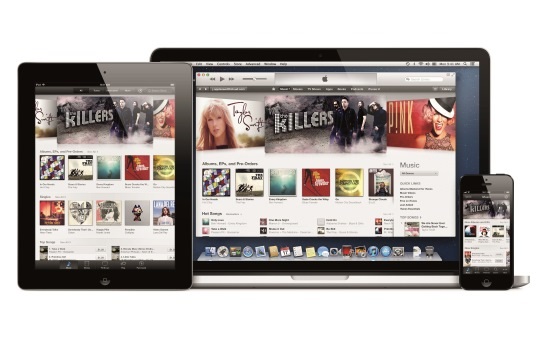
The same pattern already has begun to take hold in consumer electronics. A year ago, research firm Gartner pointed out that processors had become so powerful, and software so efficient, that corporations had lengthened the cycle of PC purchases. And PC sales in general started to disappear because of people’s preference for tablets. That preference has been driven by new cycles of improved processing power on these lighter computers, as well as advances in graphics, software and cameras. At some point, however, the tablet will face the problem the PC does. It will become too good a product to require regular replacement. Old iPads will no longer be old. The concept of outdated tablets will begin to die as the advancement of their features becomes less revolutionary.
The reasons people will hold tablets longer have already begun. The improvement in cameras is such that tablets have displaced standalone cameras at growing rates. Software evolution, in operating systems such as Google Inc.’s (NASDAQ: GOOG) Android, Microsoft Corp.’s (NASDAQ: MSFT) Windows and Apple’s iOS, has become less meaningful to most customers. Tablet processing power has reached a point at which improvements will mean little or nothing to many users.
Apple does not tell outsiders what the average lifespans of its PCs and tablets are. However, many analysts say that Apple is no longer the producer of revolutionary products that it once was. Each new generation of the iPad is more like the one before it. And the iPhone 5s is not much of a change from the iPhone 5. Apple’s ability to upgrade consumers has started to decline.
iPad owners may never hold their tablets for an average of six years, but two or three has become much more likely.






 Top Gaining Stocks
 Top Losing Stocks