


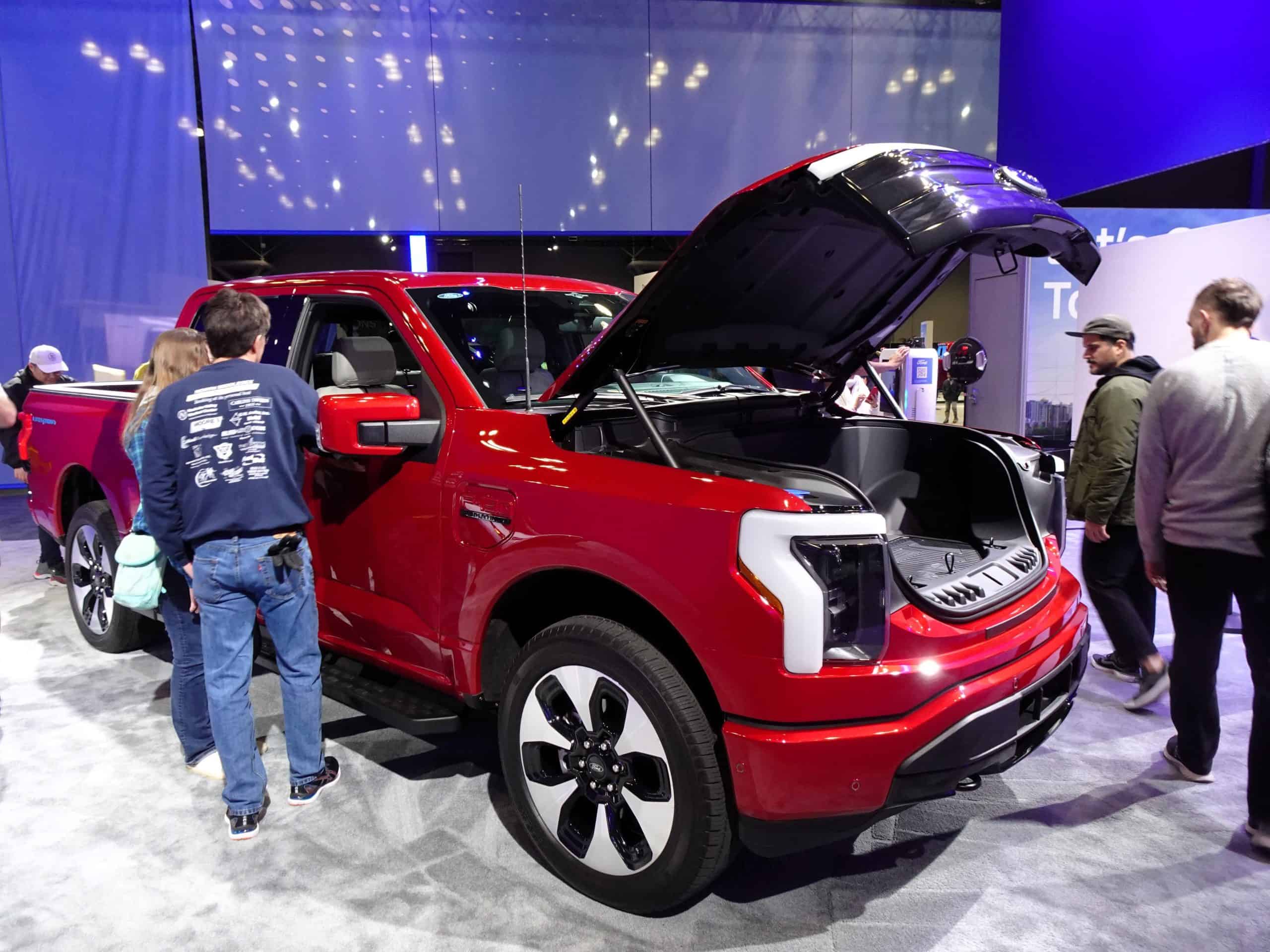
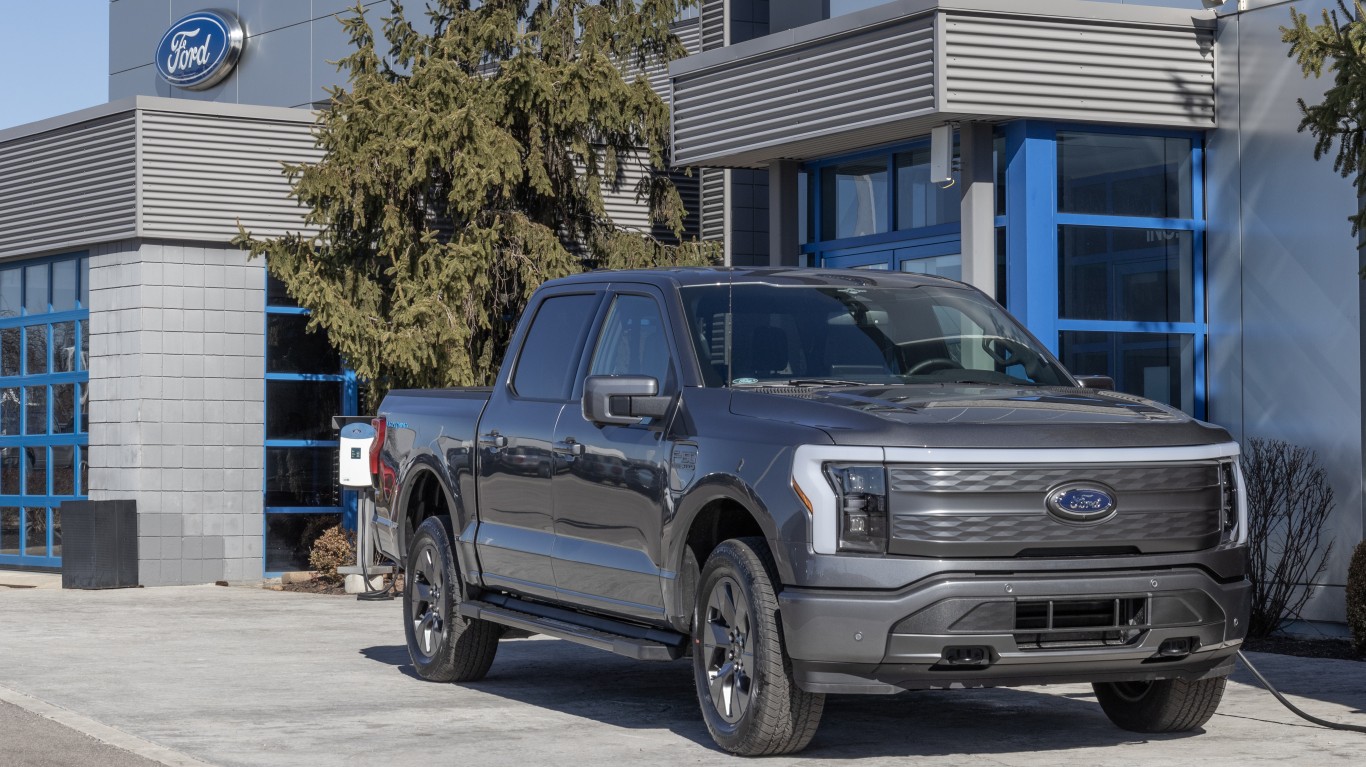
There is a drumbeat among the media and auto industry executives. If the Trump Administration eliminated the EV tax credit, often $7,500, the industry would face a major setback. This includes sales of the Ford Motor Co. (NYSE F | F Price Prediction) EV flagship F-150 Lightning and Cadillac’s new Lyriq and Optiq. It is still unclear when the tax credit will be cut or if it will be cut at all. A rise in EV purchases by year-end buyers indicates what many consumers believe. Ivan Drury of the automotive research site Edmunds said, “For consumers interested in an EV purchase, strike while the battery is hot.”
Eliminating the tax credit would mean that the EVs considered the future of the auto industry, would likely sell at a slower pace than they already are. In the third quarter, General Motors (NYSE: GM) said it sold 32,095 EVs against total US sales of 659,601. Ford’s number was 23,509 out of 504,039. F-150 Lightning sales were only 7,162 for the period.
The two large US car companies continue to hope their EV sales will surge with larger adoption across the American car buyer universe. Each has put billions of dollars into design and production. Each, however, has cut back on those investments. Hybrids have become the default product for people who want to own alternative energy vehicles. A significant challenge is that, according to Cox Automotive, only 8.9% of vehicles sold in the third quarter were EVs.
Car companies need the tax credit for another critical reason. Kelley Blue Book put the average price of a new EV at $56,000 in June compared to $49,000 for a gas-powered car. The lowest-priced F-150 Lighting is $62,995. Ford is pushing hard to sell these with 0% financing for 72 months for some models. It also gives away a home charger in a select number of cases.
In April 2023, the Biden Administration set a goal that 67% of all new cars produced in the US would be EVs by 2032. It has since backed off of that. Without the $7,500 tax credit, a high adoption rate is likely many years away.







 Top Gaining Stocks
 Top Losing Stocks