


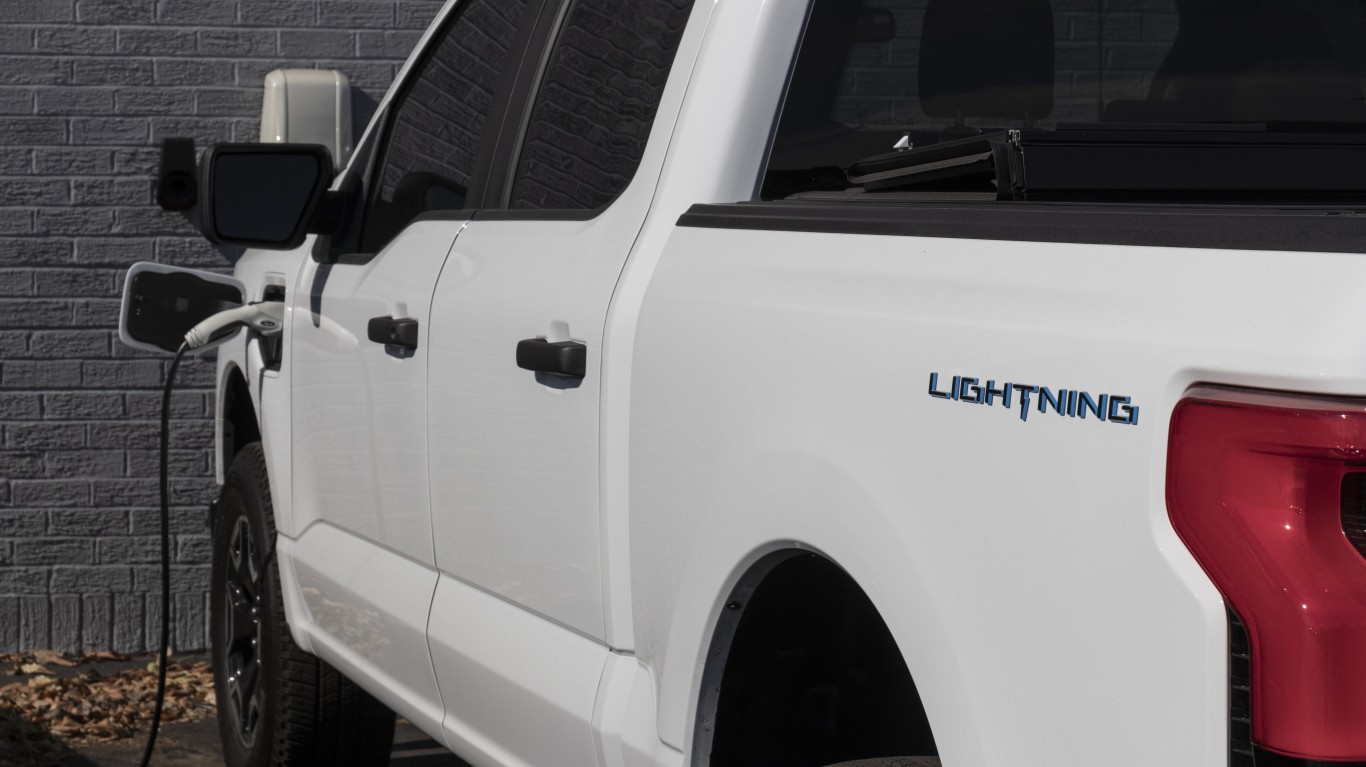
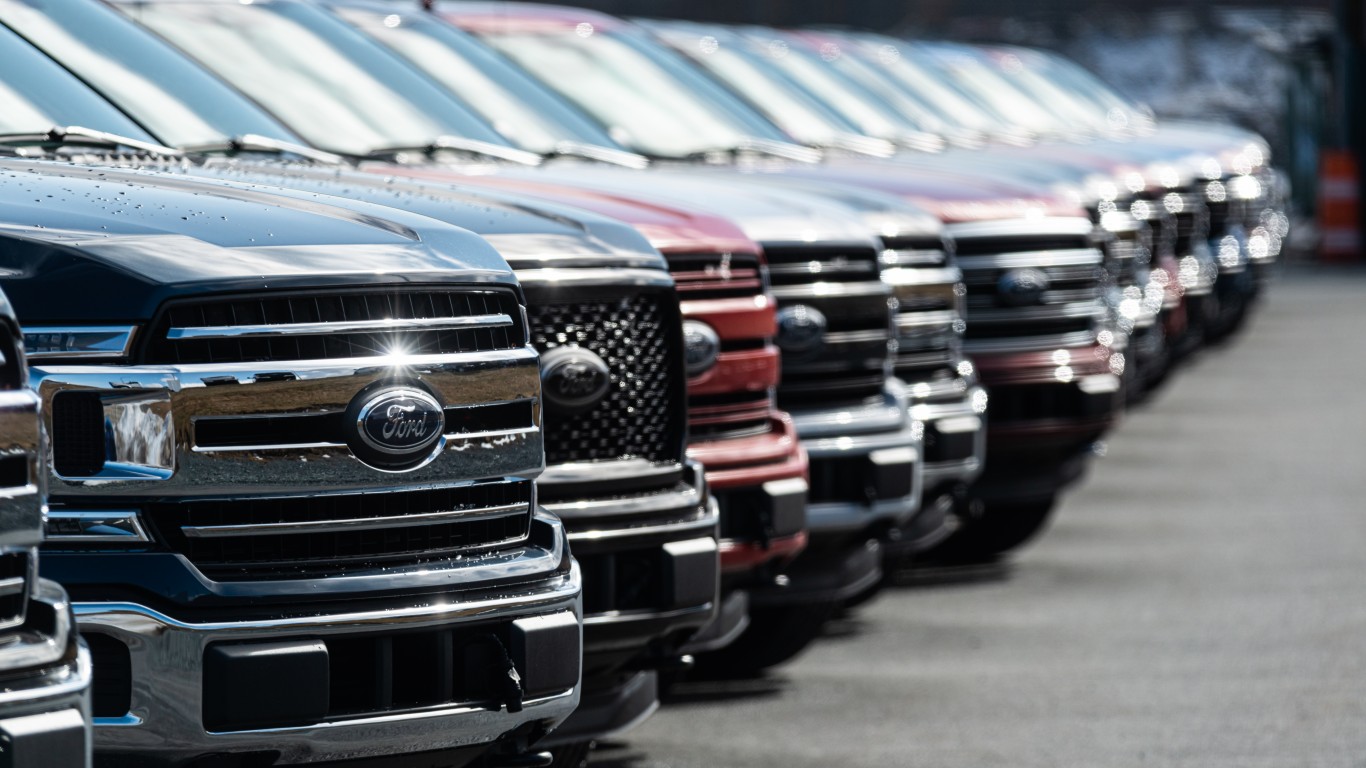
Through the first seven months of the year, F-Series sales were 39% of Ford Motor Co.’s (NYSE: F | F Price Prediction) total U.S. sales. That shows how much the company depends on its full-size pickups. Most of these are the F-150, which has been the bestselling vehicle in the United States for almost five decades. It also shows the extent to which Ford has a challenge to diversify away from gasoline-powered cars, which make up nearly all its profits.
Sales of the F-150 yield $10,000 in profits each, an indication of how much it contributes to Ford’s bottom line.
One question Ford has to face financially is, if it moves successfully into electric vehicles (EVs), what happens to its profits? Will sales of its electric F-150 Lightning cannibalize sales of the gasoline-powered version? Ford objects to the math, but it loses about $100,000 on each EV it sells. A rotation from conventional models to EVs could cost the automaker hundreds of millions of dollars.
CEO Jim Farley said recently that U.S. car companies cannot match the quality and prices of Chinese EVs. He says Ford will have a “Model T” moment on August 11. This implies that the company will relaunch its EV initiative after spending nearly $30 billion on the first wave—and losing it. Farley could point out that the first investment is a foundation for a new one.
If this so-called Model-T moment is largely to start a new generation of what could be a decades-long transformation of the company, where will the money come from? He has complained about what the new United Auto Workers contract will cost Ford. He has also acknowledged the loss that the company has to take in the EV market. Recently, he added that tariffs will undermine the company’s bottom line further.
At the core of Ford’s financials are its warranty costs, which do not seem to be going away.
The F-150 is the foundation of Ford’s financial success. What happens when that is no longer true?
Ford Stock Price Prediction and Forecast 2025-2030









 Top Gaining Stocks
 Top Losing Stocks