


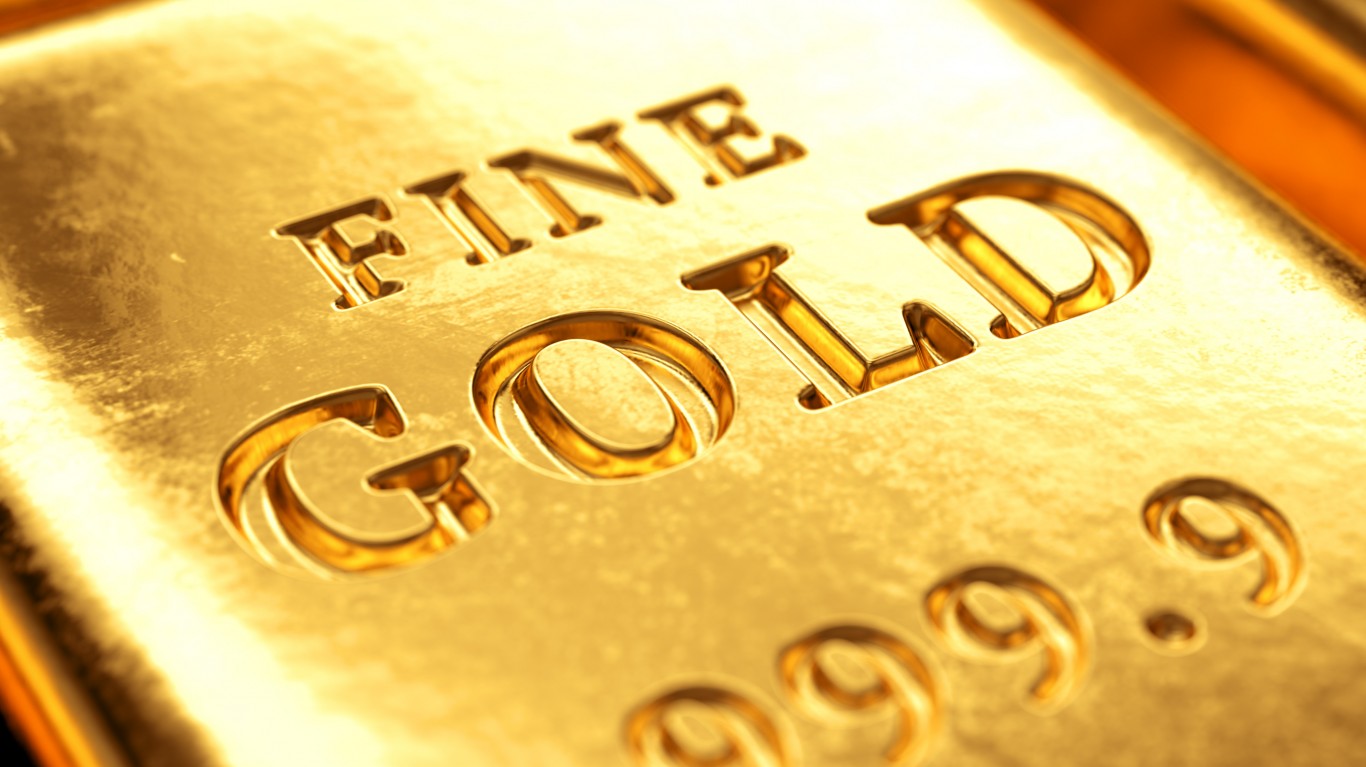
Gold is one of the world’s most closely watched—and emotionally charged—commodities. It reflects economic conditions but it also magnifies them. Movements in the price of gold can create reactivity in investors more so than many other investments. When currencies wobble, markets tumble, or headlines flash war, gold often becomes the safe harbor. But what exactly drives the price of this precious metal? And how has it evolved over the past hundred years? Let’s first explore the main forces that influence gold prices, then take a decade-by-decade journey through gold’s dramatic history
What Moves the Price of Gold

Gold isn’t just a metal—it’s a global barometer of fear, trust, and financial confidence. Here are the key factors that shape its price:
- Inflation and currency instability: When paper money weakens, gold becomes a go-to store of value.
- Political and global unrest: Wars, revolutions, and international crises drive investors toward safe-haven assets.
- Central bank policy: Interest rates, gold reserve changes, and shifts in monetary frameworks (like abandoning the gold standard) can jolt prices.
- Economic downturns: Recessions often spark gold buying as other assets drop in value.
- Supply and mining costs: As it becomes more difficult and expensive to extract gold, supply constraints can gradually raise prices.
Now here are some specific historical events over the past century that have influenced the price of gold.
1920s

An American $5 bill issued in the 1920s.
- Start: $20.67
- End: $20.67
- High: $20.69
- Low: $20.67
- Average: $20.67
In the 1920s, gold prices were essentially frozen at $20.67 per ounce under the Gold Standard Act. The U.S. adhered to the gold standard, which meant every dollar was backed by a fixed amount of gold. This created a sense of stability, but it also tied the government’s hands in times of economic distress. While inflation remained low, flexibility in responding to financial turmoil was limited.
1930s

During the Great Depression private citizens were banned from owning gold.
- Start: $20.67
- End: $35.00
- High: $35.00
- Low: $20.67
- Average: ~$26.33
The Great Depression rocked global economies and shattered faith in paper money. In 1933, President Franklin D. Roosevelt ended the domestic gold standard and banned private gold ownership. A year later, the Gold Reserve Act officially raised the gold price to $35 per ounce—an abrupt 69% increase. This move devalued the dollar and ushered in a new chapter in monetary policy.
1940s
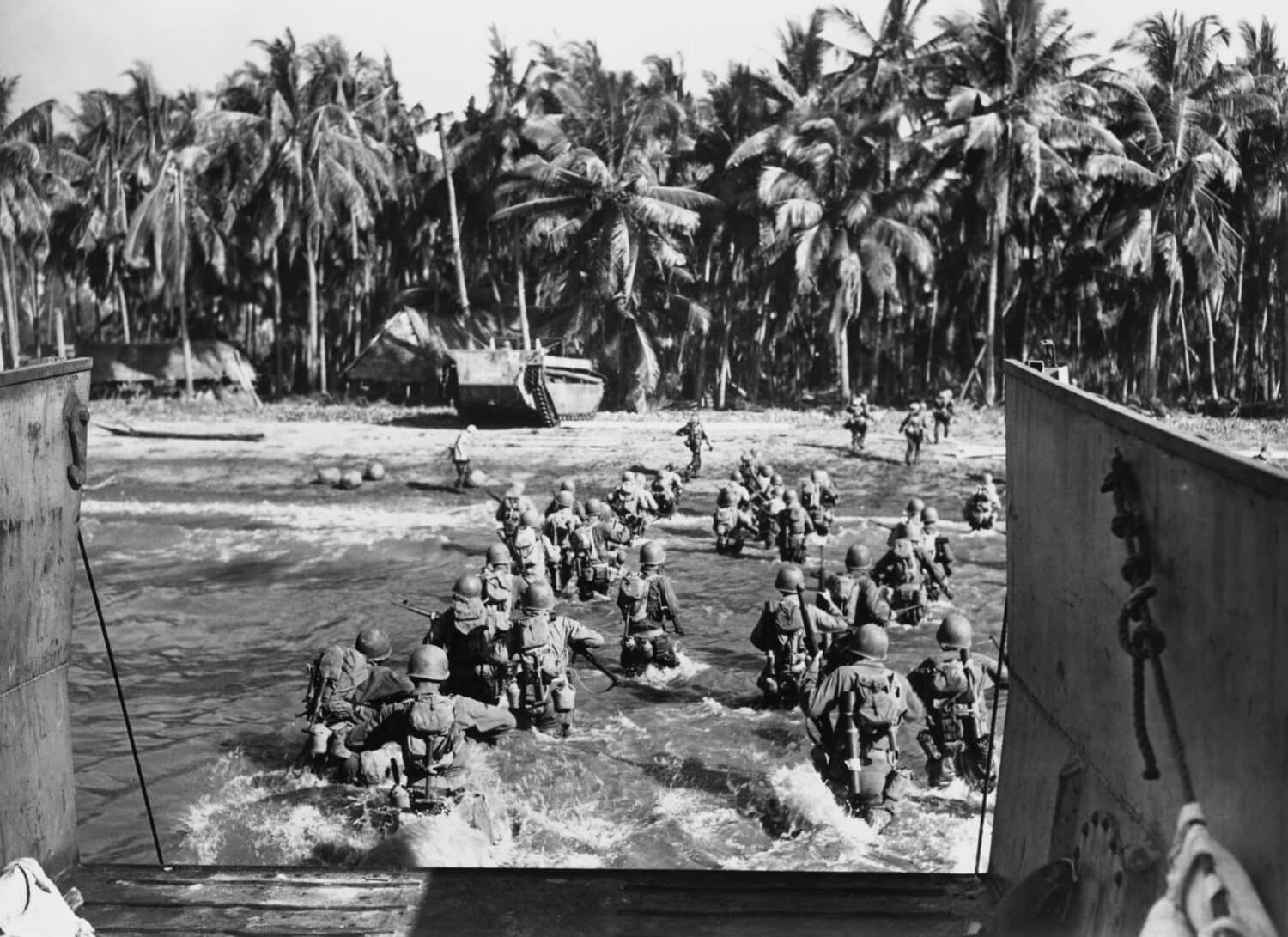
American troops storming a beach in the Pacific theater during World War II.
- Start: $35.00
- End: ~$43.00
- High: ~$43.00
- Low: $34.50
- Average: ~$38.00
During World War II, gold prices remained officially fixed but trended modestly upward, hovering between $34.50 and $43 per ounce. Inflation, restricted markets, war costs, and reconstruction demand sometimes created unofficial premiums.
The Bretton Woods Agreement, established in 1944, created a global monetary system where currencies were pegged to the U.S. dollar, and the dollar was backed by gold at a fixed rate of $35 per ounce. This system aimed to ensure exchange rate stability and rebuild international trade after World War II.
1950s

Operation Teapot, an American nuclear bomb test in 1955.
- Start: ~$43.00
- End: $35.00
- High: ~$44.00
- Low: ~$34.95
- Average: ~$35.20
In the 1950s, despite Cold War tensions and the Korean War, gold prices remained largely stable—held in check by the Bretton Woods system, which fixed the price of gold at around $35 per ounce. While global anxiety increased demand for gold as a safe haven, strict international agreements and U.S. monetary policy prevented those fears from influencing the official price. Occasionally, prices crept as high as $44, but overall, the system fostered stability.
1960s

The Vietnam War began to shake international confidence in the financial stability of the United States.
- Start: $35.00
- End: ~$43.50
- High: ~$43.50
- Low: $35.00
- Average: ~$36.00
Gold continued to hover between $35 and $40 during the 1960s, but confidence in the system was waning. Inflation ticked upward. The Vietnam War drained U.S. reserves. Foreign central banks began to question whether the U.S. could actually back dollars with gold. In 1968, the London Gold Pool—created to keep gold prices stable—collapsed. That year, gold spiked to $43.50.
1970s

During the 1970s oil crisis, gas stations and governments had to come up with creative ways to reduce long lines at gas pumps.
- Start: ~$40.62
- End: ~$512.00
- High: $665 (Jan 1980)
- Low: ~$35.00
- Average: ~$198.00
Everything changed in 1971 when President Nixon severed the dollar’s link to gold, officially ending Bretton Woods. Gold was now free to trade on the open market—and it didn’t stay cheap for long. In 1971, gold traded around $40 per ounce. By 1979, it soared to $133. In January 1980, it hit $665.
The decade was marked by deep economic and political instability. Two major oil shocks—in 1973 and again in 1979—were triggered by OPEC embargoes and geopolitical upheaval in the Middle East, sending energy prices sky-high and fueling global inflation. At home, the Watergate scandal eroded public trust in government, while the aftermath of the Vietnam War and rising unemployment added to the sense of unease. Inflation ran rampant, oil prices exploded, and political uncertainty was everywhere. Gold became the refuge of choice, and its price reflected that sense of panic and protection.
1980s
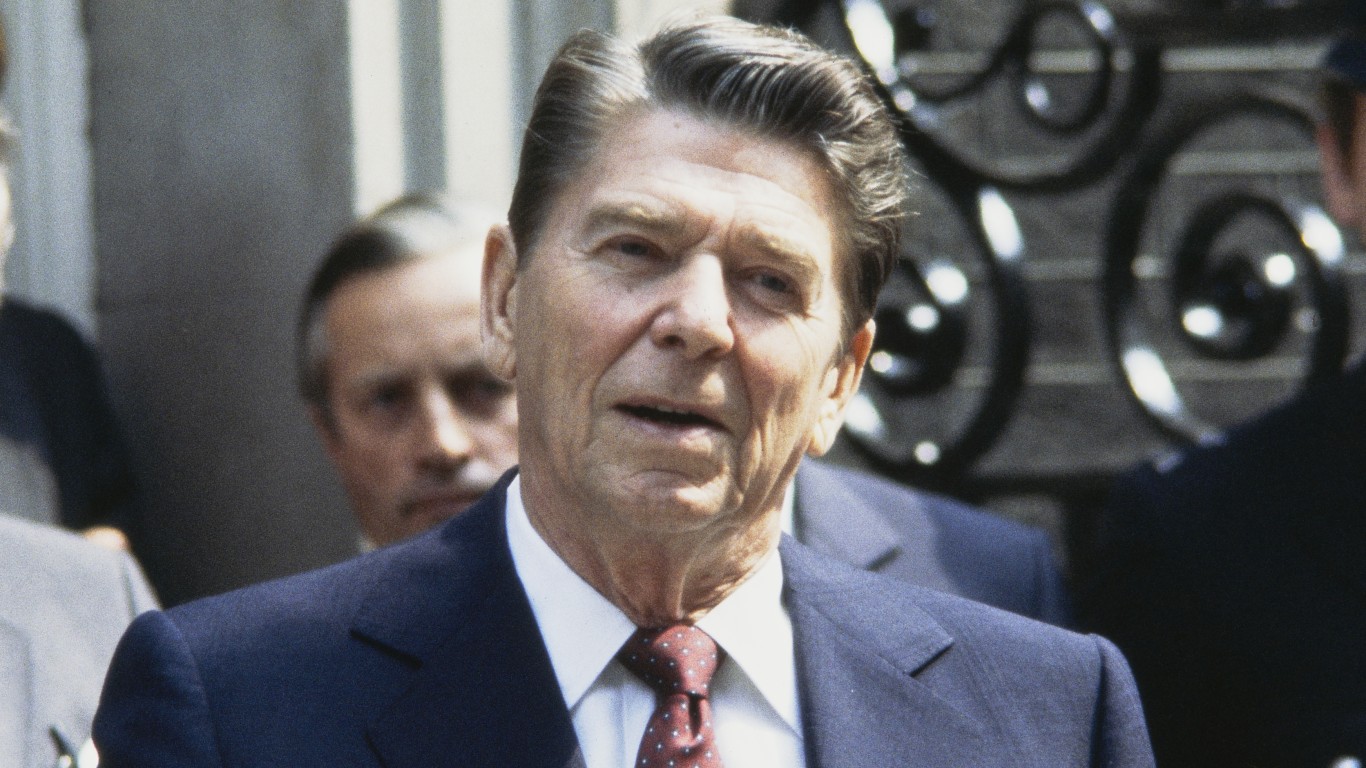
The election of Ronald Reagan in 1980 initiated new economic and foreign policies that shook the markets.
- Start: ~$512.00
- End: ~$410.00
- High: $850 (Jan 1980)
- Low: ~$253
- Average: ~$386.00
Gold reached a (to that point) all-time high of $850 per ounce in early 1980, a year when Jimmy Carter was defeated by Ronald Reagan for the presidency and the Iranian hostage crisis came to an end.
During the Reagan administration, the stock market experienced significant growth, particularly after the recession of the early 1980s. Reagan’s pro-business policies, tax cuts, and deregulation helped boost investor confidence. Meanwhile, interest rates were high in the early part of the decade, which strengthened the dollar and made bonds more attractive as well. As a result, investors moved away from conservative assets like gold, contributing to a long period of subdued gold prices. Throughout the 1980s, gold bounced between $300 and $450, occasionally dipping to $253.
1990s

The fall of the Berlin Wall was an iconic moment marking the end of the Cold War.
- Start: ~$391.00
- End: ~$290.00
- High: ~$415.00
- Low: $253 (1999)
- Average: ~$360.0
The 1990s were relatively uneventful for gold. The Cold War came to an end, and the fall of the Soviet Union in 1991 ushered in a period of relative geopolitical calm. Meanwhile, globalization accelerated, and the U.S. economy entered one of the longest peacetime expansions in history. Stock markets soared, driven by rapid growth in technology companies and the rise of the internet.
Gold, by contrast, lost much of its appeal. It averaged between $320 and $400 per ounce throughout the decade, eventually hitting a new low of $253 in 1999. With equities delivering double-digit returns and bond markets offering stability, many investors saw gold as an outdated, overly conservative investment. Central banks in some countries even began selling off gold reserves, signaling waning institutional confidence in the metal. For many portfolios, gold was pushed to the sidelines.
2000s
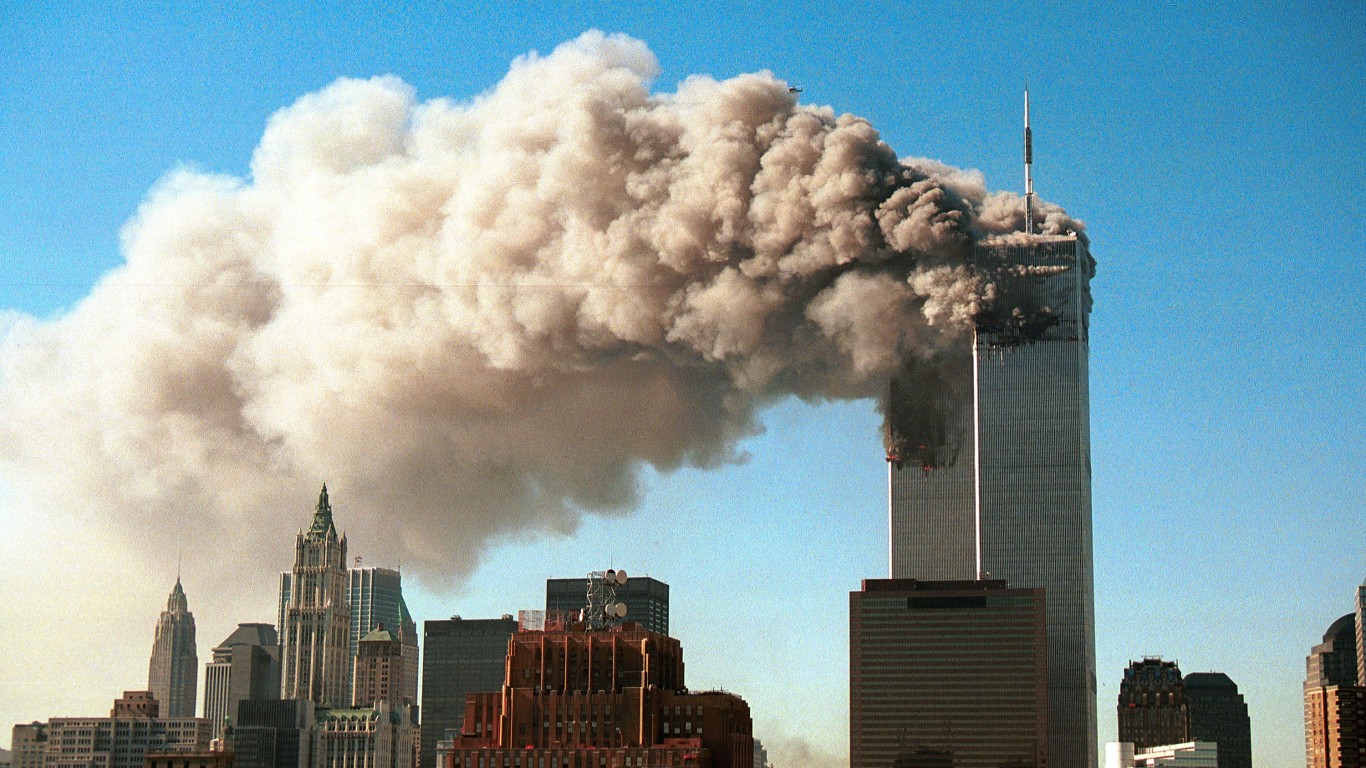
The 9-11-2001 terrorist attacks set of a decade of costly war, economic and political instability.
- Start: $272.65
- End: ~$1,096.00
- High: $1,226 (2009)
- Low: ~$256 (2001)
- Average: ~$600.00
The new millennium marked a turning point for gold. Starting at around $272 per ounce in 2000, gold prices climbed steadily throughout the decade, finishing at $1,226 by the end of 2009. A series of shocks disrupted investor confidence and reignited demand for safe-haven assets.
First came the bursting of the dot-com bubble, which wiped out trillions in market value. Then, the terrorist attacks of September 11, 2001, ushered in an era of global instability, followed by prolonged wars in Iraq and Afghanistan. As the decade progressed, the housing bubble and risky financial practices built up pressure in the global banking system. When the 2008 financial crisis hit, major banks collapsed and entire economies teetered on the brink.
In this environment, gold reemerged as a trusted store of value. Central banks slashed interest rates and flooded markets with liquidity, raising fears of inflation and currency debasement. Investors turned to gold for protection, and its price reflected that renewed demand.
2010s

The European debt crisis was a major drag on world economies in the 2010s.
- Start: ~$1,096.00
- End: ~$1,515.00
- High: $1,922 (2011)
- Low: ~$1,050 (2015)
- Average: ~$1,375.00
Gold continued its ascent into the early 2010s, reaching a record high of $1,922 per ounce in 2011. The aftermath of the global financial crisis lingered, and new crises emerged. The European sovereign debt crisis rattled markets, prompting fears about the stability of the eurozone. In the U.S., credit rating agencies downgraded the country’s debt for the first time in history, stoking anxiety about long-term fiscal health.
But as global economies gradually recovered, the urgency that had driven gold buying began to fade. Central banks began tapering stimulus efforts, and interest rates slowly crept higher. By 2015, gold had pulled back to around $1,050 per ounce.
Still, the decade proved that gold had staying power. Prices averaged between $1,250 and $1,800 during much of the 2010s. Although the initial panic subsided, gold had reestablished itself as a core component of many diversified portfolios—particularly among those wary of future instability.
2020s

The COVID-19 pandemic created major economic disruptions starting in 2020.
- Start: ~$1,515.00
- Current (mid-2025): ~$3,322.00
- High: $3,500 (April 2025)
- Low: $1,603 (early 2020)
- Average: ~$2,100.00
The 2020s began in chaos. COVID-19 disrupted economies, triggered massive stimulus spending, and brought inflation roaring back. Add in geopolitical conflicts—from Russia’s invasion of Ukraine to unrest in the Middle East—and the global appetite for safe assets grew stronger than ever.
Gold bottomed at $1,603 in early 2020 but quickly rebounded. It crossed $2,000, and by April 2025, it briefly hit $3,500 in intraday trading. Recent trade tariffs imposed by the Trump administration and threats of trade wars have increased inflation and pushed gold sharply higher as investors seek a safe haven from economic volatility. Forecasts for late 2025 suggest an average price between $3,215-3,675—with some analysts predicting $4,000 or more in 2026.
Should You Invest in Gold?
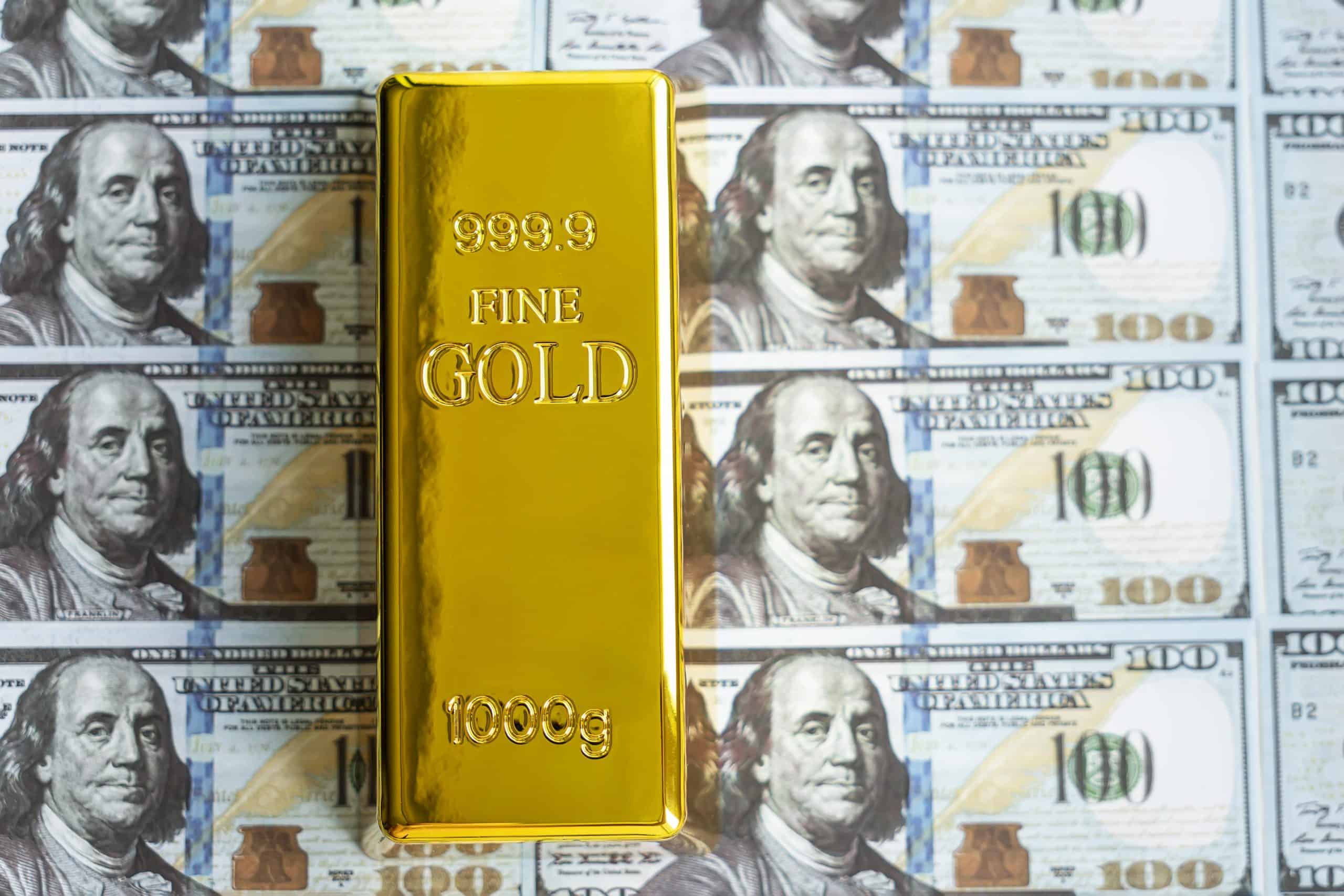
Gold isn’t just a historical relic—it’s a living asset class that still plays a role in modern portfolios. While it doesn’t generate income like stocks or bonds, it offers something else: stability during storms. Gold can hedge against inflation, diversify your holdings, and protect wealth when markets dive.
That said, it’s not foolproof. Gold can be volatile in the short term, and its price is driven by factors that don’t always follow logical patterns, including human emotions. It’s best used as part of a broader strategy, not the centerpiece. If you’re considering gold, think of it as insurance—not a lottery ticket.












 Top Gaining Stocks
 Top Losing Stocks