


 The New York Times recently made the point that Acer may soon pass Dell (DELL) as the world’s second-largest PC manufacturer. This analysis indicates that Dell favored direct sales for too long while Acer went into retail outlets. Acer began to aggressively sell laptops to consumers while Dell continued to pursue the slower-growing corporate market.
Dell’s catalogue of business sins is longer than that. It failed, over the four years since its business began to flag, to create products that were market leaders that could win customers from other PC companies. It also failed to diversify while competitor HP (HPQ) pushed deeply into the software and consulting businesses. Dell’s trailing twelve month revenue is $57.4 billion compared with $55.9 billion in 2006. Net income has dropped to $2 billion from $3.6 billion. HPQ’s revenue is up 29% over the same time frame.
Dell’s mistakes of staying with a direct sales model and not adding large, new lines of business like HP did are obvious and have been given a great deal of air time. Dell’s failure to create compelling products has not been as carefully covered.
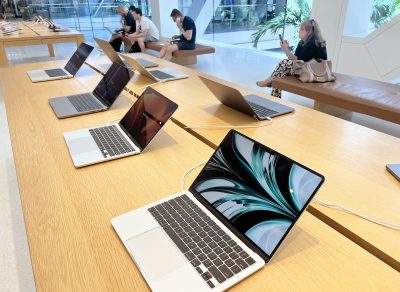
Dell does not have a line of hardware that it can put side-by-side with Apple (AAPL) Macs and make the claim that its PCs are considerably superior based on features, functions, and prices. Dell has more styles and models of computers than Apple does, but the Apple products have gained market share and Dell lost some. Part of this may have to do with customer impressions. The American Customer Satisfaction Index for PCs from 2008 shows Dell with a score of 75 and Apple with an 85 rating, the highest in the survey. Dell’s number is barely better than the industry average. Apple’s is 15% higher.
A reasonable way to look at Dell’s marketing is that its computers are sold on price. Apple’s are sold on features. The first page at the Dell website promotes laptops that sell for as little as $399 after “instant savings.” The PC is being sold as a commodity, a mid-level product like a Chrysler. The first image at the Apple Mac site shows a range of products and promotes high performance. Apple makes a point of not showing price at all. The Apple sales proposition is product-driven. Dell’s put product second.
The market has punished Dell for its inability to make the company as successful as HP and Apple have been. Five years ago, Dell’s shares sold at over $40 and now trade at $14. HP’s stock has gone from $18 to $37 during the same period and Apple’s from $18 to $142.
Five years ago, Apple was about a fifth the size of Dell in sales. Both companies were profitable. Apple’s revenue was closer to 60% of Dell’s in 2008 and Apple’s profit was two and a half times greater. Apple is much more than a computer company, but it is also fair to say that Dell is much less of a handset and media player company. Dell has the same opportunities in the broad consumer electronics business as Apple and at the beginning of the decade had significantly more financial resources.
It would be easy to say that Dell’s demise was due to management ineptitude but that paints too broad a picture. Dell became a second tier company because of product management decisions. It elected to tie its fortunes to PCs and PC accessories and then did a mediocre job of doing that.
But, management flaws cannot be left out of the evaluation because management controlled product decisions. There is a substantial difference among the Dell and its competition. Apple has been successful with the management it had in place at the beginning of the decade. HPQ’s fortunes improved substantially after Mark Hurd took over the company in early 2005. Michael Dell, Dell’s founder, has been chairman of the company for over a decade. He picked Kevin Rollins to become president in 2001 and CEO in 2004. Dell pushed Rollins out in early 2007 because the firm was struggling and became CEO himself.
Dell is about to become the largest “also ran” of the American technology industry, and Michael Dell is almost entirely to blame for that.
Douglas A. McIntyre






 Top Gaining Stocks
 Top Losing Stocks