


The Pew Research Center recently conducted a study about the U.S. smartphone use in 2015. 24/7 Wall St. has taken some tidbits from the story to outline the current position and direction of smartphone use in the United States.
Currently, about two-thirds of all Americans own a smartphone, and in everyday use these smartphones act as a gateway to the online world. This number has grown from 35% in 2011 as ever newer iPhone, Galaxy and Droid phones enter the market.
One out of every 10 Americans owns a smartphone but does not have access to broadband Internet at home. At the same time, three out of every 20 are in a similar situation but only have a limited number of options for going online, other than their smartphone.
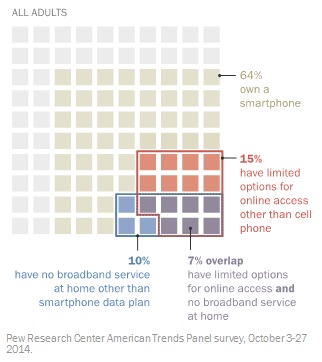
Those with relatively low income and educational attainment levels, younger adults and non-whites are especially likely to be “smartphone-dependent,” which makes up 7% of the American population.
ALSO READ: Why a BlackBerry Profit Should Surprise Even Its Rivals
Smartphones have a wide array of uses for most people, and these days many users have become dependent on their smartphones for many daily activities. Most people will use their phone to follow along with breaking news, and to share and be informed about happenings in their local community, or even on a global level. Smartphones help users navigate the world around them as well. Turn-by-turn driving directions and public transit applications are a literal definition of this.
At every economic level, smartphones are widely used for navigating numerous important life activities, whether it is researching a health condition, paying bills or accessing educational resources. People that fall into the lower-income bracket, who are also “smartphone-dependent” users, are especially likely to turn to their phones for navigating job and employment resources.
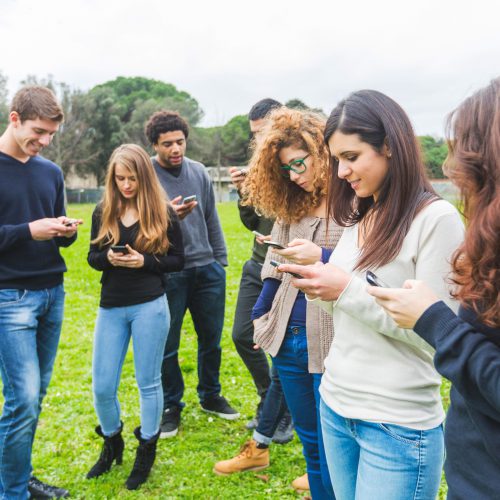
Out of all the demographics, and based on an “experience sampling” of smartphone owners over the course of a week, young adults were found to have deeply embedded mobile devices into the daily contours of their lives. This group is widely referred to as millenials.
The experience sampling survey illustrates that smartphone usage often produces feelings of productivity and happiness, but that many users also feel distracted or frustrated after mobile screen encounters.
Certain groups of Americans rely on smartphones for online access at elevated levels, in particular:
- Younger adults — 15% of Americans ages 18-29 are heavily dependent on a smartphone for online access.
- Those with low household incomes and levels of educational attainment — Some 13% of Americans with an annual household income of less than $30,000 per year are smartphone-dependent. Just 1% of Americans from households earning more than $75,000 per year rely on their smartphones to a similar degree for online access.
- Non-whites — 12% of African Americans and 13% of Latinos are smartphone-dependent, compared with 4% of whites
These numbers only look to grow as time goes on.
ALSO READ: Analyst Cools on Apple Watch and iPad Sales, but Sees Huge iPhone Gains








 Top Gaining Stocks
 Top Losing Stocks