


It’s easy to forget that today’s most popular brands were at one point nonexistent, and that the American landscape was dominated by other companies and products. Many of them were on top of their game for years or decades before competition led to their collapse.
Here are four once legendary American brands that have since been relegated to the dustbin of history.
Circuit City – Bankrupt In 2008
Circuit city was founded in 1949. Over the next fifty years it went on to become THE dominant electronics retailer. By the year 2000 it employed more than 60,000 people at 616 different locations. It was the runaway winner in the space. Just eight years later it filed for bankruptcy, and on March 8, 2009 the lights went out on the final location.
What happened? In a word, competition. The height of Circuit City’s dominance in 2000 also corresponded with the rise of Amazon (Nasdaq:AMZN | AMZN Price Prediction) and online retail in general. Smaller, and then more nimble players like Best Buy were also borrowing best practices from Circuit City and made a notable shift to online retail when other players held back.
Kodak – Bankrupt In 2012
There used to be a time Kodak was all things photography. The company is one of only a few surviving today that can claim a founding in the 1800’s. Starting in a leased third-floor building in Rochester, New York, the company started by manufacturing dry plates in the 1880s. It later reincorporated as The Eastman Kodak Company. With the release of the KODAK Camera in 1888, it laid the foundation for the entire photography sector.
The Kodak Company grew to dominate the camera and film industry. It was known for it’s iconic Kodachrome film, memorable advertising, instant film cameras, and other breakthroughs which have contributed to film and TV.
However, all good things come to an end. Like Circuit City, the rise of digital technologies caught the company off guard. Personal digital cameras were more convenient, affordable, and arguably better. The company declared bankruptcy in 2012.
Blockbuster – Bankrupt in 2010
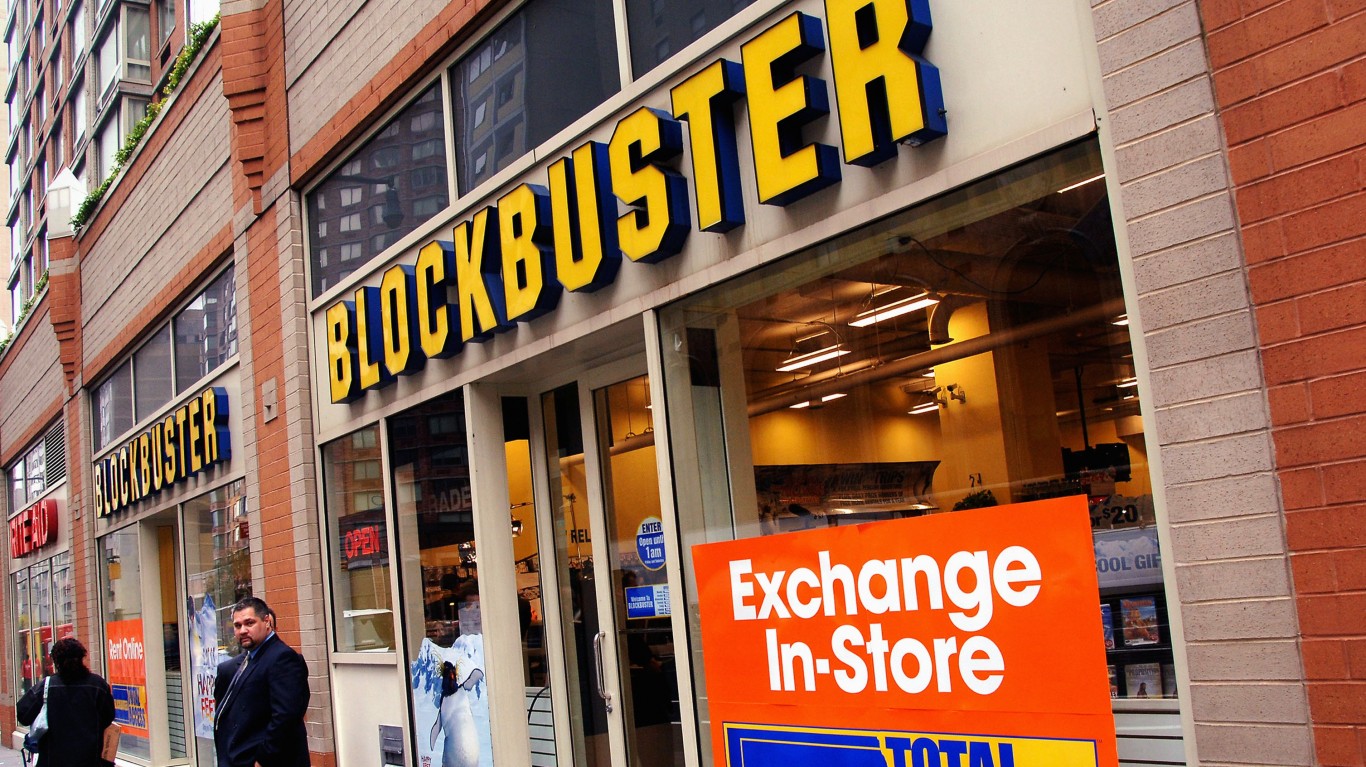
It used to be that if you wanted to watch a specific movie you had more or less two options. 1. Go to the theater and see it once. 2. Rent from Blockbuster after it was released. The company had a completely dominant position in movie rentals. At one point in 2004 it had over 9,000 stores and more than 84,000 employees across all fifty states. Shortly thereafter though it started to retreat. Like Kodak and Circuit City the company fell prey to faster and more nimble streaming services like Netflix (Nasdaq:NFLX).
Blockbuster attempted to meet competition on its own terrain and launched its own competing streaming service, Blockbuster On Demand. But it was too little, too late. The company declared bankruptcy in 2010.
Toys “R” Us – Bankrupt in 2017
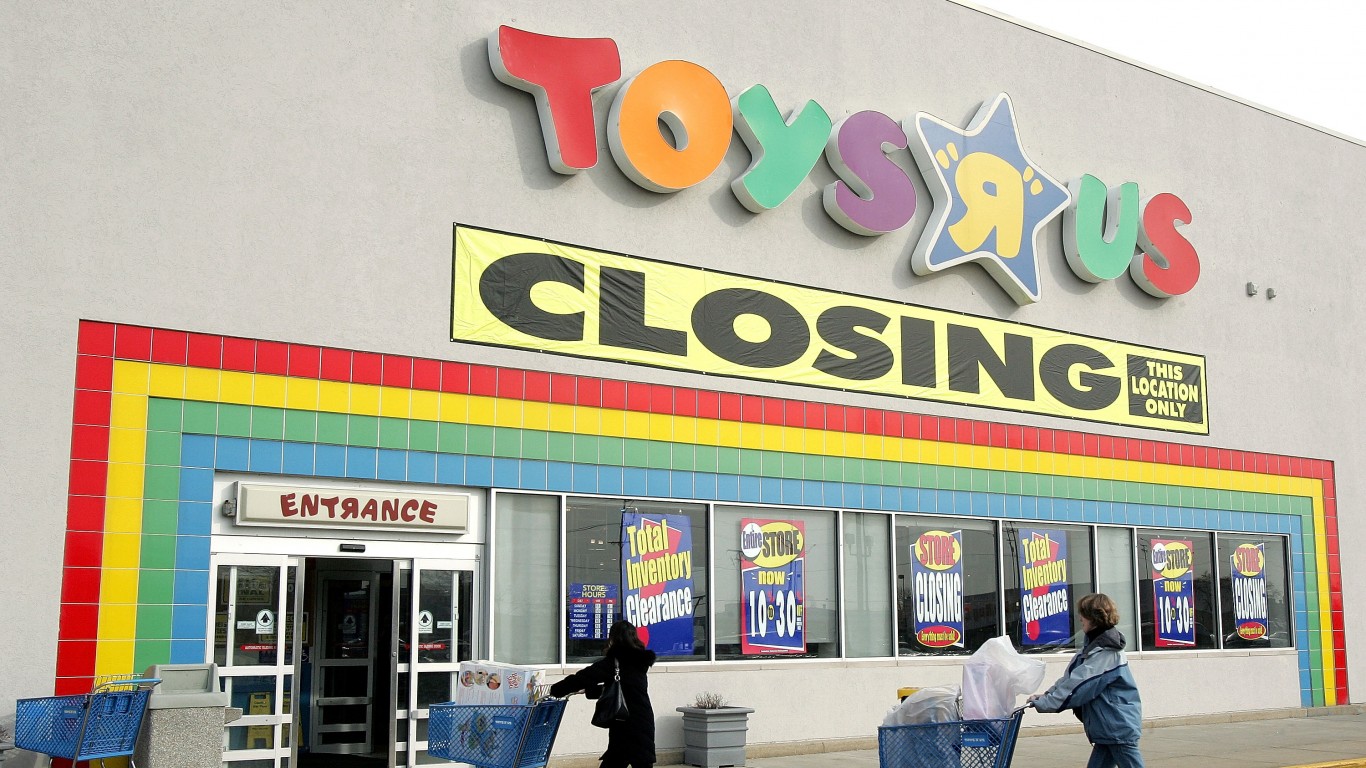
In 1948 Charles Lazarus founded a baby-furniture retailer. It was then named Children’s Bargain Town. Roughly a decade later the focus shifted and Lazarus began exclusively selling toys instead. The business was a smash success and morphed into the brand Toys “R” Us, and went on to be the ubiquitous merchant of children’s toys and clothing. At it peak, it had 739 stores in the united states, and over 750 internationally.
But like the other brands listed here, Toys “R” Us grew gigantic and was no longer nimble enough to keep up with the competition. Like Blockbuster, the company tried to pivot to online retail and compete with the then younger upstarts like Amazon (Nasdaq:AMZN). But, saddled with a massive debt load and the challenges of managing their bricks and mortar stores they eventually folded and filed for bankruptcy in 2017








 Top Gaining Stocks
 Top Losing Stocks