


 The problem is plain enough. Student debt continues to rise year after year. Many students with the debt will never repay it. Some set of organizations will be left with crippling losses. No one has come up with a reasonable solution, because there is none.
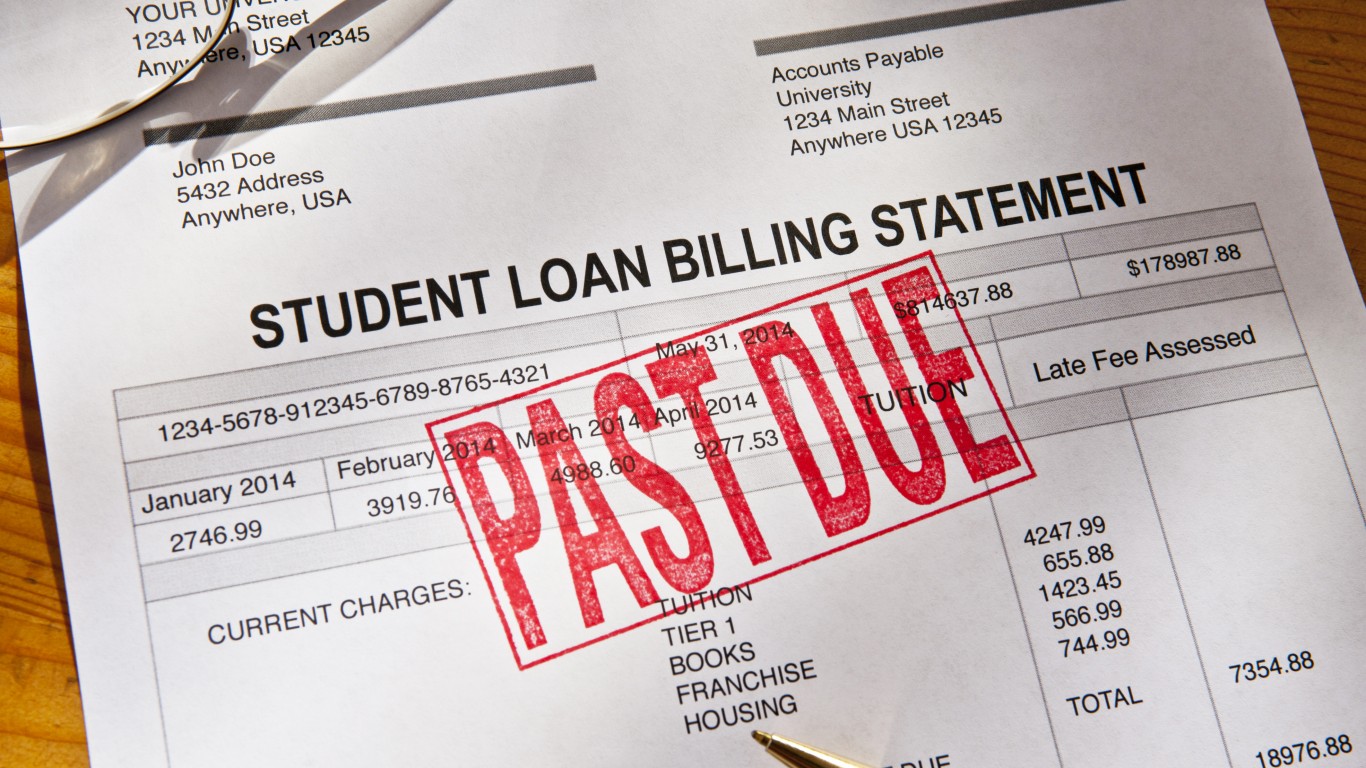
The Institute for College Access & Success came out with its most recent Project on Student Debt. Students who borrowed for college and earned bachelor’s degrees in 2011 graduated with an average $26,600 in student loan debt, up from $25,250 in 2010. And the problem has hit both the public and private lending sectors:
The report also found that about two-thirds of the Class of 2011 had loans, and that private (non-federal) student loans comprised about one-fifth of what they owe.
The balance of the report was a series of banal analyses. The economy has made its harder for recent graduates to get jobs. The problems vary from state to state and college to college. The hit for the average student is worst in New Hampshire, where the average debt is $32,440 for some reason, and is best in Utah, where the figure is $17,227. Maybe that is because Utah has more public colleges that charge less for education. There is no pattern to debt by college. Yale is on the list of “low debt colleges,” but so is the Mount Carmel School of Nursing.
What can be done? Nothing really. The Institute for College Access & Success claims that a college eduction is a good investment, but does not really say why. If unemployment remains high for several years, the statement is laughable.
A number of economists have pointed out that the student debt problem is akin to the housing one. Many estimates claim the value of the nation’s homes has cumulatively dropped trillions of dollars — perhaps as much as $6 trillion. Despite the minor recovery in the housing market, that loss will not be reversed for years, and in some parts of the country forever. The housing collapse will ruin people’s credit. Home equity will not be tapped for retirement or college. The ripple effect on banks already has been incalculably high.
For housing, once the spiral down began, there was nothing that could be done about it, even by the federal government — despite its efforts. Some economists believe the best method to relieve the problem is a level of loan forgiveness. Banks, with balance sheets already weak, will not do that. The most obvious avenue to a solution is, therefore, closed.
The same set of problems holds true for student loans. Government-backed ones might be reduced, extended or forgiven, at a cost to taxpayers. Private ones might be reduced as well, at a cost of hundreds of billions of dollars to the lending institutions. Neither will happen. The financial damage just would be too much.
The trouble, and the lack of solutions, despite best efforts to find them, will not change. Students will default on loans by the hundreds of thousands. Their credit ratings will be undermined, in many cases before they have jobs. The government and private firms will take big losses. It will not be the housing crisis all over again, but it will be bad.
Douglas A. McIntyre










 Top Gaining Stocks
 Top Losing Stocks