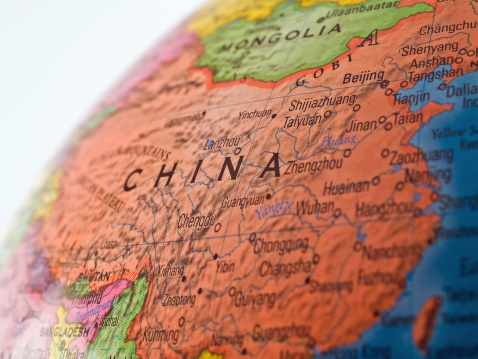
China GDP Stimulus and World Economic Recovery

Photo of Douglas A. McIntyre
By Douglas A. McIntyre Published
This post may contain links from our sponsors and affiliates, and Flywheel Publishing may receive compensation for actions taken through them.

Finance Minister Lou Jiwei seemed coy in his recent comments about a Chinese GDP stimulus package. There probably will not be a big one this year, but the central government plans to help employment and accommodate efforts by the private sector to expand. He left open the consideration about what is stimulus and what is not in the People’s Republic. No matter how he expresses the country’s plans, the rest of the world awaits a Chinese investment in its economy and must have it for global gross domestic product to recover at a rate beyond the extremely slow one that marks expansion now.

Economics 101 says that stimulus will not help Chinese exports. The balance of the world must post an economic recovery for demand for factory goods in China to pick up. And manufacturing remains at the heart of China’s growth and its ability to create a middle class. That middle class is essential if the People’s Republic wants its economy to morph closer to the one in the United States, where consumer activity represents two-thirds or better of GDP. Internal consumers need to begin to match demand for goods and services outside China’s borders.

The last major stimulus program set by the central government put $585 billion into its economy beginning in late 2008, just ahead the time a similar plan of $787 billion was adopted in the United States. Based on the relative size of the nations as measured by GDP, China’s stimulus was “bigger.” Of course, the U.S. government was not in a good position to increase the size of its stimulus effort, at least not if it was to avoid a ballooning deficit.

Like most major stimulus plans, China’s was meant to drive the economy from the inside out. Taxes were cut, businesses received incentives to expand and the People’s Republic created huge infrastructure projects that gave work to tens of thousands of businesses and hundreds of thousand of workers. These projects were criticized in some quarters, because much of what was being built had little future use. In the long run, perhaps that did not matter. A job is a job.

For the rest of the world, a job created in China is penny, a nickel or a dollar of opportunity for the consumers and enterprises in the People’s Republic to need imports from other countries. China’s middle class has been estimated at 250 million people, nearly the size of the entire population of the United States. And its industrial and technology businesses are large importers as well — so long as they have the demand, even if it is fake, to expand their businesses.

China, perhaps the world’s greatest exporter, needs to become its greatest importer as well. Although that might not happen entirely, if demand in China shifts sharply higher, the world’s economy will have one more engine to pull it out of GDP expansion doldrums.


Photo of Douglas A. McIntyre
About the Author Douglas A. McIntyre →

Douglas A. McIntyre is the co-founder, chief executive officer and editor in chief of 24/7 Wall St. and 24/7 Tempo. He has held these jobs since 2006.

McIntyre has written thousands of articles for 24/7 Wall St. He is an expert on corporate finance, the automotive industry, media companies and international finance. He has edited articles on national demographics, sports, personal income and travel.

His work has been quoted or mentioned in The New York Times, The Wall Street Journal, Los Angeles Times, The Washington Post, NBC News, Time, The New Yorker, HuffPost USA Today, Business Insider, Yahoo, AOL, MarketWatch, The Atlantic, Bloomberg, New York Post, Chicago Tribune, Forbes, The Guardian and many other major publications. McIntyre has been a guest on CNBC, the BBC and television and radio stations across the country.

A magna cum laude graduate of Harvard College, McIntyre also was president of The Harvard Advocate. Founded in 1866, the Advocate is the oldest college publication in the United States.

TheStreet.com, Comps.com and Edgar Online are some of the public companies for which McIntyre served on the board of directors. He was a Vicinity Corporation board member when the company was sold to Microsoft in 2002. He served on the audit committees of some of these companies.

McIntyre has been the CEO of FutureSource, a provider of trading terminals and news to commodities and futures traders. He was president of Switchboard, the online phone directory company. He served as chairman and CEO of On2 Technologies, the video compression company that provided video compression software for Adobe’s Flash. Google bought On2 in 2009.

Continue Reading

Top Gaining Stocks

CBOE Vol: 1,568,143
PSKY Vol: 12,285,993
STX Vol: 7,378,346
ORCL Vol: 26,317,675
DDOG Vol: 6,247,779

Top Losing Stocks

LKQ
LKQ Vol: 4,367,433
CLX Vol: 13,260,523
SYK Vol: 4,519,455
MHK Vol: 1,859,865
AMGN Vol: 3,818,618



