


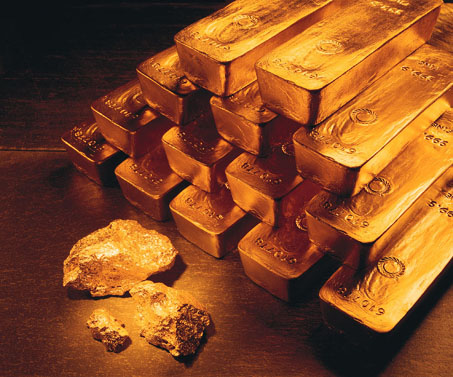
Any sort of shock to the financial system typically boosts the price of gold. The yellow metal’s most recent high came in late August at more than $1,400 an ounce. Gold closed at around $1,275 last week and was up about $15 Monday morning. In early October 2012, gold was selling for nearly $1,800 an ounce. That is a drop of around 30% in 12 months.
The S&P 500 index has risen more than 18% in the past 12 months, much of that due to the cheap money the Fed has injected into the financial system with its asset-purchasing program. Investors searching for returns have turned to equities as the commodities markets have fallen and the U.S. dollar index, like gold, is virtually flat with its level of a year ago, after a brief spike in early July. The index was down about 0.5% after the first half hour of trading Monday morning.
If the federal debt ceiling is not raised by midnight October 17, the federal government loses its ability to borrow. We will not know what that will mean to global financial markets until it happens, but if enough banks refuse to accept U.S. Treasury securities as collateral for overnight lending, the result could be a lending crisis that freezes the global financial system. At that point, demand for gold may skyrocket.
The other side of the coin is that the Fed will be forced to continue its asset purchasing with no thought of tapering before the end of this year. That may push investors to remain in equities, avoiding the rising price — and volatility — of gold.
The SPDR Gold Trust (NYSEMKT: GLD) was up about 1.1% Monday morning, but a week ago the shares were trading at around $128. No big move there, yet. Gold miners like Barrick Gold Corp. (NYSE: ABX) and Newmont Mining Corp. (NYSE: NEM) were up about 1% as well. Silver streamer Silver Wheaton Corp. (NYSE: SLW) was flat.
Markets are waiting for someone else to make the first big move. As October 17 draws nearer with no settlement, the odds rise for a bigger move up in gold almost as a reflex. But for investors looking for returns, equities might turn out to be a better bet once the dust settles.





 Top Gaining Stocks
 Top Losing Stocks