Will the U.S. Return to Recession?

Photo of Douglas A. McIntyre
By Douglas A. McIntyre Published
This post may contain links from our sponsors and affiliates, and Flywheel Publishing may receive compensation for actions taken through them.

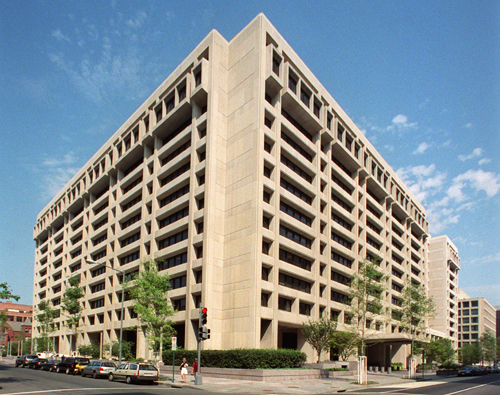
Barely masked in the International Monetary Fund (IMF) downgrade of U.S. GDP growth for 2014 was a warning. Without policy changes, which include investment to create jobs and infrastructure, the American economy continues to have downside risks. Absent any of that investment, the IMF did not provide a further forecast. But if it did, the numbers would have to be grim.

The IMF’s concern was based primarily on America’s employment situation, with its foundation in the forecast that full employment will not return until 2017. The organization pointed to its anxiety about overall joblessness, the situation of people who have been out of work for more than 27 weeks and the 50 million Americans who live in poverty. Unfortunately, it would be hard to point to a single major policy initiative taken by the federal government to improve these conditions. Debate over the debt ceiling has been heated enough that spending on efforts to improve the jobs situation is unlikely.

The IMF’s assessment of long-term growth in the United States was more grim than its 2014 assessment:

[W]e’ve also looked at the trend for growth going forward, and essentially based on the aging of population and productivity trends, which have not kept up with earlier expectations, we have revised downwards our projection for the long-term growth rates of the United States to around 2 percent. That is clearly, significantly lower than the 3 percent average that we have seen between 1948 and 2007.

It would take a major change in federal government policy to address the effects of productivity as well. Gridlock in Washington, which could continue for years, makes revisions to current laws nearly impossible.

ALSO READ: Ten States With the Slowest Growing Economies

The actions of the Federal Reserve, particularly to keep interest rates low, may no longer be enough on their own to push economic growth by making money available on a very favorable basis. If there is any hint of what the Fed plans to do in the year ahead it is to raise rates, or perhaps keep them at the current level. This is despite that fact that many economists believe the Fed may lower its own forecasts for GDP growth and unemployment improvement.

If the IMF is correct, and U.S. economic growth depends on federal government decisions, then its 2% forecast will be far too high, and the odds that GDP growth will end moves much, much higher.


Photo of Douglas A. McIntyre
About the Author Douglas A. McIntyre →

Douglas A. McIntyre is the co-founder, chief executive officer and editor in chief of 24/7 Wall St. and 24/7 Tempo. He has held these jobs since 2006.

McIntyre has written thousands of articles for 24/7 Wall St. He is an expert on corporate finance, the automotive industry, media companies and international finance. He has edited articles on national demographics, sports, personal income and travel.

His work has been quoted or mentioned in The New York Times, The Wall Street Journal, Los Angeles Times, The Washington Post, NBC News, Time, The New Yorker, HuffPost USA Today, Business Insider, Yahoo, AOL, MarketWatch, The Atlantic, Bloomberg, New York Post, Chicago Tribune, Forbes, The Guardian and many other major publications. McIntyre has been a guest on CNBC, the BBC and television and radio stations across the country.

A magna cum laude graduate of Harvard College, McIntyre also was president of The Harvard Advocate. Founded in 1866, the Advocate is the oldest college publication in the United States.

TheStreet.com, Comps.com and Edgar Online are some of the public companies for which McIntyre served on the board of directors. He was a Vicinity Corporation board member when the company was sold to Microsoft in 2002. He served on the audit committees of some of these companies.

McIntyre has been the CEO of FutureSource, a provider of trading terminals and news to commodities and futures traders. He was president of Switchboard, the online phone directory company. He served as chairman and CEO of On2 Technologies, the video compression company that provided video compression software for Adobe’s Flash. Google bought On2 in 2009.

Continue Reading

Top Gaining Stocks

CBOE Vol: 1,568,143
PSKY Vol: 12,285,993
STX Vol: 7,378,346
ORCL Vol: 26,317,675
DDOG Vol: 6,247,779

Top Losing Stocks

LKQ
LKQ Vol: 4,367,433
CLX Vol: 13,260,523
SYK Vol: 4,519,455
MHK Vol: 1,859,865
AMGN Vol: 3,818,618