


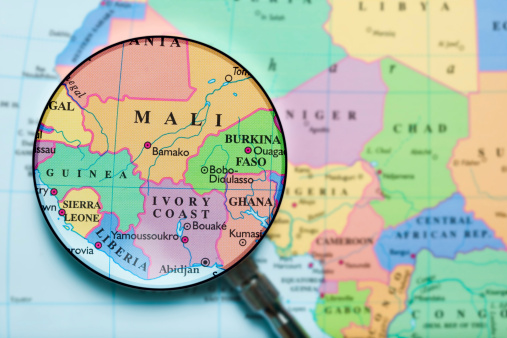
I have never seen a health event threaten the very survival of societies and governments in already very poor countries. I have never seen an infectious disease contribute so strongly to potential state failure.
— Dr. Margaret Chan, Director-General of the World Health Organization, Keynote address to the Regional Committee for the Western Pacific, sixty-fifth session Manila, Philippines, 13 October 2014.
It seems impossible that one disease could bring down the entire government of a sovereign nation. Yet, one of the world’s leading experts on the spread of disease believes that the countries hardest hit by Ebola could face the extinction of their ability to govern. Among the reasons are not only the disease itself, but the affects the spread have on national economies to generate substantial gross domestic product. The threat is particularly powerful because the nations involved are already extremely poor, have nearly no infrastructure and rely on one or two industries for their economic output.
24/7 Wall St. has already profiled the three nations that have been hit by the brunt of the disease. In some cases, travel of any kind to and from these countries has been cut off. Some multinationals have pulled their entire workforces out.
ALSO READ: How Ebola Could Cost the World $32 Billion by End of 2015
In our analysis, we pointed out:
Sierra Leone ranks 110th among all nations based on population, at 6.2 million.
Measured by gross domestic product (GDP) (nominal) it ranks 83rd at $43.6 billion. Based on annual GDP (nominal), Sierra Leone ranks 148th at $4.7 billion, according to the International Monetary Fund (IMF). GDP per capita was $1,927 last year.
The CIA World Factbook’s evaluation of the Sierra Leone economy is grim, with much of the cause being corruption. However, mining could be a key to growth:
Sierra Leone is extremely poor. Nearly half of the working-age population engages in subsistence agriculture. The country possesses substantial mineral, agricultural, and fishery resources, but it is still recovering from a civil war that ended in the early 2000s that destroyed most institutions. In recent years economic growth has been driven by mining — particularly of iron ore and oil exploration. The country exports rutile, diamonds, and bauxite, and is vulnerable to fluctuations in international commodity prices. The country relies on external assistance to meet its budgetary needs; overseas grants make up one-fourth of total revenue. Corruption is a hindrance to foreign investment, although from 2011 to 2012 the country’s Anti-Corruption Commission increased convictions of high-level officials from nine to 22 and recovered millions of dollars. In December 2013, the US Millennium Challenge Corporation (MCC) did not hold a vote on the reselection of Sierra Leone because the country did not pass MCC’s Scorecard Corruption indicator; however, MCC continues compact development through a more limited engagement.
Comments from the IMF’s most recent official visit to the country in April are more sanguine:
Economic activity continues to expand robustly, mainly on account of a sharp increase in mining activity. Output expanded by an estimated 20 percent in 2013, 5½ percent excluding iron-ore mining activity. Reflecting subdued food prices, inflation has also continued to decelerate to 8½ percent at end-2013. Gross international reserves reached 3½ months of import cover, supported by increased export receipts from iron ore. The fiscal position improved, reflecting a strong revenue performance and expenditure restraint. The overall fiscal deficit is estimated to have narrowed to 1.9 percent of non-iron ore GDP, from 5.6 percent in 2012.
Program implementation remained good. At the end of December 2013, all quantitative performance criteria were met; and all quantitative indicative targets, but one, were observed. The indicative floor on poverty-related spending was lower than programmed mainly because of slower-than-expected execution of investment financed domestically. Structural reform measures planned for the end of December were also implemented on time.
However, these reforms may be undermined or delayed as the country fights the Ebola epidemic and some of its economic activity is harmed by a slowdown in exports and fear by businesses to keep people in the country.
And:
Liberia ranks 126th among all nations based on population, at 4.4 million.
Liberia is among the poorest economies in the world, ranking near the bottom of the list in gross domestic product (GDP) and income per person, among other things.
Based on International Monetary Fund (IMF) data for 2013, Liberia ranks 132nd based on GDP on a nominal basis at $1.9 billion. It ranks 184th based on GDP (nominal) at $703 a year.
In the IMF’s evaluation of Liberia in April, the organization reported:
Liberia’s economic performance in 2013 was strong and the outlook for 2014 is positive. Real GDP growth is estimated at 8.7 percent in 2013 reflecting increased iron ore production and an acceleration in private and public investment. For 2014, GDP growth is projected to moderate to about 6 percent, as mining output stabilizes.
Budget implementation through December 2013 has been constrained by revenue shortfalls. The overall fiscal deficit is still projected to reach 3.8 percent of GDP in 2014 (fiscal year), as envisaged at the time of the last review, as the authorities were able to reduce current spending. The authorities are strongly committed to preserving current expenditure savings and to implementing decisive measures to raise revenue collection in the reminder of the fiscal year, including by addressing the backlog of taxes in the concessions sector and collecting fees owed by state entities.
Those positive assessments have almost certainly been wiped out by the spread of disease.
The economy is commodity driven, which may help its growth over time. The CIA Factbook’s report reads:
Liberia is a low income country that relies heavily on foreign assistance. Civil war and government mismanagement destroyed much of Liberia’s economy, especially the infrastructure in and around the capital, Monrovia. Many businesses fled the country, taking capital and expertise with them, but with the conclusion of fighting and the installation of a democratically elected government in 2006, several have returned. Liberia is richly endowed with water, mineral resources, forests, and a climate favorable to agriculture, and iron ore and rubber have driven growth in recent years. Liberia is also reviving its raw timber sector and is encouraging oil exploration. President JOHNSON SIRLEAF, a Harvard-educated banker and administrator, has taken steps to reduce corruption, build support from international donors, and encourage private investment. Rebuilding infrastructure and raising incomes will depend on financial and technical assistance from donor countries and foreign investment in key sectors, such as infrastructure and power generation. The country achieved high growth during 2010-13 due to favorable world prices for its commodities. In the future, growth will depend on global commodity prices, on sustained foreign aid, trade, investment, and remittances, on the development of infrastructure and institutions, but mostly on maintaining political stability and security.
As many experts have observed, that aid has to come in the form of medical aid, for the time being, or the Liberian economy could suffer a decimating blow.
These two countries have had teetering governments and economies for some time. It is entirely possible that one huge blow could take down their ability to govern.







 Top Gaining Stocks
 Top Losing Stocks