


The world has changed a lot since Dustin Hoffman was advised by Murray Hamilton in 1967’s “The Graduate” that the future was in “plastics, my boy, plastics.” The use of plastic has increased 20 times in the past 50 years and is expected to double again in the next 20. But the price is high.
According to a report published Tuesday by the World Economic Forum (WEF), the 32% of plastic packaging that is missed by collection systems generates sizable economic costs to natural systems like oceans and to clogged urban infrastructure. According to the report:
After a short first-use cycle, 95% of plastic packaging material value, or $80–120 billion annually, is lost to the economy. … The cost of … after-use externalities for plastic packaging, plus the cost associated with greenhouse gas emissions from its production, is conservatively estimated at $40 billion annually – exceeding the plastic packaging industry’s profit pool.
In other words, if plastics makers had to stump up the external costs of their products, they would soon be out of business.
[ims_survey]
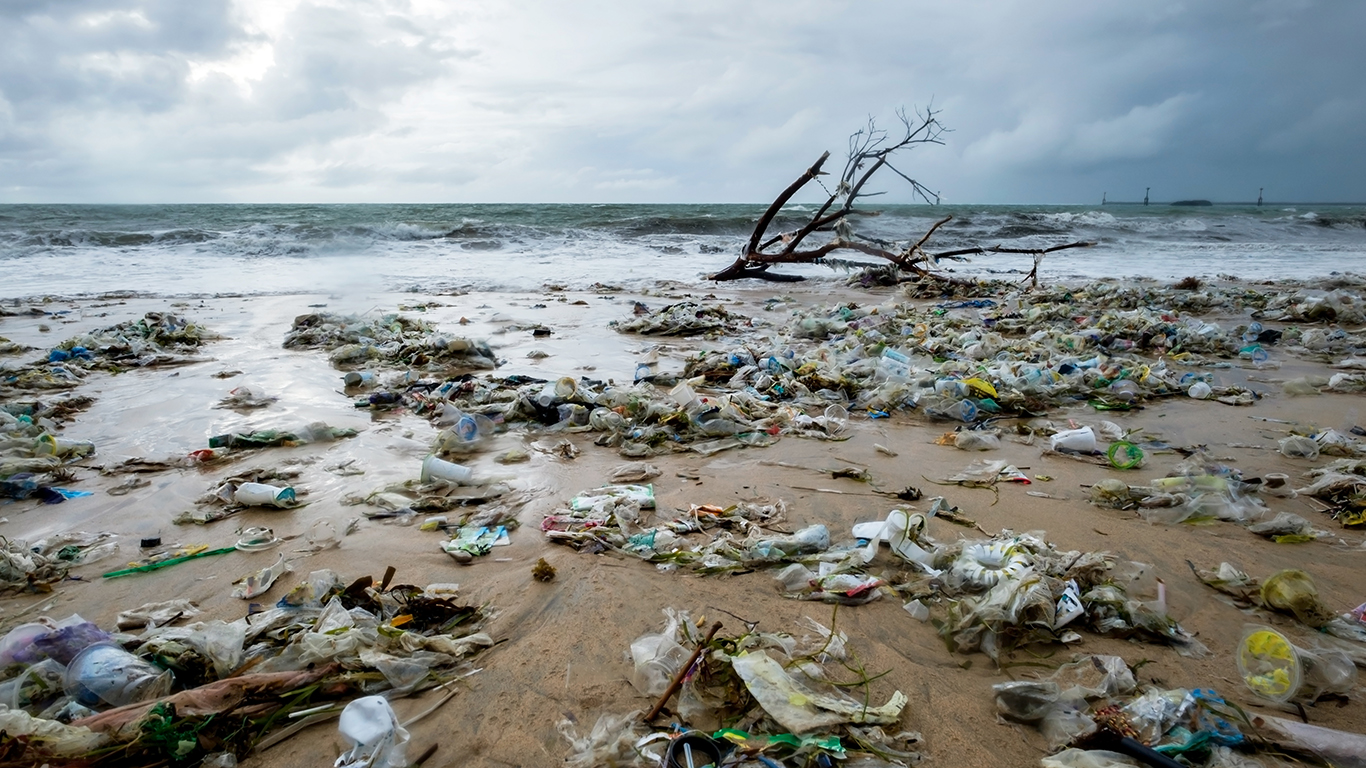
The world’s oceans are particularly hard hit:
Initial findings indicate that the presence of hundreds of millions of tonnes of plastics (of which estimates suggest that packaging represents the majority) in the ocean, whether as microscopic particles or surviving in a recognizable form for hundreds of years, will have profoundly negative effects on marine ecosystems and the economic activities that depend on them.
It gets worse too:
Each year, at least 8 million tonnes of plastics leak into the ocean – which is equivalent to dumping the contents of one garbage truck into the ocean every minute. If no action is taken, this is expected to increase to two per minute by 2030 and four per minute by 2050. Estimates suggest that plastic packaging represents the major share of this leakage. The best research currently available estimates that there are over 150 million tonnes of plastics in the ocean today. In a business-as-usual scenario, the ocean is expected to contain 1 tonne of plastic for every 3 tonnes of fish by 2025, and by 2050, more plastics than fish (by weight).
While plastics themselves are trouble enough, 90% of produced plastic are made from virgin fossil fuel feedstocks, amounting to about 6% of current world annual average oil production. At this rate, by 2050 20% of all oil consumed will be used to make plastics and 15% of the world’s annual carbon budget will be attributable to plastics.
The WEF report goes on:
In future, these costs will have to be covered. In overcoming these drawbacks, an opportunity beckons: enhancing system effectiveness to achieve better economic and environmental outcomes while continuing to harness the many benefits of plastic packaging.
The WEF report is titled The New Plastics Economy: Rethinking the Future of Plastics.










 Top Gaining Stocks
 Top Losing Stocks