Temperature in India Reaches 114 Degrees

Photo of Douglas A. McIntyre
By Douglas A. McIntyre Updated Published
This post may contain links from our sponsors and affiliates, and Flywheel Publishing may receive compensation for actions taken through them.
Temperature in India Reaches 114 Degrees

© Thinkstock

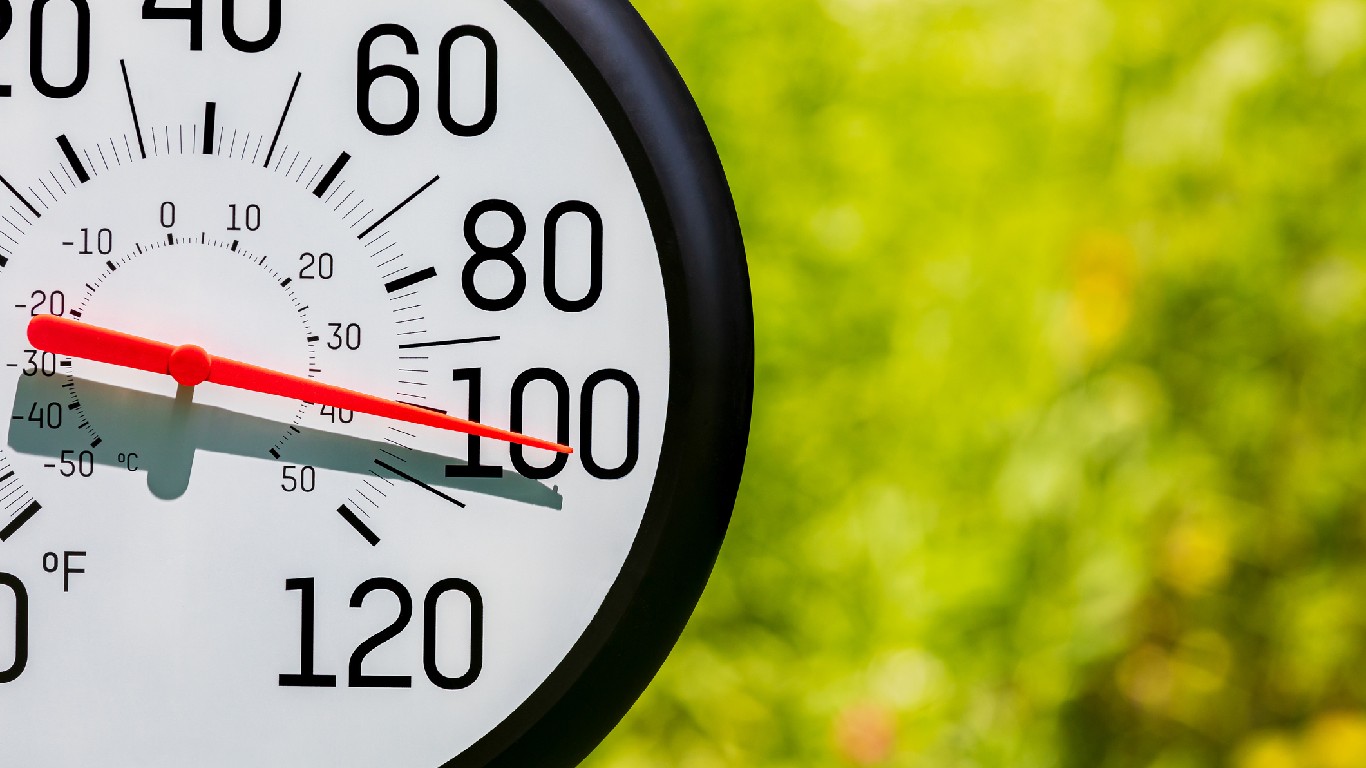
NASA reported that April was the seventh month in a row when global temperatures broke all-time records. The problem is particularly acute in some of the hottest areas in the world. The temperate reached 114 degrees Fahrenheit (45.5 Celsius) in Bhubaneswar, India, and essentially shut down the city. Almost certainly this will become an ever greater threat in cities where temperatures often run over 100 during certain periods of the year.

According to the Times of India, the problem was not isolated to the city, but covered a larger area of the world’s second most populous country:

Other places recording high temperatures during the day include Chandbali (44.4 degree), Talcher (43.8 degree), Sundergarh (43.5 degree), Jharsuguda (43.4 degree), Bolangir (43.2 degree), Cuttack and Baripada (42.5 degree each), Malkangiri (42.4 degree) and Sambalpur (42.3 degree).

The precautions of shuttering businesses and schools are not unlike those taken when cities face record high levels of air pollution.

According to the WHO, half of the world’s cities with the worst air pollution are in India. This presses lung disease higher in these cities and erodes their ability to be commerce centers and improve worker efficiency.
[nativounit]
As CDC researchers have pointed out, the dangers of heat on humans is almost immediate under extreme circumstances:

Extreme heat events can trigger a variety of heat stress conditions, such as heat stroke. Heat stroke is the most serious heat-related disorder. It occurs when the body becomes unable to control its temperature. Body temperature rises rapidly, the sweating mechanism fails, and the body cannot cool down. This condition can cause death or permanent disability if emergency treatment is not given. Small children, the elderly, and certain other groups including people with chronic diseases, low-income populations, and outdoor workers have higher risk for heat-related illness.

The problem is worst in India, but it is a signal of things to come in other countries with high temperatures, particularly as the global heat figures increase every month.

Photo of Douglas A. McIntyre
About the Author Douglas A. McIntyre →

Douglas A. McIntyre is the co-founder, chief executive officer and editor in chief of 24/7 Wall St. and 24/7 Tempo. He has held these jobs since 2006.

McIntyre has written thousands of articles for 24/7 Wall St. He is an expert on corporate finance, the automotive industry, media companies and international finance. He has edited articles on national demographics, sports, personal income and travel.

His work has been quoted or mentioned in The New York Times, The Wall Street Journal, Los Angeles Times, The Washington Post, NBC News, Time, The New Yorker, HuffPost USA Today, Business Insider, Yahoo, AOL, MarketWatch, The Atlantic, Bloomberg, New York Post, Chicago Tribune, Forbes, The Guardian and many other major publications. McIntyre has been a guest on CNBC, the BBC and television and radio stations across the country.

A magna cum laude graduate of Harvard College, McIntyre also was president of The Harvard Advocate. Founded in 1866, the Advocate is the oldest college publication in the United States.

TheStreet.com, Comps.com and Edgar Online are some of the public companies for which McIntyre served on the board of directors. He was a Vicinity Corporation board member when the company was sold to Microsoft in 2002. He served on the audit committees of some of these companies.

McIntyre has been the CEO of FutureSource, a provider of trading terminals and news to commodities and futures traders. He was president of Switchboard, the online phone directory company. He served as chairman and CEO of On2 Technologies, the video compression company that provided video compression software for Adobe’s Flash. Google bought On2 in 2009.

Featured Reads

Our top personal finance-related articles today. Your wallet will thank you later.

Continue Reading

Top Gaining Stocks

CBOE Vol: 1,568,143
PSKY Vol: 12,285,993
STX Vol: 7,378,346
ORCL Vol: 26,317,675
DDOG Vol: 6,247,779

Top Losing Stocks

LKQ
LKQ Vol: 4,367,433
CLX Vol: 13,260,523
SYK Vol: 4,519,455
MHK Vol: 1,859,865
AMGN Vol: 3,818,618