



[cnxvideo id=”507732″ placement=”ros”]The bull market has not helped the value of college and university endowments. They fell 1.9% in the fiscal year that ended one June 30, 2016. Endowments did little better in 2015, up 2.4%, a trend that means that as the Dow Jones Industrial Average rose 30%, college funds, known as higher education endowments, barely broke even.
The 2016 NACUBO-Commonfund Study of Endowments reported that the two-year performance of college funds posted the worst results since the recession year of 2008 to 2009. The trouble occurred during a period when colleges continued to increase spending, eating into these stagnant pools of money.
That same study of endowments showed that college spending rose at 74% of its members. The median increase for fiscal year 2016 was 8.1%. Much of this was for student aid. NACUBO President and Chief Executive Officer John D. Walda commented:
In spite of lower returns, colleges and universities continue to raise their endowment spending dollars to fund student financial aid, research, and other vital programs.
The question is whether that level of spending is sustainable, or are some of the underpinnings of a strong education system at risk for erosion.
[nativounit]
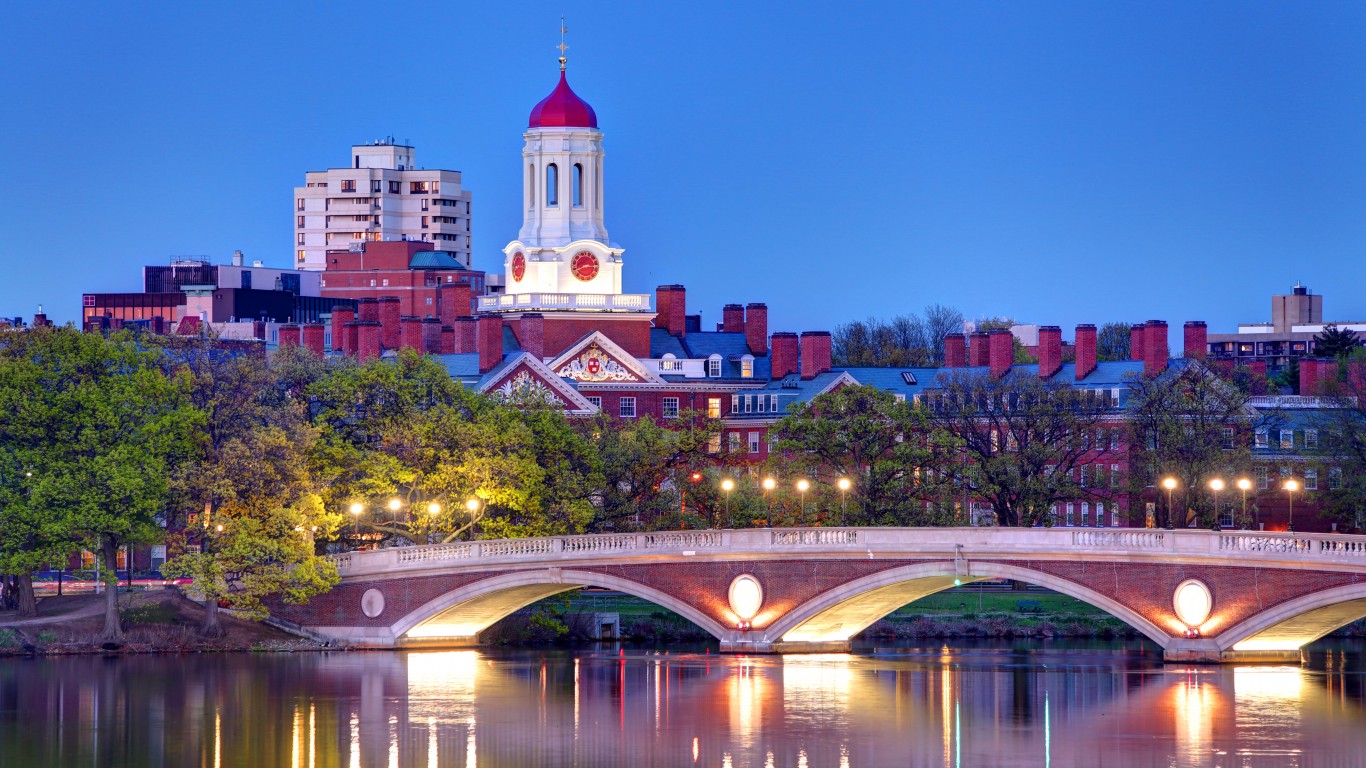
There is no better sign of the endowment problem that what happened at Harvard, which has the largest fund, valued at $35.7 billion at the end of fiscal year 2016. That was down from $37.6 billion at the end of 2015. The former head of the Harvard Management Company, Robert A. Ettl, said the poor performance had been triggered by a “low interest rate environment and market volatility of the past fiscal year.”
Harvard Management Company recently fired half of its staff. New CEO N. P. Narvekar announced that much of the management of the university’s fund will be turned over to outside money managers. He acknowledged that Harvard’s long-term practice of endowment self-management essentially had ended:
Major change is never easy and will require an extended period of time to bear fruit. Transitioning away from practices that have been ingrained in HMC’s culture for decades will no doubt be challenging at times.
If fiscal year 2017 performance among college and universities does not change, Harvard’s decision to change course may spread.
[wallst_email_signup]







 Top Gaining Stocks
 Top Losing Stocks