


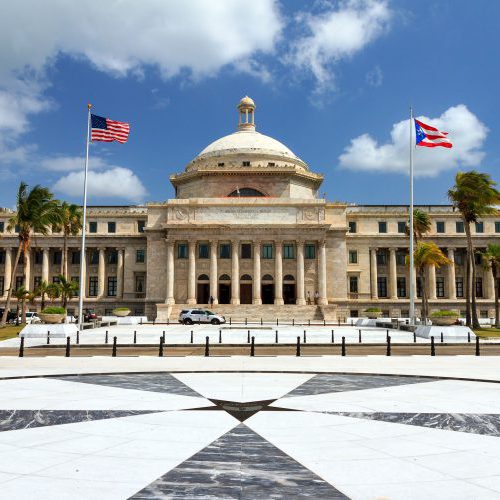
The road back for Puerto Rico is going to be difficult in the aftermath of hurricanes Irma and Maria. Some estimates are putting the cost of the damage above the $7 billion it took for the island to recover from Hurricane Georges in 1998.
Even before the tempests hit, the island was dealing with a severe debt crisis and a prolonged outmigration of its population.
Puerto Rico has a population of about 3.4 million, and its capital, San Juan, is home to 2.5 million people. The nation has lost about 8.4% of population since 2010, as the economy has worsened. There are 1,088.2 people per square mile on the island, which has 3,423 square miles. More than 93% of the population lives in urban areas.
Almost 76% of Puerto Rico’s population identifies as white, while 12.4% identifies as black or African American. Ninety-nine percent of the population identifies as Hispanic or Latino.
[nativounit]
The median age of the population as of 2010 data from the CIA World Fact Book was 39.5 years and the average life expectancy was 79.4 years.
Seventy-three percent of all households are family households, with 42% headed by a male householder. Almost 30% of all Puerto Rican households have someone 65 years old or older. Speaking of those over 65, their share of the Puerto Rican population is climbing. In 2010, those over 65 were 14.5% of the island’s population. In 2016, they were 18.9%, an indication that younger people are leaving the island for other places, most notably the United States mainland, for what they believe are better opportunities.
The owner-occupied housing unit rate is almost 69%, and the median value for a home was $120,500 for the four-year period ending 2015. There are 2.85 people per household.
Seventy-three percent of Puerto Ricans graduate high school, and about 24% have a bachelor’s degree.
The median household income is $19,350, and about 43.5% of Puerto Ricans live in poverty.
There are just over a million Puerto Ricans in the labor force, with nearly one-fifth, or 218,100, employed by the government. Transportation, trade and utilities is the second-largest sector. Unemployment soared to 16% in 2011, though it has tumbled to 10.1% through August.
The country’s gross domestic product is estimated at $131 billion.
Puerto Rico’s association with the United States began after the Spanish-American War, when it was ceded to the United States after Spain lost the war in 1898.
Puerto Ricans became U.S. citizens in 1917. The commonwealth has held plebiscites to change its status, and among the options has been to vote for statehood. However, the current political status has prevailed. Residents of Puerto Rico do not vote for the U.S. president, however, they may vote in Democratic and Republican party presidential primary elections. The island is overseen by a governor who is directly elected by majority of the popular vote for a four-year term. Ricardo Rossello is the island’s governor.
Fueled by a favorable corporate tax structure that lured pharmaceuticals and other businesses to the island, as well as a booming tourist industry, Puerto Rico had one of the most robust economies in the region. But the tax preferences were fully repealed in 2006, and Puerto Rico has been mired in an extended recession.
Puerto Rico’s government owes $74 billion to bondholders, and another $50 billion in pension obligations to teachers and other government employees. In May, it filed for the largest municipal bankruptcy in U.S. history.
[wallst_email_signup]






 Top Gaining Stocks
 Top Losing Stocks