


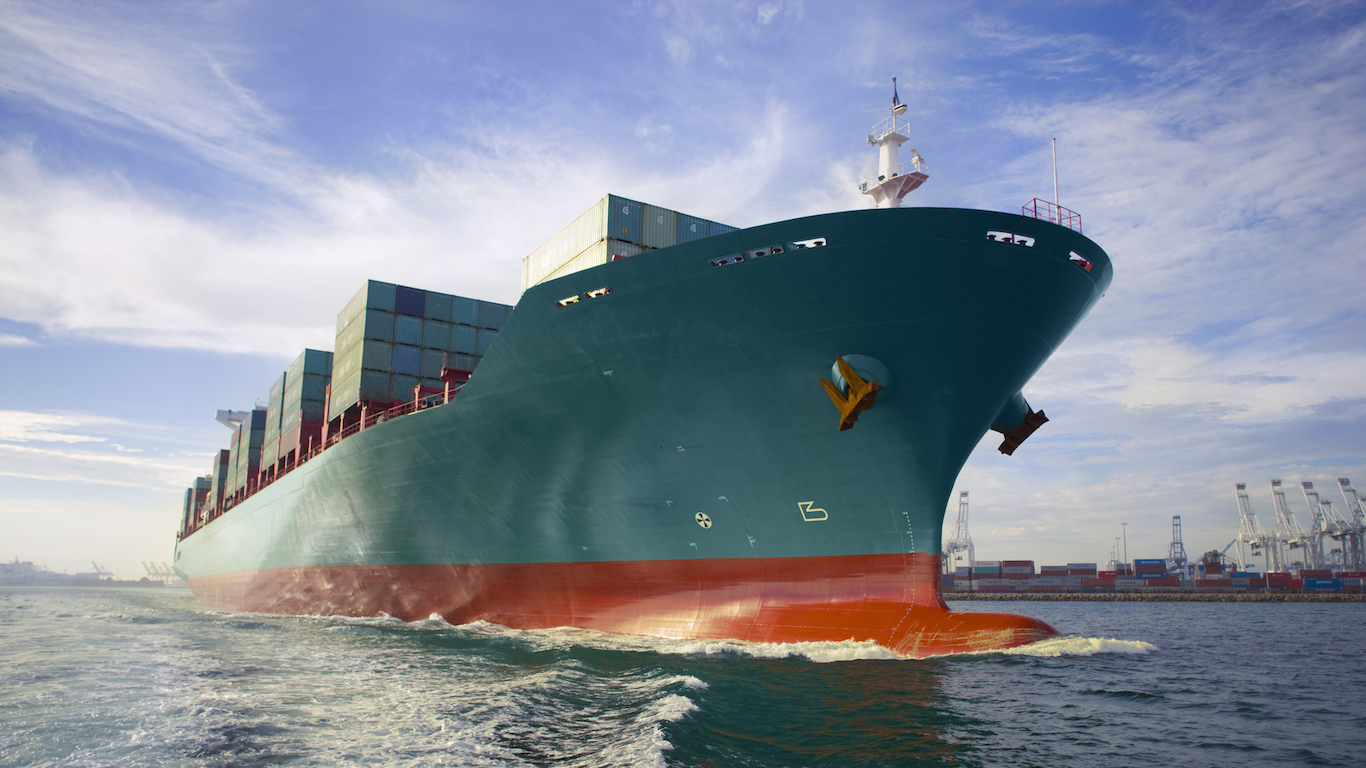
It has probably been the most discussed economic and political story of 2018, and it is one that probably will stay front and center for some time. After years of huge trade imbalances with our global trading partners, and years of unbalanced tariffs on many of our manufactured goods, President Trump has put in massive tariffs on foreign products destined for the United States, and with good reason.
In 2017 the U.S. trade deficit in goods and services grew 12% to a stunning $566 billion, its widest mark since 2008. That included a staggering goods deficit with China that hit a record $375.2 billion. Many economists will point to the fact that the U.S. economy is booming, and that is why the numbers are so elevated. The bottom line is that the United States has the world’s largest trade deficit, and it has been that way since 1975.
How long and how deep the trade war between the United States and its trading partners goes is anybody’s guess. The fact of the matter is despite all the hyperbolic rhetoric, in many cases, the tariffs placed on U.S. goods and services abroad are much higher than what is placed on goods and services coming into the country, and until that changes, you can expect the president to stand his ground.
[nativounit]
Based on data that tracks the percentage of manufacturing concentration in each state in the United States, here are the 10 states that are most exposed to the effects of a trade war, from the highest to the lowest percentage:
- Indiana: 28.6%
- Oregon: 20.1%
- Louisiana: 20.0%
- North Carolina: 19.3%
- Michigan: 19.2%
- Iowa: 18.8%
- Kentucky: 18.7%
- Wisconsin: 18.3%
- Alabama: 17.4%
- South Carolina: 17.1%
Now despite these numbers, the fact of the matter is that in many cases U.S. corporations have moved their manufacturing offshore because of the punitive tariffs charged abroad for the products they make and sell, and already some companies have said they are reopening, or planning on building facilities here. United States Steel Corp. (NYSE: X) said recently that it is preparing to restart its steelmaking facilities and one blast furnace at an Illinois plant as a result of the president’s promise to levy tariffs on foreign steel. U.S. Steel president and CEO David Burritt praised the president’s “strong leadership” on the tariff proposal and said recently, “Our Granite City Works facility and employees, as well as the surrounding community, have suffered too long from the unending waves of unfairly traded steel products that have flooded U.S. markets.” He added that the “action announced by President Trump recognizes the significant threat steel imports pose to our national and economic security.”
Despite the howls from many in the financial media, some of whom claim that the tariffs could start a new depression, citing the depression of the 1930s and the trade actions that preceded it, most of the president’s actions appear to be concentrated on getting our trading partners to the bargaining table to help level the playing field.
[recirclink id=475432]
The reality is the president’s actions might be working. In late June, it was reported that Germany’s leading automakers had thrown their support behind the abolition of all import tariffs for cars between the European Union and the United States in an effort to find a peaceful solution to a potential trade war. And well they should, as the United States is a top market for their automobiles.
What ultimately happens still remains to be seen, but one thing is for sure. The long-time practice of punitive tariffs and huge trade imbalances may be coming to an end. And while the United States may never have an overall global trade surplus, bringing down the current huge deficits and lowering the barriers to foreign markets will be yet another positive for what currently is a roaring economy.
[wallst_email_signup]










 Top Gaining Stocks
 Top Losing Stocks