


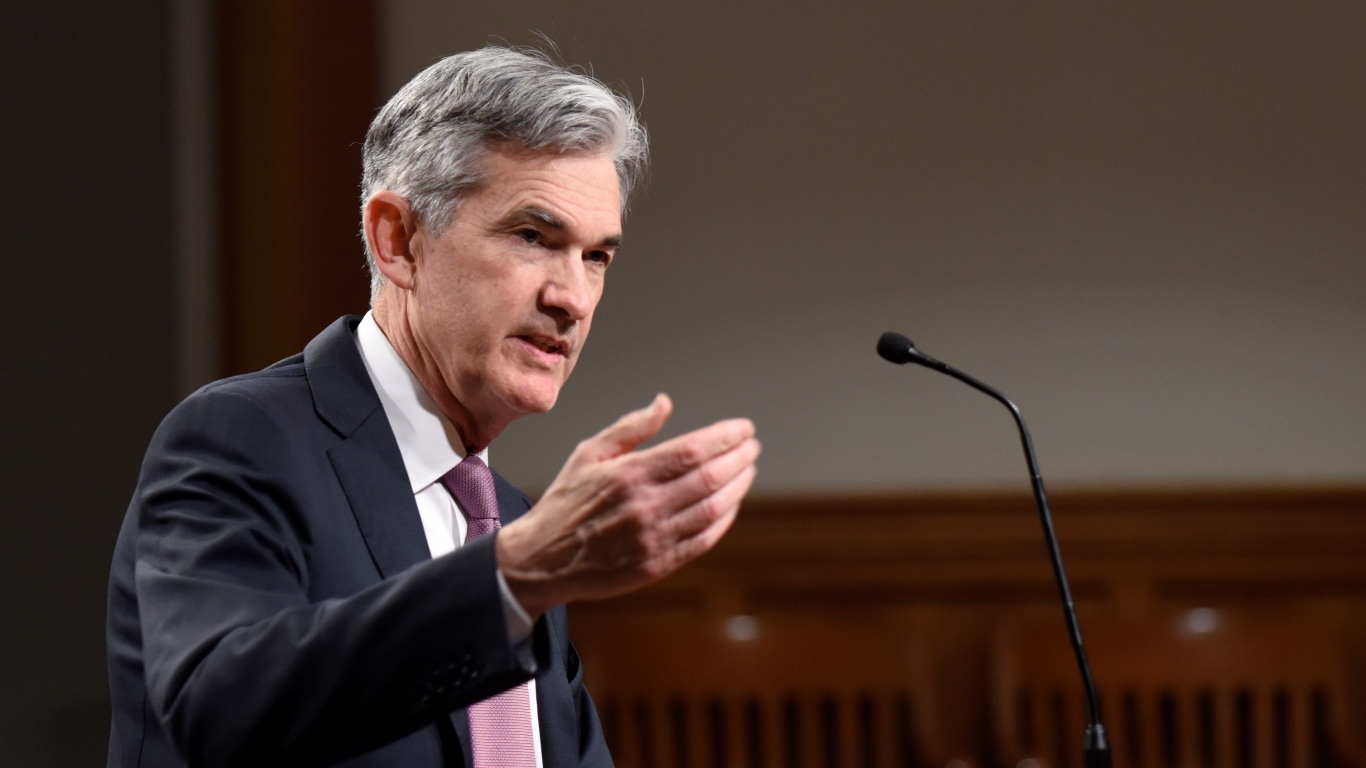
In the Federal Reserve’s endless quest to raise interest rates in the past two years, one of the big concerns with a strong economy and with better wage growth was that inflation might get out of hand from a 2.0% to 2.5% target. More recent data, aided by lower energy costs and a softening economy, has pointed to inflation being quite well contained.
The U.S. Department of Labor has released its reading on the Consumer Price Index (CPI) for January, showing that monthly price gains were flat at 0.0% on the headline “all items” CPI. The index for all items, less food and energy, or the core CPI, rose by 0.2% in January. Dow Jones (WSJ) had indicated that the consensus estimates were for a gain of 0.2% on each reading.
The year-over-year reading is the real measurement of annualized inflation. Prices were up just 1.6% from January of 2018 on the all-items reading. The all-items index for the annual January reading actually was the smallest increase since the period ending June 2017. The core reading, after backing out food and energy prices, was up by 2.2% and that was the same reading that had been seen in the prior two months.
[nativounit]
Wednesday’s Bureau of Labor Statistics report said that the energy component is having a drag on inflation:
The energy index declined for the third consecutive month, offsetting increases in the indexes for all items less food and energy and for food. All the major energy component indexes declined in January, with the gasoline index falling 5.5 percent. The food index increased 0.2 percent, with the index for food at home rising 0.1 percent and the food away from home index increasing 0.3 percent.
Other index readings were seen as follows on the monthly changes:
- The indexes for rent and owners’ equivalent rent both rose 0.3%, and the index for lodging away from home rose 0.5%.
- The apparel index rose 1.1% in January, its largest increase since February 2018.
- The medical care index rose 0.2% in January, with its component indexes mixed.
- The recreation index continued to rise, increasing 0.3% in January, as did the indexes for household furnishings and operations and for education.
- The index for airline fares continued to fall in January, declining 0.9%.
All in all, the Federal Reserve will still be watching inflation ahead, but the current trends have been that inflation is within check.
[recirclink id=527115]
[wallst_email_signup]










 Top Gaining Stocks
 Top Losing Stocks