


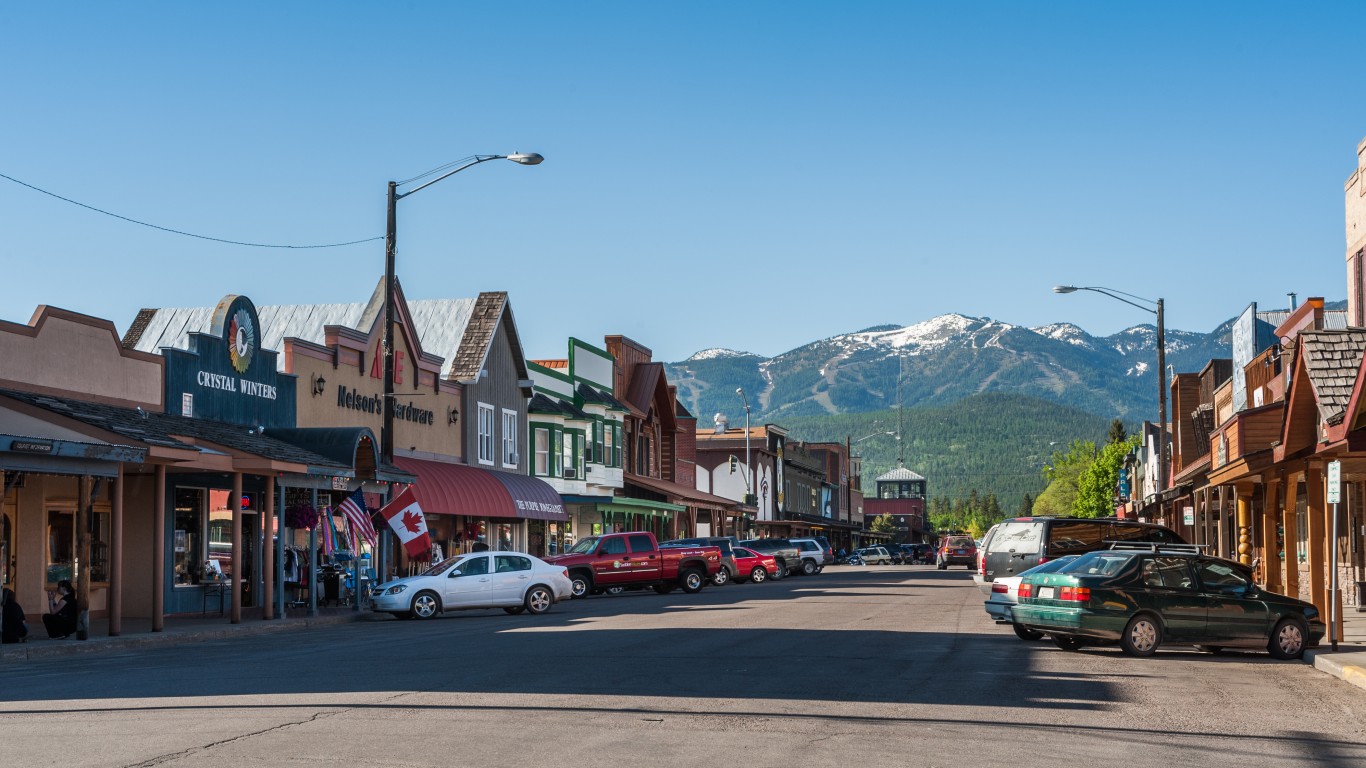
Since the COVID-19 outbreak struck the United States with full force in March, small businesses have been among the hardest hit economically by the pandemic. In mid-July, the National Restaurant Association estimated that nearly 100,000 restaurants (about one in six of all U.S. restaurants) had closed in just the prior two weeks. Up to 3 million restaurant workers were out of work.
While restaurants may be among the businesses struggling the most, small businesses of all kinds are also suffering. According to the latest report from the National Federation of Independent Businesses, small business earnings improved by seven percentage points in August. Now, just 25% instead of 32% are making lower profits than they were a year ago.
The U.S. Chamber of Commerce (USCC), on Tuesday, reported the results of a new poll indicating that nearly 80% of small business owners rate the U.S. economy as either “average,” “somewhat poor” or “very poor.” That’s up eight percentage points from a poll taken in July and double the percentage of the January 2020 rating of the country’s economy.
According to the USCC, 55% of small business owners now believe it will take six to 12 months for the economy to recover. In April, at the depth of the economic slump, 46% believed the same thing.
[nativounit]
Part of the gloom on Main Street has to do with changing consumer habits. More Americans are shopping online than ever before, and the primary reason for that is to protect themselves, their families and their communities from spreading COVID-19. A recent survey from credit card giant Visa reported that 49% of consumers now buy online whenever they can.
The Visa study also noted that only about a quarter of shoppers will support local businesses whenever they can. The rest will shop online or in person at retailers Amazon, Walmart and Target.
Small business owners may not be participating in the transition to online sales because they are worried about issues that, Visa says, are “more commonly associated with big businesses.” These concerns include data privacy and security (32%), less personal connection with customers (31%) and cost of digital infrastructure (28%).
Allaying two of those concerns involving spending relatively serious amounts of cash. But, Visa’s survey indicated, continuing the personal connection between business owners and customers can get a boost if customers feel safe when they visit a brick-and-mortar store.
Visa, which obviously has a horse in the race, noted that if price, selection and location were equal, “nearly two-thirds (63%) of consumers would switch to a new store that installed contactless payment options.” Nearly half (48%) of consumers say they will not shop at a store that does not offer options like self-swipe or tap to pay.
Handing over cash and receiving change or giving a card to a cashier are non-starters. Some 62% of shoppers now pay with cash less often and about 12% have stopped using cash altogether. Younger consumers also are less likely to use cash than older ones. While 56% of boomers are less likely to use cash, 64% of millennials and 66% of GenXers are less likely to pay in cash.
[recirclink id=768709][wallst_email_signup]








 Top Gaining Stocks
 Top Losing Stocks