


Russia’s attack on Ukraine reminds the world how interconnected national economies are. Many nations have sanctioned Russia, which relies on imports of technology and energy partnerships. As nations cut these ties, the Russian economy has begun to shift toward ruin. Threats to Russia’s huge oil and gas exports, at the same time, have sent energy prices soaring.
On a smaller scale, U.S. trade restrictions against China started during the Trump administration have hurt the nation’s electronics exports. And Brexit has hurt the United Kingdom’s trade relationship with European Union countries.
Virtually none of the world’s 193 United Nations member states, or other countries, territories and dependencies, are fully self-reliant, meaning they produce everything their populations need within their own borders.
To find the most self-sufficient country in the world, 24/7 Wall St. used World Bank data to rank countries by the total value of imports as a percentage of gross domestic product. Data includes imports and exports as a percentage of GDP and in current U.S. dollars. GDP is also in current U.S. dollars, and annual growth of imports is based on constant local currency that are based on constant 2015 prices then expressed in U.S. dollars. All data is from the World Bank for the most recent year available.
[nativounit]
Imports include all goods and services imported to a country, including agricultural products, commodities, merchandise, freight services, banking, royalties, licensing fees and other valuables.
The countries we considered import goods and services valued at 21% or less of their GDP. However, exports vary widely, with some countries dealing with large trade deficits (more imports than exports). While some of these are economically prosperous and the low level of imports implies self-sufficiency, others are low-income countries.
Sudan, for example, a country still precariously recovering from decades of civil war, is almost completely self-reliant. Its total trade activity with the rest of the world made up less than 1% of its GDP in 2020. Many of the country’s residents are engaged in subsistence farming.
Conversely, wealthy, highly developed, economically diverse countries can typically weather trade deficits. For example, the United States, with its $21 trillion economy, is considered among the most self-reliant in the world, even if the value of its imports made up more than 13% of its GDP in 2020, compared to about 10% for its exports that same year.
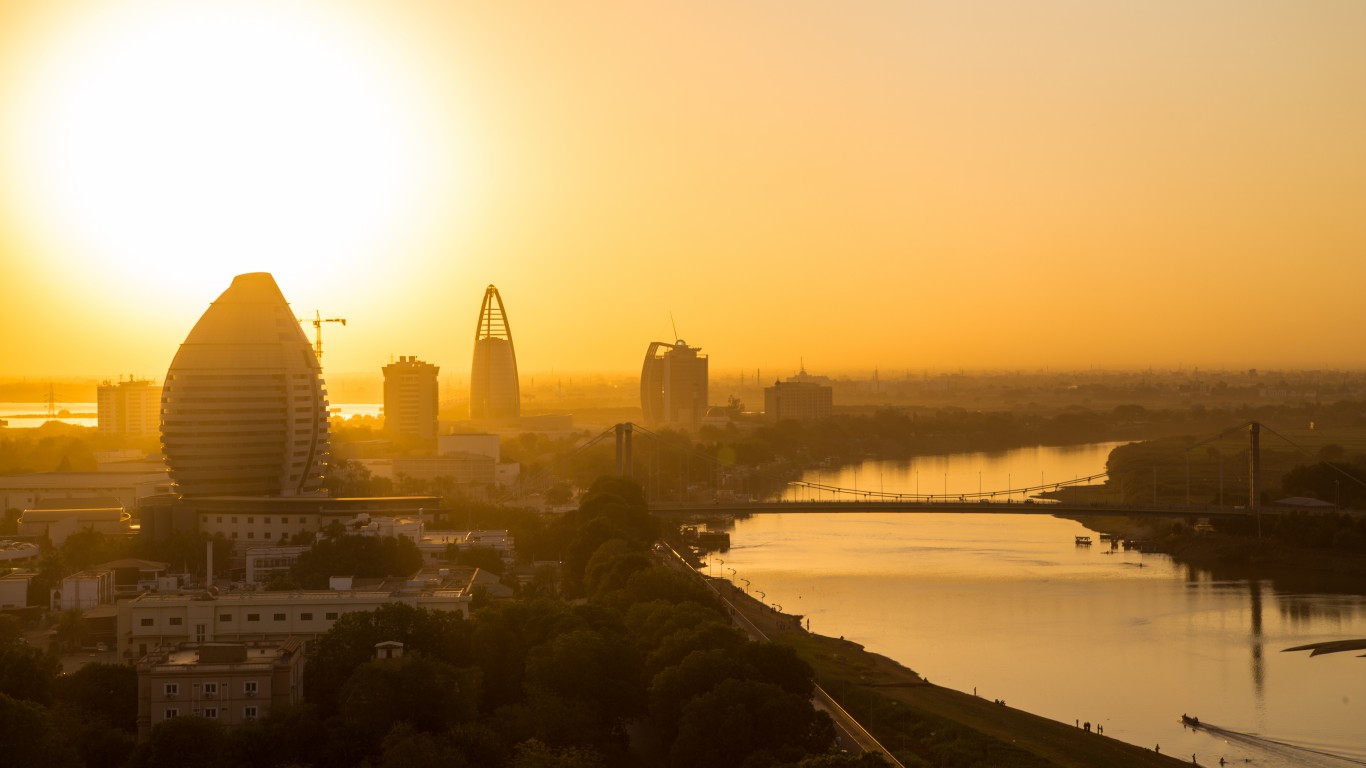
The most self-sufficient economy in the world is Sudan. Here are the details:
- Imports as a percentage of GDP (2020): 0.35%
- Imports in current U.S. dollars (2020): $0.07 billion (lowest of 189 countries)
- Annual imports growth (2020): −3.90% (19th smallest decline of 170 countries)
- Exports as a percentage of GDP (2020): 0.44% (lowest of 190 countries)
- Exports in current U.S. dollars (2020): $0.09 billion (sixth lowest of 189 countries)
- GDP in current U.S. dollars (2020): $21.33 billion (80th lowest of 190 countries)
Out of necessity, this country of 44 million is the world’s most self-reliant, with only a sliver of outgoing or incoming trade thanks to years of civil war and social unrest. Sudan’s top exports are livestock, fresh vegetables and stone and glass. Its top export market is the United Arab Emirates, and the top source of imports is China.
Click here to all the most self-sufficient economies in the world.
[wallst_email_signup]








 Top Gaining Stocks
 Top Losing Stocks