


The lines of trade around the world have just become more complex. Sanctions against Russia because of the invasion of Ukraine, have immediately affected the movement of oil, semiconductors, and, to some extent, even money. Russia’s exports of oil have slowed substantially. Its ability to import goods from most of the Western economies, Japan, and South Korea have diminished sharply. The effect on energy prices, particularly in Europe has already begun.
Even huge economies like the U.S. rely on imports, despite the country’s ability to build everything from cars to commercial airplanes. America relies on electronic components for a long list of consumer and business technologies. Some food products, not grown in the U.S. also get imported. The global economy relies tremendously on trade.
The COVID-19 virus has affected trade as well. Many of the nations whose economies have struggled most during the pandemic are heavily dependent on international trade. Some are low-income countries like Somalia, while others may be geographically small but have among the highest global per-capita incomes, like Luxembourg.
[nativounit]
To find the most trade-dependent economy in the world, 24/7 Wall St. ranked countries by imports as percent of gross domestic product, using data from the World Bank. Trade-dependent countries would rely on imports to satisfy their citizens’ needs. Additional data includes imports, exports, and trade as percent of GDP and in current U.S. dollars. GDP is also in current U.S. dollars. All data is from the World Bank for the most recent year available.
Exports and imports of goods and services include merchandise, freight services, communications services, banking, insurance, royalties, licensing fees and other valuables. They do not include so-called factor services, like the cost of employee compensation, investment income, or international money transfers.
Smaller countries lacking in natural and human resources tend to be more reliant on trade due to limitations of their size. Larger countries may be dependent on trade due to their stage of economic development and their struggles in developing industrialization and diversifying and growing their economies enough. Being reliant on trade makes these economies more vulnerable to global trade downturns.
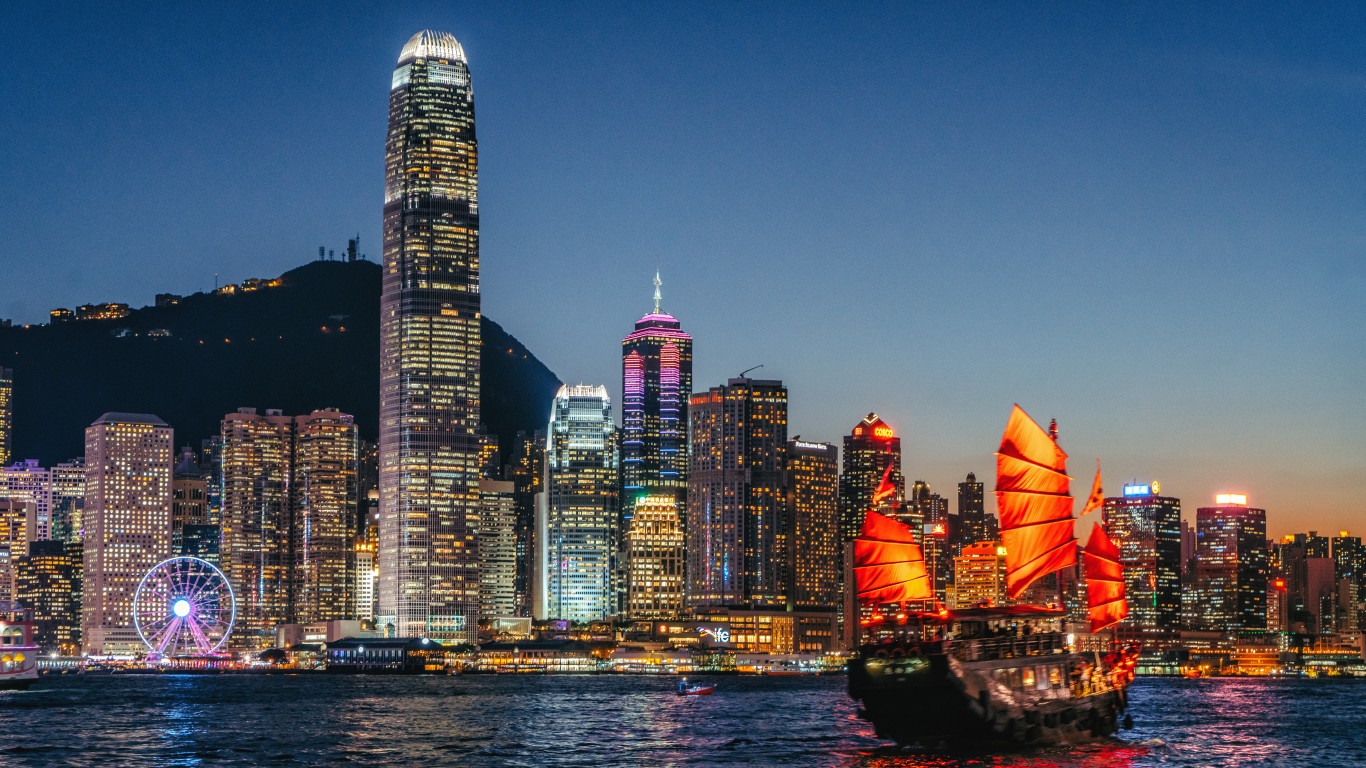
The most import-dependent country in the world is Hong Kong SAR, China. Here are the details:
> Imports as % of GDP, 2020: 174.92%
> Imports in current US$, 2020: $606.25 billion – #8 largest of 189 countries
> Trade as % of GDP, 2020: 351.66% – #2 largest of 190 countries
> Exports as % of GDP, 2020: 176.74% – #2 largest of 190 countries
> Exports in current US$, 2020: $612.57 billion – #8 largest of 189 countries
> GDP in current US$, 2020: $346.59 billion – #35 largest of 190 countries
The special administrative region of China is the world’s most trade-dependent economy. Both of the country’s imports and exports were worth around 175% of its total GDP for a total trade value of 350% of GDP. This means that while the country has the 35th largest economy by GDP, it has the eighth largest imports and exports values, and the second highest total trade value.
The World Bank estimates that almost 70% of Hong Kong exports consisted of machinery and electronics, while its primary imports include machinery and transportation equipment, manufactured consumer goods, and food and live animals.
Click here to read The Most Import-Dependent Economies in the World
[wallst_email_signup]










 Top Gaining Stocks
 Top Losing Stocks