


By David Callaway, Callaway Climate Insights
With oil surging above $110 a barrel and countries such as the U.S., UK and Germany scrounging for more oil and coal after boycotting Russia, it’s hard in the middle of the Ukrainian crisis to see an end to our fossil fuel addiction.
A pair of reports today puts what’s at stake in stark terms. The richest countries, including the U.S., UK, Norway and Canada, must stop producing oil in 12 years — by 2034 — to keep the world from tipping over the threshold of temperatures rising beyond the Paris Accord goal of 1.5°C. and into a climate devastation spiral, according to a report from climate researchers at the University of Manchester.
Others, such as China, Brazil and Mexico, would have another nine years after that, and the world’s poorest countries would be allowed to produce until 2050 to help strengthen their economies for the transition. From here in an energy crisis in 2022, these dates look unlikely at least, and probably impossible.
A second report, more damaging, explains why. Reclaim Finance issued a report/tool called the Oil and Gas Policy Tracker, which revealed that only about half of leading 150 financial institutions worldwide have policies in place to reduce their investments in oil and gas. Those include many who have already made carbon reduction pledges and joined net zero groups, according to the report.
Oil prices won’t stay this high forever. And if the Ukrainian crisis proves anything, it’s that the world needs to transition to renewable energy sooner than later, if only to save itself from the whims of oil-rich dictators like Vladimir Putin. The balance toward renewables will tip again, but now we have a timetable.
More insights below . . . .
Three flashpoints for coming battle on new climate risk rule
. . . . The SEC’s long-awaited rules proposal on how to mandate climate risk reporting and emissions disclosure from public companies was released Monday to much fanfare from supporters and hostility from critics. It almost certainly is headed for a legal challenge in coming months, from either the fossil fuel lobby, big business, or a combination of both. David Callaway looks at the three flashpoints in the proposal that critics will seize on to try to prevent it from passing. The central question will be whether climate risk is also financial risk for companies and investors. . . .
Tuesday’s subscriber insights: East Coast ports in line to profit from offshore wind
. . . . Despite the fact that most East Coast offshore wind projects have gone mostly to overseas companies, there’s still a lot of money to be made by U.S. firms, as shown by the development of ports in the Northeast. Here’s what’s happening. . . .
. . . . One of the hallmarks of President Joe Biden’s climate agenda is the strategy to boost electric car and truck usage across the country by investing in charging stations. And while electric vehicles look good right now with gasoline prices soaring, the adoption has its downside. Including this story from The Independent about a new university study that estimates electric commercial trucking could potentially wipe out up to half million trucker jobs in coming years. . . .
. . . . They’ve got acres of roof spaces and huge parking lots. Both are prime for solar panels that can cut their utility bills and even feed power into the grid. But the Big Box stores aren’t rushing to take advantage. Is anything happening, and if not, why not? And who is the leader so far? Read more here. . . .
. . . . Alongside a predicted rise in EV sales spurred by high fuel prices (and worries about their continued ups and downs), electric bikes are also booming. Part of the jump is not related to fuel prices, but a lot is. Read more here. . . .
. . . . There’s a lot of wasted energy everywhere — oil well flaring, anyone? — but those canny Finns have found a way to corral some of it, by warming homes in the Helsinki area with the heat thrown off by Microsoft data centers. Using underground pipes, Microsoft can transmit the heat to Finnish homes instead of just letting it waste. Something that could grow? All we need are data centers. Read more here. . . .
Editor’s picks: Shipping at risk from climate change; Mercedes Benz EQS comes with a parking valet
Shipping industry, ports at risk of billions in damage and disruption
A new report by RTI International for Environmental Defense Fund (EDF) says that the global shipping and port industry is susceptible to billions of dollars in infrastructure damage and trade disruption from climate change impacts. Act Now or Pay Later: The Costs of Climate Inaction for Ports and Shipping looks at the data for climate-related risks and projects the cost of future damages for the industry. RTI International says “without ambitious action to reduce emissions, climate change impacts could cost the shipping industry up to $25 billion every year by the end of the century.” According to the report, growth in international shipping over the past 25 years, in combination with shipping’s “reliance on heavily polluting fuels, the industry has become a large emitter of greenhouse gasses, currently accounting for roughly 20% of global emissions from transportation. Meanwhile, from sea level rise to increased storm activity to inland flooding, climate change threatens shipping infrastructure and operations.”
Step away from the car and let it park itself
In a demonstration in Los Angeles recently, Mercedes Benz and Bosch showed off the Intelligent Park Pilot technology for the Mercedes EQS all-electric luxury model. Daniel Golson writes for CNET’s Road Show, “No one actually enjoys parking a car in a garage, especially one that has tight corners, small spots and an annoying layout. Mercedes-Benz and Bosch have a solution called Intelligent Park Pilot, a Level 4 automated valet parking system that lets a driver drop their car off at the entrance of a garage so it can park itself.” The system is already operating at the airport in Stuttgart. According to published reports, the technology will expand to other Mercedes models like the EQE, and Bosch said it will eventually work with other models.
Data driven: Wildfires in Texas and Oklahoma
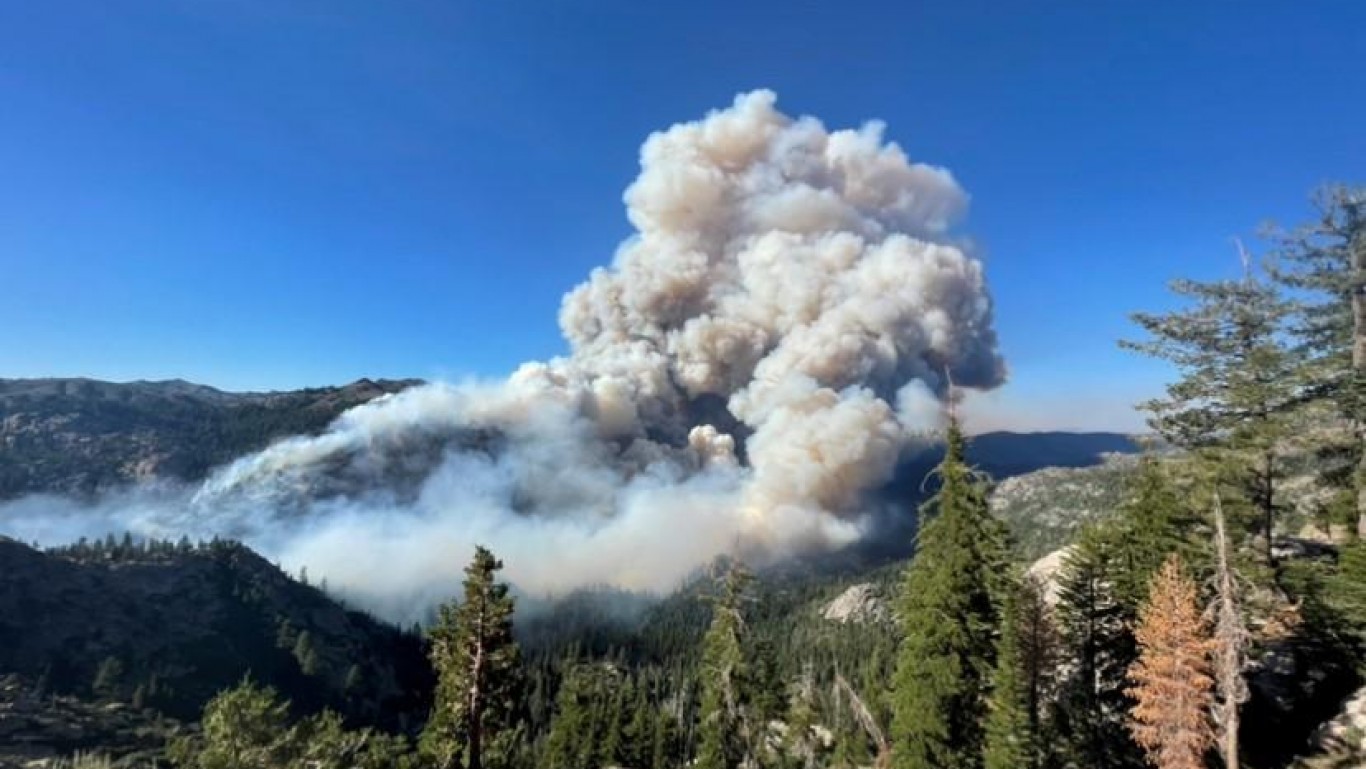
. . . . As many as 180 wildfires have burned about 100,000 acres across Texas in the past week, according to the state’s forest service. The Eastland Complex Fire tearing across the center of the state has killed one person and was composed of at least seven major fires that have combined. A storm system moving through yesterday was expected to bring some relief via much-needed rain, but also strong winds, forecasters said. Texas state officials said on Friday that 50 houses had been destroyed. As of Friday, the national Fire Information for Resource Management System reported 499 new fires across the U.S., with 310 in new fires across the southern region. . .












 Top Gaining Stocks
 Top Losing Stocks