


The high-tech business world has been centered around San Francisco and Seattle, at least are far as most Americans imagine. These metropolitan areas are home to high-tech giants Apple, Alphabet, Microsoft, Amazon and scores of others. Presumably, this is because of the presence of universities that graduate large numbers of people with strong tech backgrounds. These people have stayed close to the areas where they lived as young adults. Steve Jobs was born in San Francisco. Bill Gates was born in Seattle.
Tech companies have started to spread out. Austin has become a major tech center. Many large tech companies have added offices in New York City. Again, many of these areas have strong universities that act as feeders of people with strong tech backgrounds.
To determine the city with the high-tech sector growing the fastest, 24/7 Wall St. reviewed employment data by industry from the Bureau of Labor Statistics (BLS) Quarterly Census of Employment and Wages. Metropolitan statistical areas were ranked by the percentage increase in employment in high-tech industries from 2015 to 2020.
It is important to note that high-tech is more than semiconductors and computers. It extends to chemicals, pharmaceuticals, aerospace products and other industries. Also, our list of candidates makes it clear that the U.S. high-tech industry is not all concentrated in Silicon Valley. There are cities with fast-growing high-tech sectors all across the country. In fact, the top three cities we looked at are not generally regarded as tech centers.
[nativounit]
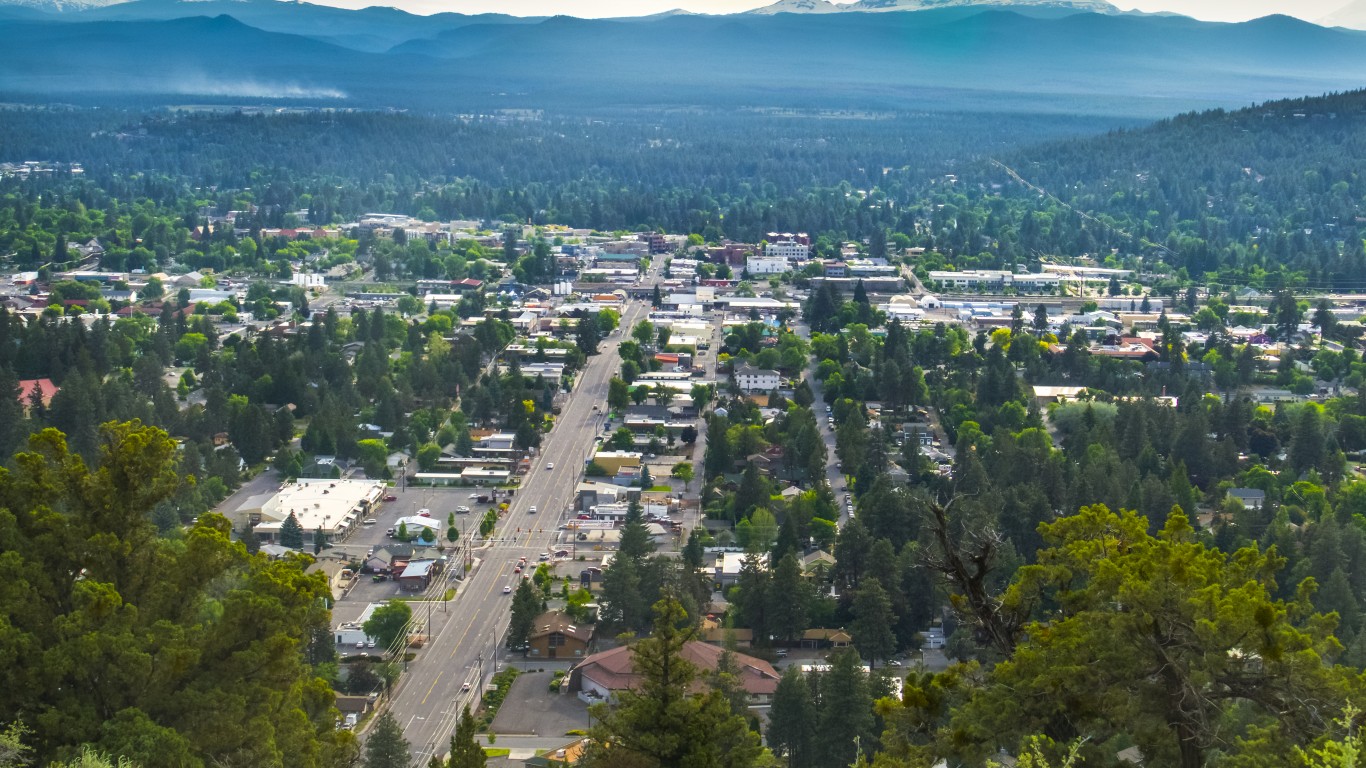
At the top of the list was Bend-Redmond, Oregon. Its fastest growing high-tech industry is management of companies and enterprises, which experienced 237.3% growth between 2015 and 2020. The next two metro areas on the list were both in Florida: Palm Bay-Melbourne-Titusville, with strong growth in software publishing, and Crestview-Fort Walton Beach-Destin, with growth in scientific research and development services.
In fourth place was Austin-Round Rock, Texas. “Silicon Hills” has been a nickname for Austin since the 1990s. The metro area is also home to the University of Texas at Austin, which has more than 50,000 students.
Many of the cities we looked at are home to well-known educational institutions that often underpin their high-tech sectors. These include Durham-Chapel Hill, part of North Carolina’s Research Triangle, and Boston-Cambridge-Newton, home to the Massachusetts Institute of Technology and Harvard.
In determining the city with the high-tech sectors growing the fastest, metropolitan statistical areas were ranked based on the percentage increase in employment industries defined as high-tech by the BLS from 2015 to 2020. The BLS identified high-tech industries in a March 2018 publication titled “High-tech industries: an analysis of employment, wages, and output” as those with a concentration of STEM (science, technology, engineering and mathematics) occupations at least 2.5 times greater than their average concentration nationwide in goods-producing and service-providing industries.
Only metropolitan areas in which high-tech industries constitute at least 5% of the total workforce and where the high-tech industries added at least 1,000 jobs from 2015 to 2020 were considered. Data on average annual pay by detailed industry also came from the Quarterly Census of Employment and Wages. Supplemental data on the percentage of adults 25 years and older with a bachelor’s degree or higher came from the U.S. Census Bureau’s American Community Survey and are five-year estimates for 2020.
High-tech industries include: oil and gas extraction; electric power generation, transmission and distribution; basic chemical manufacturing; pharmaceutical and medicine manufacturing; industrial machinery manufacturing; commercial and service industry machinery manufacturing, including digital camera manufacturing; computer and peripheral equipment manufacturing, excluding digital camera manufacturing; communications equipment manufacturing; audio and video equipment manufacturing; semiconductor and other electronic component manufacturing; navigational, measuring, electromedical and control instruments manufacturing; manufacturing and reproducing magnetic and optical media; electrical equipment manufacturing; aerospace product and parts manufacturing; pipeline transportation; software publishers; wired telecommunications carriers; wireless telecommunications carriers (except satellite); satellite, telecommunications resellers and all other telecommunications; other telecommunications; data processing, hosting and related services; other information services; architectural, engineering and related services; computer systems design and related services; management, scientific and technical consulting services; scientific research and development services; and management of companies and enterprises.
[wallst_email_signup]
Click here to see all the cities with the fastest growing high-tech sectors.









 Top Gaining Stocks
 Top Losing Stocks