


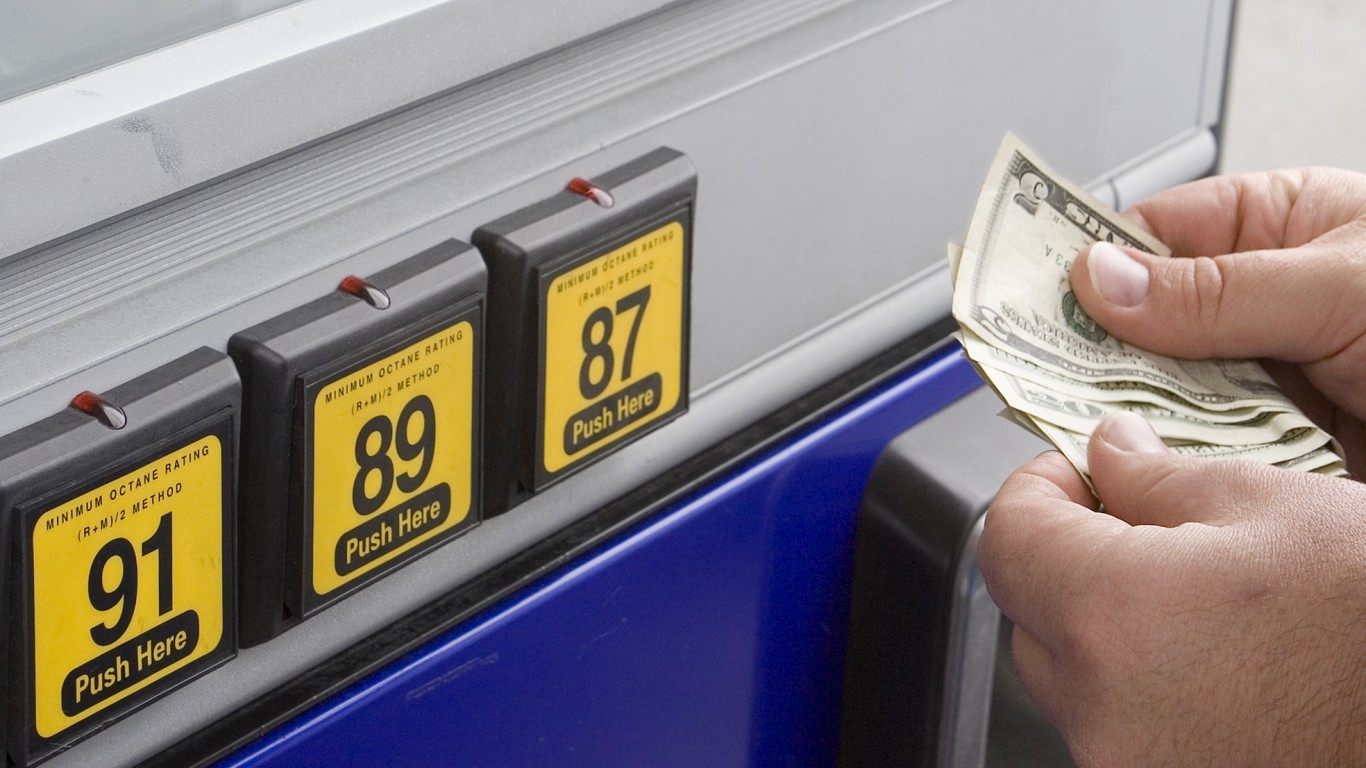
Inflation has bitten American consumers much worse than they could imagine early last year, when it rose about 2% most months. According to recent monthly consumer price index numbers, the cost of most goods and services has risen by over 8% in aggregate. At the center of this increase is the cost of oil and gas. In May, the price of gasoline rose 49.5% compared to last year.
A real-world way to look at gas prices is that, a year ago, the average price of a gallon of regular nationwide was about $3. That number reached a record of $5 a few weeks ago. Oil prices are expected to rise further, particularly if sanctions against the import of Russian crude continue due to the Russian invasion of Ukraine. J.P. Morgan recently forecast that crude could rise to $380 a barrel, although it admitted the odds were slim.
For a family that travels several hundred miles each month, particularly for work and school, the price of gas could increase by $100 or more. Consider that a family that has a household income of $50,000 has a monthly after-tax income of about $3,100. That money has to cover food, housing, clothing, education and other less expensive necessities.
This is not the first time Americans have faced high gas prices. In the 1970s, a sharp uptick in prices caused what The Washington Post called “bedlam.” The increases were particularly high in 1973 and 1979.
[nativounit]
Americans came up with several solutions, although they did not work for everyone. Among these was that people stopped unnecessary driving altogether. They canceled vacations and walked to the store. Another, more radical move is that they bought lighter cars that got better mileage. This downsizing of the American car favored the rise of high-mileage, high-quality cars made in Japan.
[wallst_email_signup]
The rotation of car size and mileage may begin, particularly if gas prices stay high. Large sport utility vehicles, crossovers and pickups favored by Americans today tend to get poor gas mileage. Once again, this trend will favor the Japanese, who have fleets that include smaller cars.
[recirclink id=1135803]
Another option is public transportation. In some cities, like New York, public transportation use has dropped sharply. Some of this has to do with the COVID-19 pandemic. Some have to do with a rise in violence. Only the city can help combat the second of these. Many other cities have large public transportation systems that reach well into the suburbs.
Many Americans do not have to drive. They just want to.







 Top Gaining Stocks
 Top Losing Stocks