



The price of crude oil has risen from $71 at the start of 2024 to above $82. For several reasons, it is likely to move higher. Experts, including those at J.P. Morgan, expect oil to reach $100 this year if the geopolitical problems pushing crude up do not improve.
The Russian decision to cut oil production is among the reasons the investment bank expects a surge in crude. According to Barron’s J.P. Morgan’s Natasha Kaneva wrote, “The shift in Russia’s strategy is surprising. At face value, and assuming no policy, supply, or demand response, Russia’s actions could push Brent oil price to $90 already in April, reach mid-$90 by May and close to $100 in September, keeping pressure on the U.S. administration in the run-up to elections.” However, there are several other reasons.
Russia’s crude production could drop more, even if it is not the government’s decision. Drones from Ukraine have attacked several Russian oil facilities, partially shutting them down. Those attacks may well continue.
In the meantime, oil tankers, which generally go through the Red Sea and Suez Canal, have to be, in many cases, sent south to the Cape of Good Hope on their way to Asia. This can add ten days to two weeks to their journeys. This tightens the oil supply chain and pressures prices. One ship has already been sunk. American military efforts have not stopped the attacks.
The crisis in the Middle East could widen. Israel recently sent rockets into Syria and Lebanon to attack Hezbollah. This puts Israel at risk of retaliation. Military unrest has previously cut the flow of oil to the region.
OPEC+ has kept production cuts made earlier this year, which is another reason oil prices will remain high. According to Reuters, “OPEC+ members led by Saudi Arabia and Russia agreed on Sunday to extend voluntary oil output cuts of 2.2 million barrels per day into the second quarter, giving extra support to the market amid concerns over global growth and rising output outside the group.”
The only major offset to these production cuts and risks of more drops in production is the US, which produced more oil in December than any country has in any month in history. However, there is no evidence this is enough to keep crude prices down.
Will oil go to $100? The chances are reasonable. Will it go higher than it is today? Almost certainly.
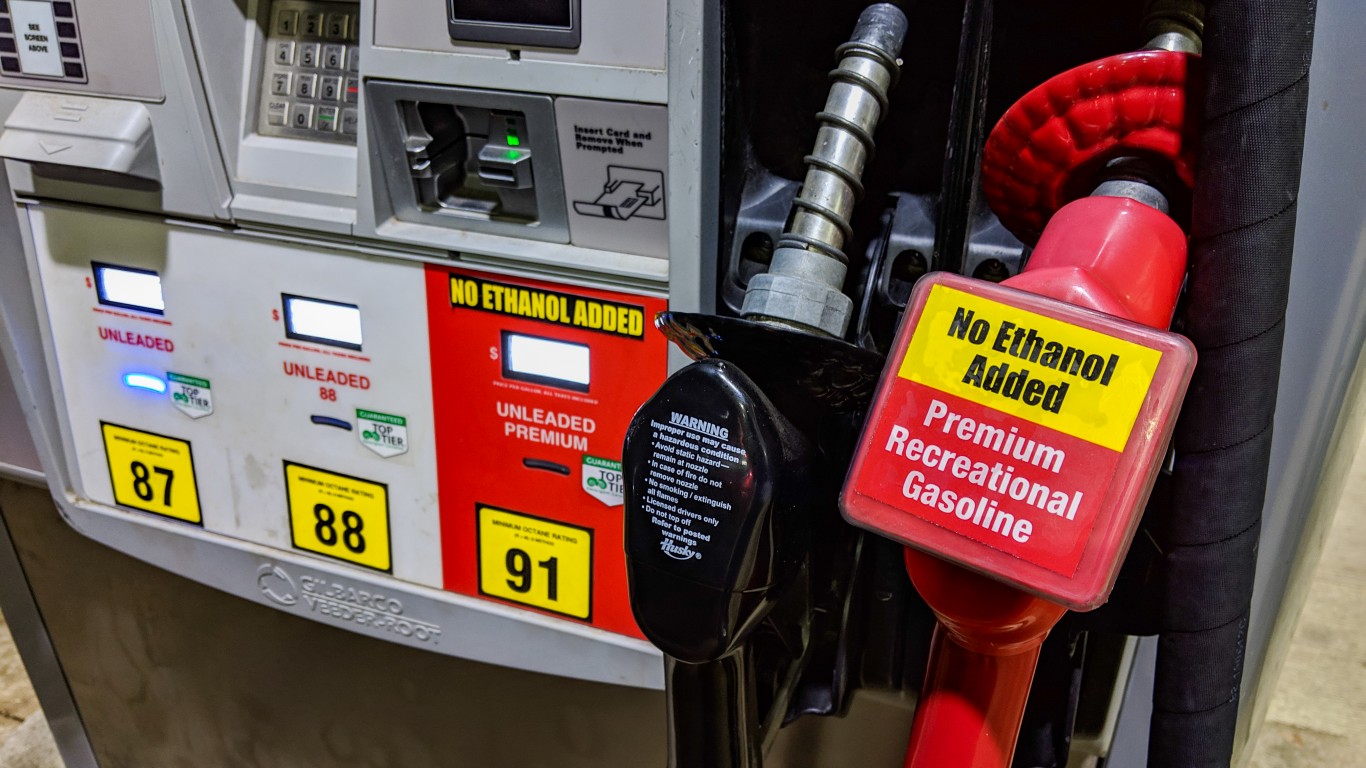
Now, how does $100 crude damage the economy? First is the cost of gasoline. When crude rose above $100 in June 2022 because Russia attacked Ukraine, gas prices rose to $5, a record. At one point recently, however, gas prices fell below $3. This alone threatened to undermine household discretionary income, particularly for middle—and low-income families. Another challenge was the rise in oil prices for heating homes.
The effects are not restricted to US consumers. Oil prices ripple across the commercial economy by affecting everything from trucking costs to airline margins to the costs of petrochemicals used in the industry.
$100 oil is more than a number on a piece of paper.











 Top Gaining Stocks
 Top Losing Stocks