


The confrontation between Russia and the West took a turn for the worse with the downing of a Malaysian airliner on July 17, and that could spell trouble for several major oil companies operating in Russia.
Just one day earlier, U.S. President Barack Obama slapped sanctions on Russia over its ongoing role in the destabilization of Ukraine. The sanctions prohibited American banks from issuing loans with a maturity of over 90 days to four key Russian companies — Rosneft, Novatek, Gazprombank, and VEB.
“Because Russia has failed to meet the basic standards of international conduct, we are acting today to open Russia’s financial services and energy sectors to sanctions,” U.S. Treasury Official David S. Cohen said in a press release describing the agency’s actions.
The sanctions tightened the economic noose on the Russian economy by targeting companies in Russia’s energy sector. Up until now, western sanctions largely targeted individuals in the Russian elite, freezing their assets or issuing bans on American companies from doing business with them. But with oil and gas accounting for over 50 percent of revenues for the Russian state, if Obama wanted sanctions to have any bite, he had to escalate the campaign by going after Russia’s energy sector.
Until the July 16 announcement, the major western oil companies operating in Russia shrugged off their effects. Companies like BP, ExxonMobil, and Royal Dutch Shell defied White House pressure to avoid doing business with Russia.
They made a big bet on the likelihood that their billion-dollar projects would not be affected by the deteriorating relationship between Russia and the West.
But the markets took the latest round of sanctions much more seriously than their previous iterations. Rosneft saw its share price decline by 6.2 percent the day of the announcement, and Novatek was off 11.5 percent.
And western companies were not safe either. BP lost $4.4 billion in its market value on July 17. BP owns a 19.8 percent share of Rosneft, Russia’s state-owned oil company that was singled out by Obama’s sanctions. Nearly one-third of BP’s global oil production — or 1 million barrels per day — comes from its investment in Rosneft.
ExxonMobil also has massive business plans with Rosneft. The two companies are drilling a $300 million well in Siberia, and next month they plan on drilling a $700 million well in the Russian Arctic, the country’s most expensive in history. ExxonMobil and Rosneft have also agreed to jointly develop an LNG export terminal on Russia’s Pacific coast. The Houston-based ExxonMobil has thus far maintained that the projects will be unaffected by sanctions, but that has been thrown into doubt after the U.S. Treasury Department’s latest move.
On July 18, Zacks.com, a market research firm, warned investors against putting their money into companies with exposure to Russia, including ExxonMobil.
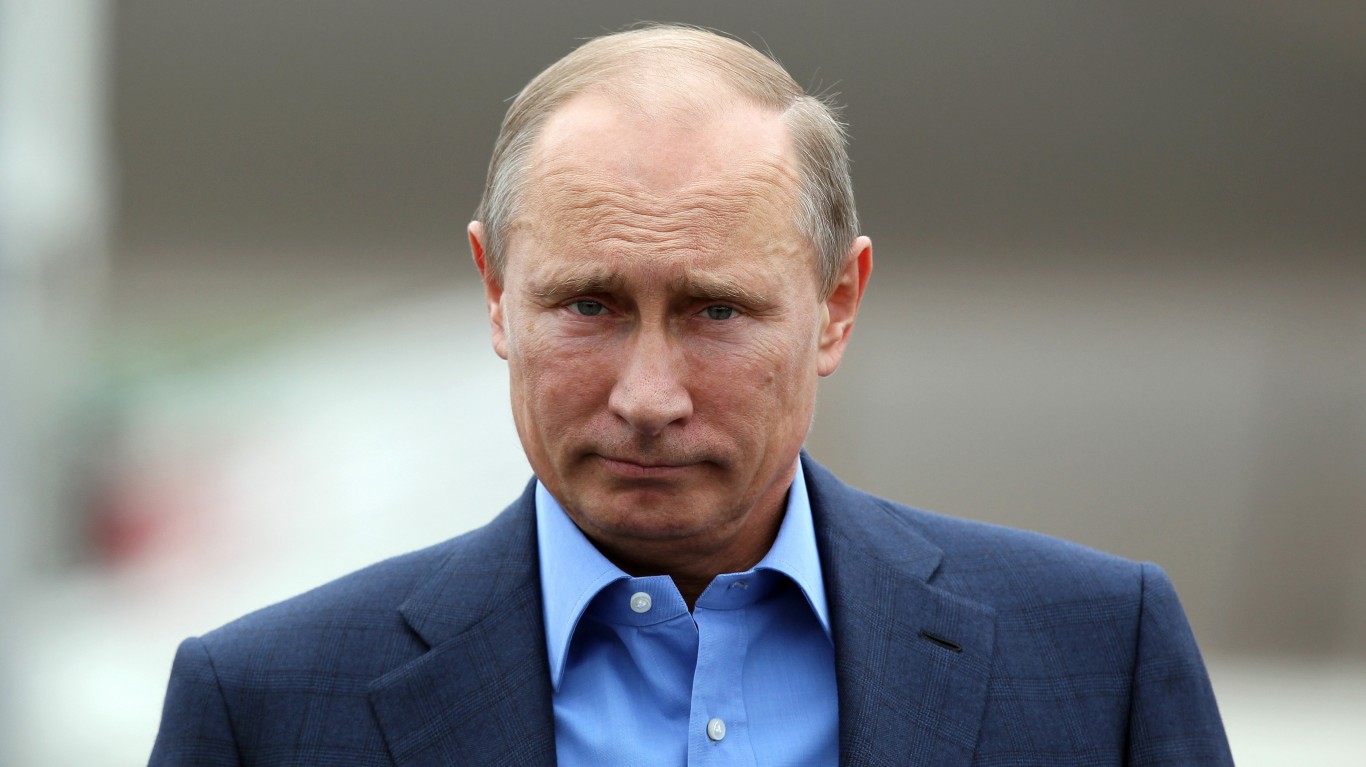
Russian President Vladimir Putin scoffed at the sanctions, saying that they will merely hurt American energy companies. “This means that U.S. companies willing to work in Russia will lose their competitiveness next to other global energy companies,” Putin said. “So, do they not want it to work here? They are causing damage to their major energy companies.”
With financing likely to be increasingly hard to come by for Russia’s major oil and gas companies, several of them are looking east for access to lending. As The New York Times notes, Russian energy companies are becoming more dependent on Chinese finance to pay for their capital-intensive projects. Partly, this is due to China looking for more Russian energy, but it is also because Russia sees the door slowly closing on access to western banks.
The rift between Russia and the West is bound to worsen after in the aftermath of Malaysian Airlines Flight 17 being shot down by a surface-to-air missile in pro-Russian rebel territory. And the cumulative effect of recent sanctions could be minor compared to what may be coming. The U.S. could issue far-reaching sanctions, and the incident could help European Union leaders overcome their hesitation over inflicting damage on the Russian economy.
The international community has called for a full investigation, but right now, all roads appear to be leading to Moscow. Perhaps fearing the fallout from the incident, Putin called for a cease fire in Ukraine.
Swept up in the international crisis are the major oil companies — BP and ExxonMobil — who fear their bottom line taking a big hit from Russia’s growing isolation.






 Top Gaining Stocks
 Top Losing Stocks