As Oil Reaches $111 a Barrel, Are Gas Price Spikes Next?

Photo of Douglas A. McIntyre
By Douglas A. McIntyre Published
This post may contain links from our sponsors and affiliates, and Flywheel Publishing may receive compensation for actions taken through them.

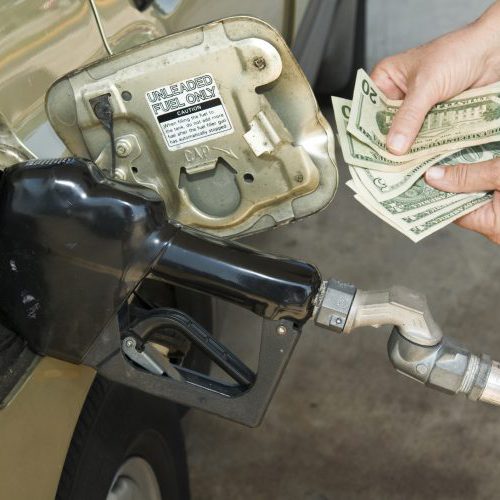
The Syrian crisis drove oil prices to $111 a barrel. The crisis may well be worse if the U.S. strikes government installations there with drones. If Bashar al-Assad’s government reacts with more actions against civilians, the cycle of action and reaction could last for weeks, and perhaps beyond. The question of how oil could press gasoline prices higher, an issue that has been dormant for months, should cause anxiety again.

The price of oil does not pass through to gas prices directly because of the sources of the crude and refinery and transportation costs. However, it does pass through eventually.

Gasoline prices in the United States continue to run well below those of a year ago. The cost of an average gallon of regular nationwide stands at $3.542, compared with $3.75 on the same day in 2012. As some historical evidence the figure could go much higher very quickly, prices have spiked sharply three times in the past two years, and approached $4 in March and April of 2012.

The discussion of a rapid run up in gas prices quickly comes around to U.S. gross domestic product. Economists have not built a consensus model about what a penny increase does to consumer spending, or to the margins of companies that use oil-based fuels or petrochemicals.

The swiftest reaction among public companies is usually from airlines, an industry in which jet fuel prices may determine the difference between profit and loss. Passenger carrier shares have sold off sharply in the past two days, a trend that likely will continue if oil’s advance does.

At the core of the analysis of gas prices and their effect is consumer reaction. Often this analysis is done based on households with four people. The mid-point of the analysis often starts with national median household income ,which is about $51,000 but actually has dropped in real dollars in the past decade. The logic for the damage done by higher gas prices is usually the same. The lower middle class and those closer to the poverty line have to curb discretionary spending, to the extent that they have any discretion at all.

Gasoline prices will go up, and soon. With that, the guessing game on injury to economic growth will be stirred up again.


Photo of Douglas A. McIntyre
About the Author Douglas A. McIntyre →

Douglas A. McIntyre is the co-founder, chief executive officer and editor in chief of 24/7 Wall St. and 24/7 Tempo. He has held these jobs since 2006.

McIntyre has written thousands of articles for 24/7 Wall St. He is an expert on corporate finance, the automotive industry, media companies and international finance. He has edited articles on national demographics, sports, personal income and travel.

His work has been quoted or mentioned in The New York Times, The Wall Street Journal, Los Angeles Times, The Washington Post, NBC News, Time, The New Yorker, HuffPost USA Today, Business Insider, Yahoo, AOL, MarketWatch, The Atlantic, Bloomberg, New York Post, Chicago Tribune, Forbes, The Guardian and many other major publications. McIntyre has been a guest on CNBC, the BBC and television and radio stations across the country.

A magna cum laude graduate of Harvard College, McIntyre also was president of The Harvard Advocate. Founded in 1866, the Advocate is the oldest college publication in the United States.

TheStreet.com, Comps.com and Edgar Online are some of the public companies for which McIntyre served on the board of directors. He was a Vicinity Corporation board member when the company was sold to Microsoft in 2002. He served on the audit committees of some of these companies.

McIntyre has been the CEO of FutureSource, a provider of trading terminals and news to commodities and futures traders. He was president of Switchboard, the online phone directory company. He served as chairman and CEO of On2 Technologies, the video compression company that provided video compression software for Adobe’s Flash. Google bought On2 in 2009.

Continue Reading

Top Gaining Stocks

CBOE Vol: 1,568,143
PSKY Vol: 12,285,993
STX Vol: 7,378,346
ORCL Vol: 26,317,675
DDOG Vol: 6,247,779

Top Losing Stocks

LKQ
LKQ Vol: 4,367,433
CLX Vol: 13,260,523
SYK Vol: 4,519,455
MHK Vol: 1,859,865
AMGN Vol: 3,818,618