


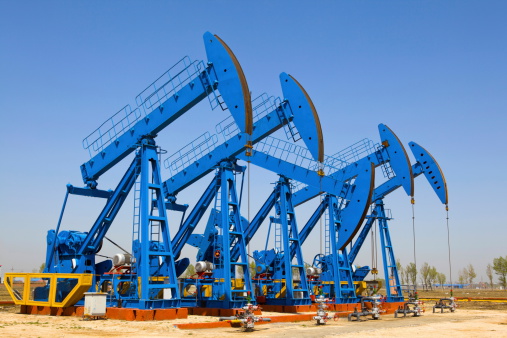
Bakken crude does not price there, but either at the field or at the delivery point in Clearbrook, Minn. The posted price of Williston Basin Sweet crude was reported at $41.44 on Friday, while Williston Basin Sour went for $49.25 a barrel. These two are the grades of crude produced in North Dakota’s Bakken shale play.
The posted price by Plains Marketing, a division of Plains All American Pipeline L.P. (NYSE: PAA), for WTI outside the Permian Basin was $54.25, and the highest price of all, for Louisiana Light Sweet, was just $54.50. The posted price is what Plains is offering to pay producers and provides a good indicator of market direction in the United States.
As prices for Brent and WTI fall below $50, prices for Bakken crude are going to settle below $50, and if Brent falls below $50, well, then things could get a lot more interesting for Bakken crude.
ALSO READ: Low Crude Oil Prices Hammer Tesla
No one knows for sure what will happen. When crude fell to below $40 a barrel in 2009, horizontal drilling and fracking made only modest contributions to U.S. oil production. North Dakota produced an average of 218,000 barrels a day in 2009, compared with more than 1 million barrels in 2014.
Can U.S. production growth from the Bakken and the Permian Basin survive at less than $40 a barrel? Harold Hamm, CEO of Continental Resources Inc. (NYSE: CLR) and the Bakken’s largest producer, has cancelled all the company’s hedging on future barrels, betting on a price rise in 2015. That is not quite the same thing as surviving if prices fall below $40 a barrel, but Hamm has been in the business long enough to be reasonably sure that he’s got himself hedged with technology if nothing else.
What we may be witnessing is a high-stakes game of chicken. OPEC’s recent decision to maintain market share no matter the price is unprecedented. Can their economies hold out long enough at low crude prices to stop the supply growth of North American shale producers? At what price will one side or the other give up? $50? $40? Less?
To answer our headline question, yes, $40 oil is very likely on its way. Prices are already in the $40 range for some U.S. crude varieties. How long the price can remain that low is the big question? And once that has been answered, the next question becomes how quickly the price will jump back to $100 a barrel?







 Top Gaining Stocks
 Top Losing Stocks