


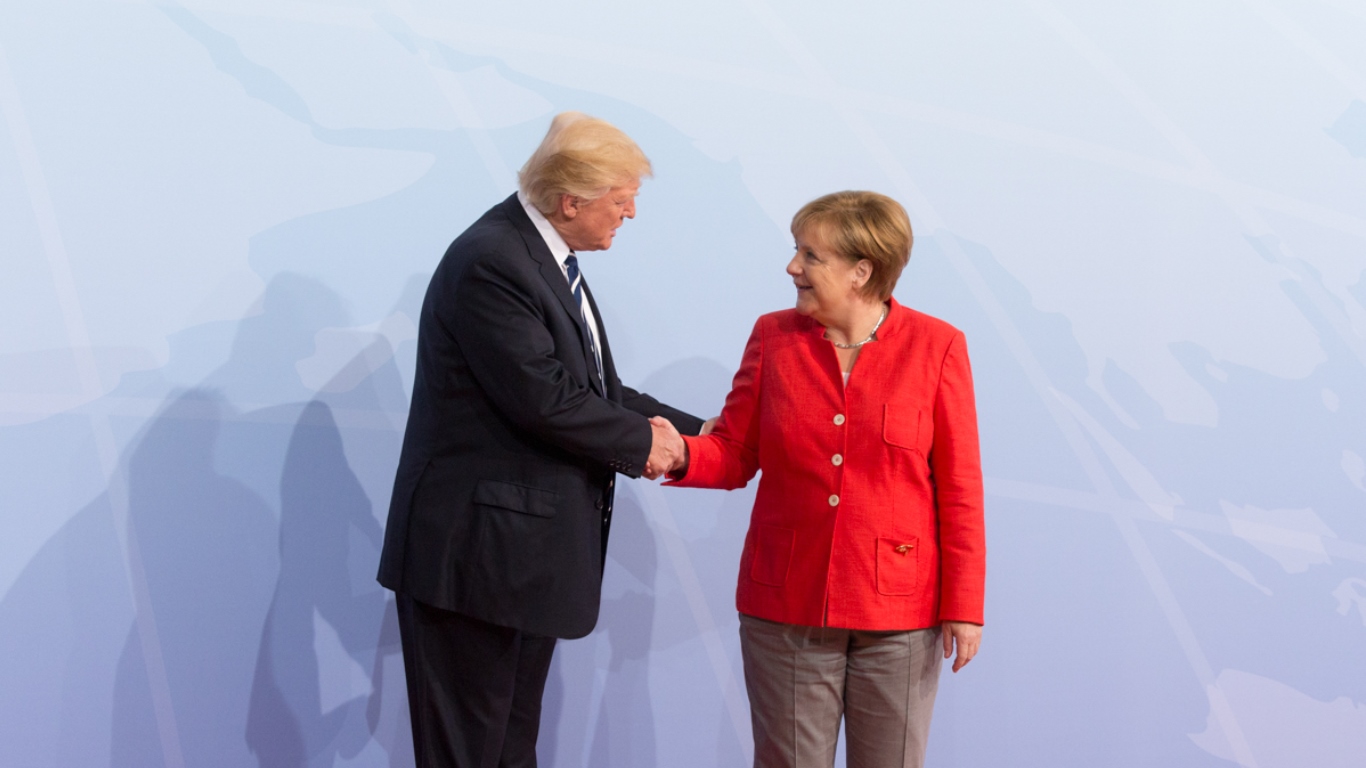
True to form, President Trump, kicked off Wednesday’s NATO summit by tossing a grenade. This one was in German Chancellor Angela Merkel’s direction and aimed at the country’s dependency on natural gas imports from Russia.
It’s not clear whether Trump’s goal in targeting Merkel this morning was to shame Germany into putting more money into NATO or to encourage the Germans to buy more natural gas from the United States. But if it’s the second, that will be very difficult to achieve.
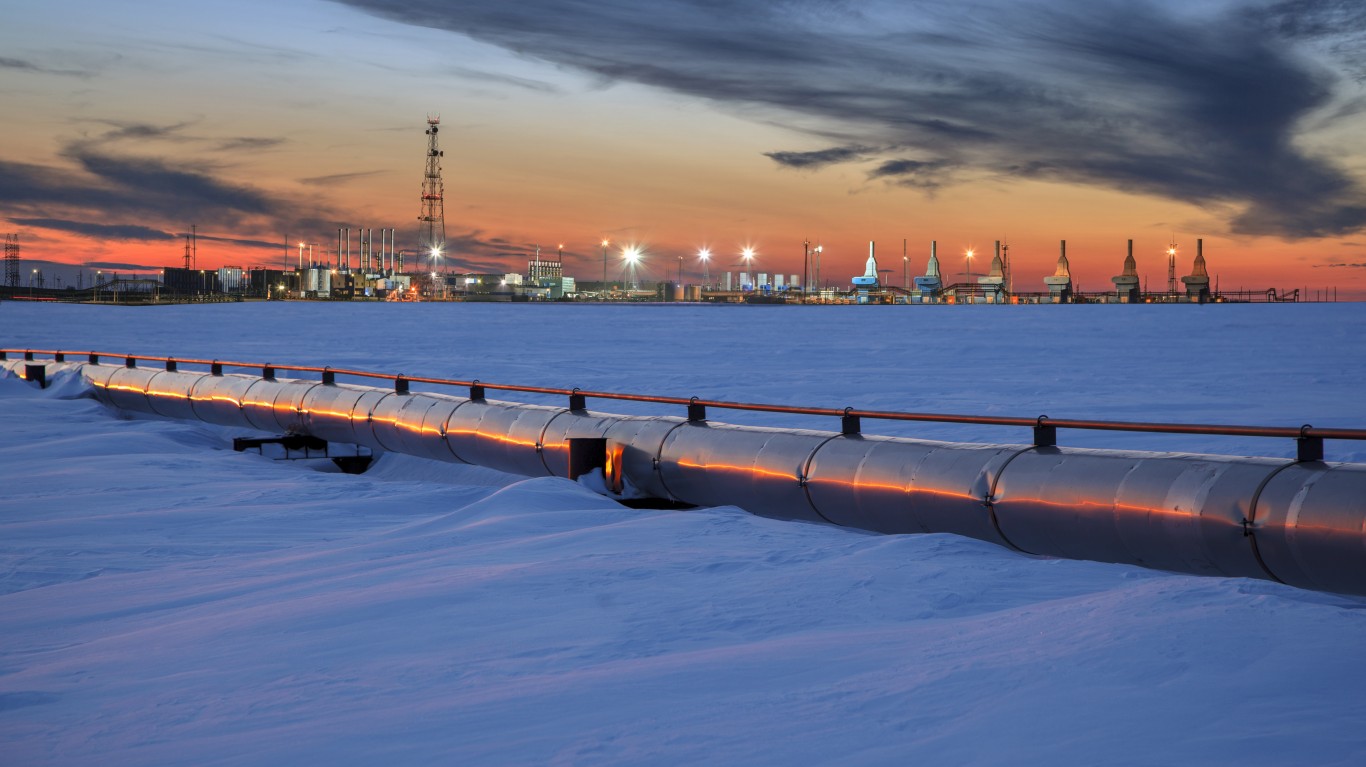
Germany currently receives about a third of its current 80 billion cubic meters of annual natural gas supply from Russia, nearly all transported by pipelines running through Eastern Europe. Europe as a whole consumed about 425 billion cubic meters of natural gas last year, of which about 150 billion cubic meters came from Russia.
Russia’s state-controlled gas producer, Gazprom, next year is completing a new pipeline dubbed the Nord Stream 2 that detours around Eastern Europe by following a route under the Baltic Sea before reaching the German coast at the city of Lubmin, where construction of a new receiving terminal was begun in May. Once the new pipeline is in operation, it will deliver about 55 billion cubic meters of Russian natural gas annually to Germany, which would then distribute the gas to the rest of Europe.
[nativounit]
The new pipeline is as much about politics as it is about energy, however. Critics argue that the Nord Stream 2 is unnecessary and is a politically inspired move by Russia to avoid paying transit fees to Poland, the Baltic states and, most important, Ukraine for the right to transport natural gas through these countries on its way to Europe. Over half the gas Russia sends to Europe annually travels through Ukraine.
When Russia took over the Crimea and moved on eastern Ukraine in 2014, the United States and its allies slapped sanctions on Russia that have chafed Russian President Vladimir Putin ever since. The sanctions remain in place, but Trump and others have questioned their current worth to U.S. relations with Russia.
For the U.S. natural gas to reach Europe, it must first be converted to liquefied natural gas (LNG), loaded on a special tanker and sailed from the U.S. Gulf Coast to a receiving terminal where it is reconverted into gas. Naturally this costs more than simply putting natural gas in a pipeline and sending it off. In addition, Qatar, Australia and other countries are way ahead of the United States in developing liquefaction facilities.
In time the United States could sell more natural gas to Europe, but the sales probably will be limited to countries like Spain, Portugal and Turkey that have never received a lot of their supply from Russia. It is exceedingly doubtful that U.S. LNG will ever be a major source of supply to Germany.
[recirclink id=476207]
[wallst_email_signup]






 Top Gaining Stocks
 Top Losing Stocks