


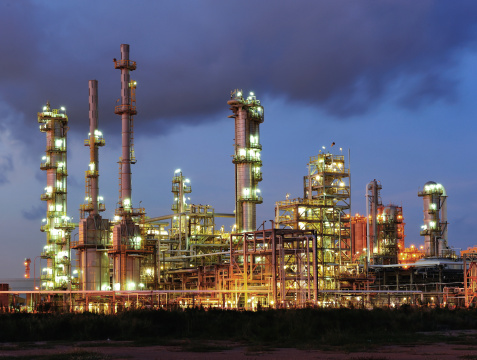
While this scenario may work out the way the Citi analysts suggest, do not bet on it. The U.S. currently produces about 7 million barrels of crude oil every day. Last week, U.S. refineries gobbled up 14.4 million barrels a day and produced about 8.8 million gallons of gasoline. Imports totaled 7.6 million barrels a day last week.
There is no scenario in which U.S. crude oil production approaches 14 million barrels a day. That means that consumption will have to fall. Citi thinks that 30% of the heavy truck fleet in the U.S. will be fueled by natural gas by 2015, reducing demand for diesel fuel by about 600,000 barrels a day. Improved automobile mileage ratings are expected to cut 2 million barrels a day from consumption.
U.S. drivers are also driving less, down by about 3% from a peak of more than 3 trillion miles driven annually in 2007 to around 2.94 trillion miles in November of last year. That works out to about 200,000 barrels a day.
Adding in refinery gains, other liquid and condensate production and renewables raises Citi’s 2012 U.S. production total to 11.2 million barrels a day, not far from the 11.6 million barrels that the consumption savings are expected to bring by the end of the decade. The U.S. Energy Information Administration (EIA) forecasts U.S. production of 7.25 million barrels a day this year, rising to 7.82 million barrels a day in 2014.
The Citi analysts also say that in five years the U.S. could be importing crude only from neighboring Canada. In fact, the U.S. could become an exporter of crude if laws forbidding the practice are repealed.
The report also suggests a per barrel price range for benchmark Brent crude of $70 to $90 a barrel by the end of the decade, far below today’s range of $90 to $120 barrel.
Citi’s view is among the rosiest we have seen for U.S. energy independence, and a lot of things have to go right in order for the scenario the analysts describe to become reality. Drilling will have to increase to compensate for the short-term production nature of fracked wells. Some of the liquids included in the totals are not refinable into gasoline, which consumes around 60% of every barrel of crude refined.
It is a good story, but it is just a story. Let’s hope it is not a fairy tale.






 Top Gaining Stocks
 Top Losing Stocks