


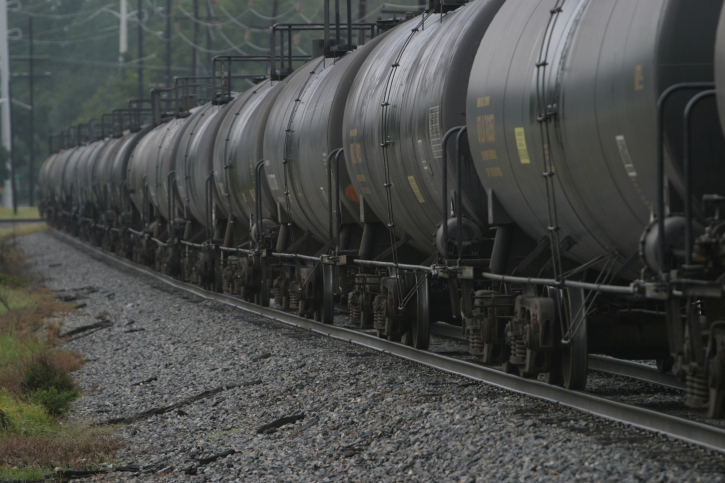
The American Association of Railroads (AAR) has done the work and even though the group has a stake in the outcome, the AAR deserves a lot of props just for digging through more than a dozen years of data.
Between 2002 and 2012, there were a total of 129 reported incidents of crude oil spills on U.S. railroads compared with a total of 1,849 reported pipeline incidents in the same period. On average a railroad oil spill dumps 738 gallons of the black stuff compared with an average pipeline spill of 10,777 gallons per spill. Total gallons spilled from rail cars was 95,256 compared with 19,926,540 gallons spilled as a result of pipeline ruptures.
For every million barrels moved by rail an estimated 0.38 gallons were spilled, compared an estimated spill rate of 0.88 gallons were spilled for every million barrels moved.
Looking at the number of barrels moved, though, presents a slightly different version of the story. The AAR reported earlier this year that a total of 233,800 carloads of crude oil were moved by rail in 2012. One carload holds between 600 and 700 barrels. Taking a midpoint of 650 barrels per tanker car, rail transport moved about 152 million barrels of crude last year.
Pipelines moved about 51 million barrels of crude in January 2013 alone according to the U.S. Energy Information Administration. Those movements were between Petroleum Administration Defense Districts (PADDs) and do not include intra-Padd shipments, which would raise the number even higher.
As more and more carloads of crude oil travel on the nation’s railroads, the number of spills is likely to rise, but it is very unlikely that a single rail accident could dump over 800,000 gallons of crude, as did the 2010 spill following a pipeline rupture near the Kalamazoo River in Michigan.
Moving crude oil by rail is safe and, in fact, appears to be considerably safer than moving oil by pipelines. That’s good, since U.S. railroads expect to carry even more of the stuff this year and next.







 Top Gaining Stocks
 Top Losing Stocks