


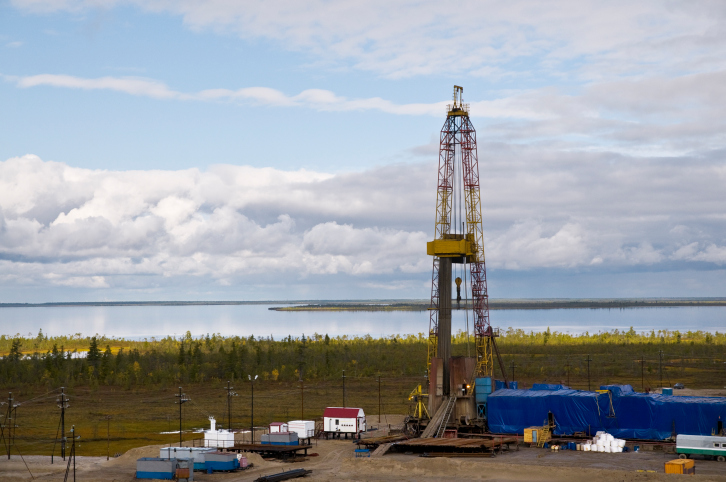
The study was published in the “Proceedings of the National Academy of Sciences,” following an analysis of 141 drinking water wells in northeastern Pennsylvania’s Marcellus shale region. According to the study, methane was detected in 82% of the drinking water samples, with concentrations up to six times higher in wells less than a kilometer from the gas wells. Ethane concentrations were 23 times higher in homes less than a kilometer from gas wells.
The causes of the higher concentrations of methane and ethane are likely faulty well casings, which are supposed to keep gases and water inside the well from leaking into the environment, and “imperfections” in the cementing of gaps between the well casings and the rock, which are supposed to keep fluids from moving toward the surface along the outside of the well. The study notes:
In 2010, the Pennsylvania Department of Environmental Protection (DEP) issued 90 violations for faulty casing and cementing on 64 Marcellus shale gas wells; 119 similar violations were issued in 2011.
The study’s authors also note that it is not possible to draw a general conclusion about leaking gases due to fracking. They point out that in a new study of drinking water contamination in the Fayetteville shale of Arkansas, they found “no evidence” of drinking water contamination. And, as with nearly every study ever done, this one calls for more studies, particularly to “understand why, in some cases, shale gas extraction contaminates groundwater and how to keep it from happening elsewhere.”




 Top Gaining Stocks
 Top Losing Stocks