Moody’s Cuts Russia Toward Junk

Photo of Douglas A. McIntyre
By Douglas A. McIntyre Published
This post may contain links from our sponsors and affiliates, and Flywheel Publishing may receive compensation for actions taken through them.

One more downgrade, and Russia’s government bond rating will be junk. The trend is moving rapidly in that direction, as Moody’s lowered its rating one slot to Baa3. The credit agent’s analysts also noted it was on “further review for future downgrade.”

Sanctions against Russia, based on its military action in Ukraine, and the remarkable drop in oil prices will push Russian into recession, if it is not already there. Open to debate is how deep the recession will be: a modest but painful 2% or one as extreme as 5% or more. Given Russia’s reliance on oil, if crude remains below $50 for long, a deeper recession is certain.

Moody’s commented the primary reasons for the change:

1) Moody’s expectation that the substantial oil price and exchange rate shock will further undermine the country’s already subdued growth prospects over the medium term; and

2) Moody’s nearer-term concerns over the negative impact on the government’s financial strength of the erosion in official foreign exchange buffers and fiscal revenues.

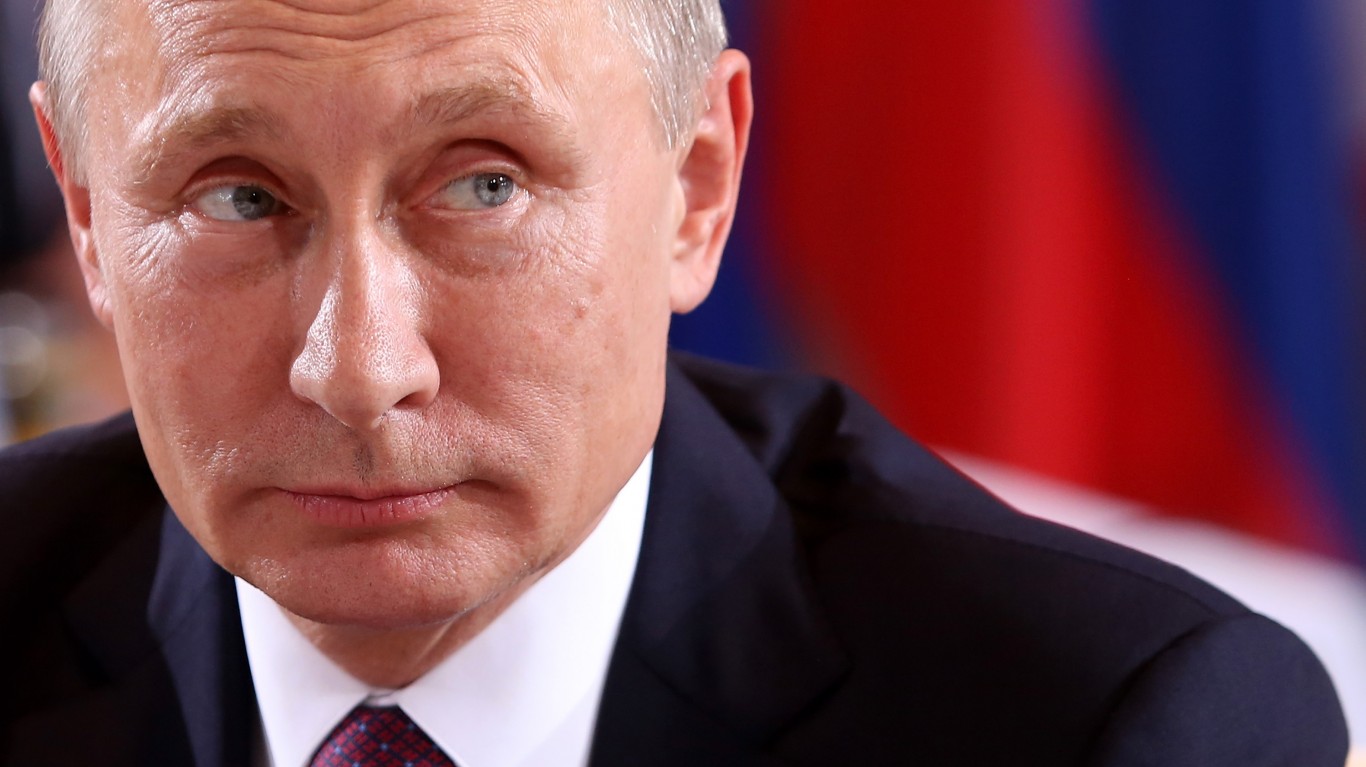
The effects of the rating change, and the situation that triggered it, will put more pressure on the Putin government to rethink its Ukraine policy in the hopes that sanctions can be lifted quickly. Without mentioning this situation directly, Moody’s researchers expressed worry about Russia’s current direction in its comments about what could make its rating worse:

The government’s ability to sustain its financial strength, which is the main factor supporting the country’s investment grade rating, rests on a large number of assumptions regarding, for example: oil prices and the exchange rate; the longevity of sanctions; capital flows; the effect of import compression on the current account balance; the impact of recession and inflation on the government’s fiscal position; and the policy response to domestic or external financial pressures. Small changes in assumptions could imply a more severe decline of reserves and a more rapid accumulation of debt by the government.

The “longevity of sanctions” is something the government can control.

ALSO READ: 5 Things That Could Save Russia From Recession in 2015

Photo of Douglas A. McIntyre
About the Author Douglas A. McIntyre →

Douglas A. McIntyre is the co-founder, chief executive officer and editor in chief of 24/7 Wall St. and 24/7 Tempo. He has held these jobs since 2006.

McIntyre has written thousands of articles for 24/7 Wall St. He is an expert on corporate finance, the automotive industry, media companies and international finance. He has edited articles on national demographics, sports, personal income and travel.

His work has been quoted or mentioned in The New York Times, The Wall Street Journal, Los Angeles Times, The Washington Post, NBC News, Time, The New Yorker, HuffPost USA Today, Business Insider, Yahoo, AOL, MarketWatch, The Atlantic, Bloomberg, New York Post, Chicago Tribune, Forbes, The Guardian and many other major publications. McIntyre has been a guest on CNBC, the BBC and television and radio stations across the country.

A magna cum laude graduate of Harvard College, McIntyre also was president of The Harvard Advocate. Founded in 1866, the Advocate is the oldest college publication in the United States.

TheStreet.com, Comps.com and Edgar Online are some of the public companies for which McIntyre served on the board of directors. He was a Vicinity Corporation board member when the company was sold to Microsoft in 2002. He served on the audit committees of some of these companies.

McIntyre has been the CEO of FutureSource, a provider of trading terminals and news to commodities and futures traders. He was president of Switchboard, the online phone directory company. He served as chairman and CEO of On2 Technologies, the video compression company that provided video compression software for Adobe’s Flash. Google bought On2 in 2009.

Featured Reads

Our top personal finance-related articles today. Your wallet will thank you later.

Continue Reading

Top Gaining Stocks

CBOE Vol: 1,568,143
PSKY Vol: 12,285,993
STX Vol: 7,378,346
ORCL Vol: 26,317,675
DDOG Vol: 6,247,779

Top Losing Stocks

LKQ
LKQ Vol: 4,367,433
CLX Vol: 13,260,523
SYK Vol: 4,519,455
MHK Vol: 1,859,865
AMGN Vol: 3,818,618