


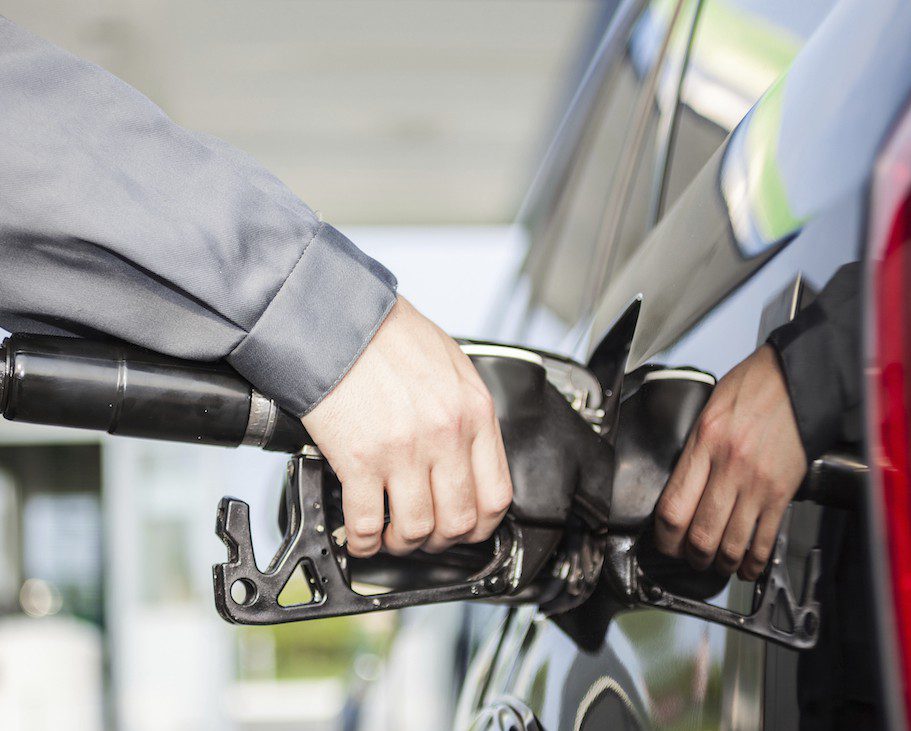
It seems that every day the price of a gallon of regular gasoline moves inexorably closer to $1 a gallon. In Amarillo, Texas, a gallon cost $1.69 Tuesday, a penny less than it did the day before, according to GasBuddy. The honor for the lowest state price for a gallon goes to Missouri, where the average price dropped two cents Tuesday to $1.79. GasBuddy reports that the current U.S. average price is $2.022, the lowest price so far in 2015.
According to AAA, a gallon of regular gasoline cost $2.027 Tuesday, down nearly a penny since Monday and down just over a penny from a week ago. Gas is $0.65 a gallon cheaper now than it was a year ago.
Gasoline prices are driven by four factors: oil prices, proximity to refineries, refinery capacity and state taxes and levies. Oil prices have dropped below $40, recently hitting a low of $36.64 a barrel. The recent decision by Saudi Arabia to continue to keep its oil exports high has almost dissolved the OPEC cartel. This guarantees an oversupply of crude. Slowing national economies in the largest countries, which include China, will lower demand. The cost of producing oil from shale deposits is greater in some cases than what it can be sold for; nonetheless, parts of this industry continue pumping, increasing supply even further.
Refinery costs are another primary factor in gas prices, and production was back over 92% of capacity, according to the most recent data from the U.S. Energy Information Administration. Refineries in California and the Midwest, which had been closed for maintenance, have reopened and are now operating at regular volumes. The national supply of refined products will continue to rise as oil prices are plunging.
Goldman Sachs has said there is a 50% chance the price of crude will drop to $20. Jeffrey Currie, head of commodities research at the bank, recently forecast that “the global surplus of oil is bigger than [the bank] previously thought and that failure to reduce production fast enough may require prices to fall near $20 a barrel to clear the glut.”
U.S. production is falling, but very slowly. Production from OPEC countries is about 1.5 million barrels a day above its agreed level of 30 million barrels a day, and Iran expects to boost production sharply once international sanctions are lifted. Russia, the other large producer, has increased, not slowed, production, and if history is any guide, the country won’t stop pumping flat out until Armageddon.
At the rate that crude prices have fallen in just the past couple of days, the odds improve every day that some lucky consumers somewhere in the United States could be paying closer to $1 a gallon for gas someday soon.
[recirclink id=301707]






 Top Gaining Stocks
 Top Losing Stocks