


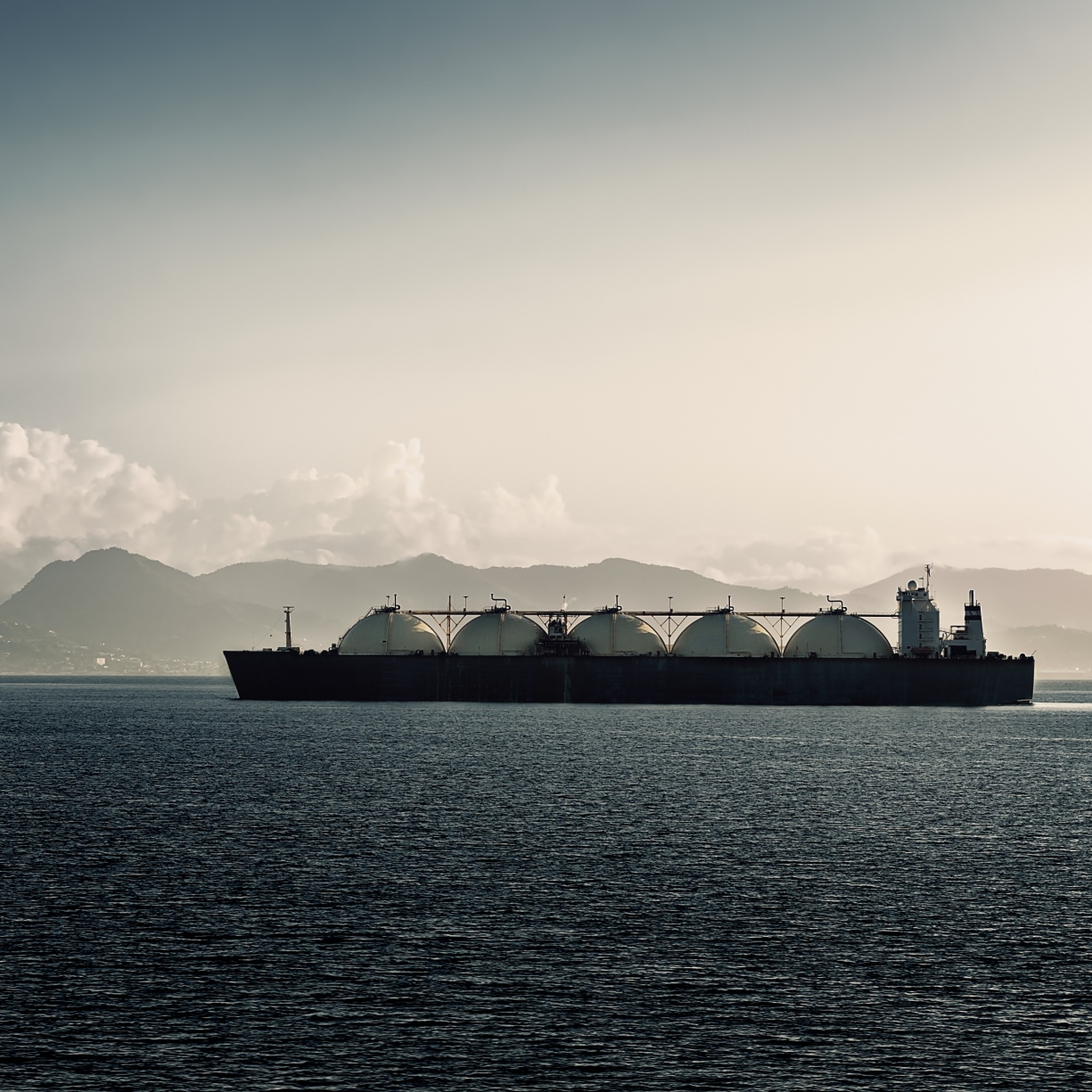
The United States will enter the market for liquefied natural gas (LNG) later this week when Cheniere Energy Inc. (NYSEMKT: LNG) begins loading the first tanker ever to export LNG from the lower 48 states. The tanker, dubbed the Energy Atlantic, is scheduled to arrive at Cheniere’s Sabine Pass terminal off the coast of Louisiana on Tuesday.
The Sabine Pass terminal was originally built as an LNG import terminal, anticipating declining output of natural gas from U.S. wells. Then the horizontal drilling and fracking revolution hit in 2010, and Cheniere quickly saw the writing on the wall and applied to convert the import terminal to an export facility.
The Sabine Pass terminal’s estimated output capacity is 22.5 million metric tons (tonnes) annually, and Cheniere is building a second export terminal with a 9 million tonne capacity offshore of Corpus Christi, Texas, that is scheduled to open in late 2018. One million tonnes of LNG is equivalent to 48 billion cubic feet of natural gas.
The U.S. consumes about 700 billion cubic feet of natural gas on average every day, which works out to about 26 trillion cubic feet in a year. Sabine Pass has capacity to export just over 1 billion cubic feet a year. Besides the Cheniere terminal, three other LNG export terminals are under construction, with additional export capacity of about 33.8 million tonnes per year.
[nativounit]
Australia and Qatar are currently the largest producers of LNG in the world, and the U.S. ranks third. It is unlikely that more export terminals will be built in the United States due to the current low price for LNG. In addition to the price of the natural gas, currently about $2.40 per thousand cubic feet, it costs approximately $3.00 to $3.50 to liquefy the gas and another $2 or so to transport it. The current price for LNG in Japan and South Korea has dropped to around $6.65 per million BTUs (one thousand cubic feet is roughly equivalent to one million BTUs).
Ironically, Cheniere fired its co-founder and CEO Charif Souki in mid-December. Souki reportedly wanted to continue expanding aggressively, a position that other board members and activist investor Carl Icahn, who owns nearly 14% of the company, did not support. Souki told the Financial Times that he doesn’t “necessarily disagree” that he is the wrong person to lead the company in the current set of circumstances.




 Top Gaining Stocks
 Top Losing Stocks