


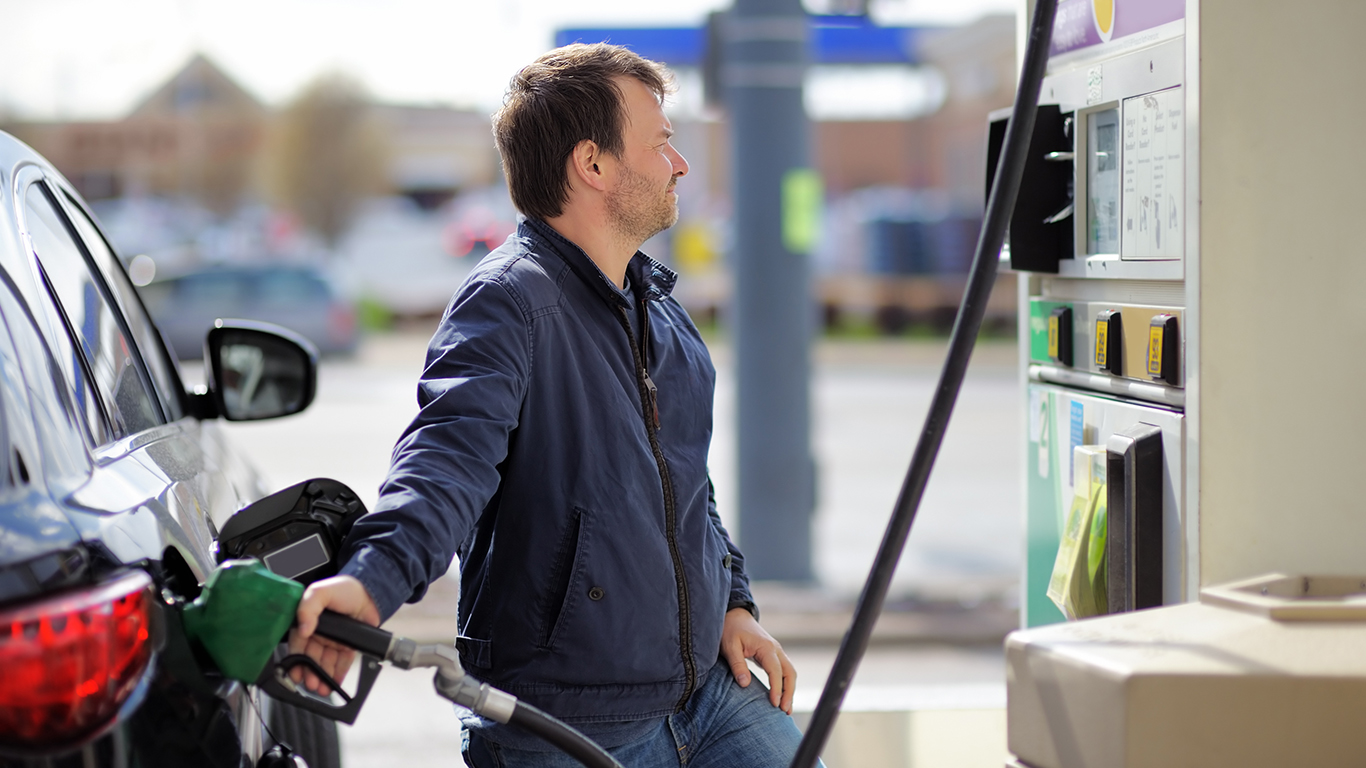
U.S. drivers will fork out more than $1 billion more to pay for gasoline this July 4 holiday than they did last year. Crude oil prices jumped to $73 a barrel on Wednesday, following a record week-over-week decline in commercial inventories.
Analysts at GasBuddy estimate the cost to motorists for a gallon of regular gas will reach $2.90 for the first four days of July. Last year, gas cost an average of $2.22 a gallon for the holiday weekend. This year’s price is the highest since U.S. drivers paid $3.66 a gallon in 2014.
U.S. refineries produced more than 10 million barrels of gasoline daily last week but a record of 3 million barrels a day were exported. U.S. exports are priced against the Brent benchmark, which is about $5 a barrel higher than benchmark West Texas Intermediate (WTI).
GasBuddy’s head of petroleum analysis, Patrick DeHaan urges travelers to check gas prices before crossing a state line:
Crossing a line can be exciting and fun during summer road trips, until drivers realize that they left cheaper gas prices in the dust. Instead, motorists should mind the state line and find the best side to fill up on. In some extreme cases, we’ve seen consumers spend an extra $25 on a single tank when refueling on the wrong side of the line.
[nativounit]
The price difference between Oklahoma and Colorado, for example, is nearly 40 cents a gallon. and gasoline costs about 50 cents a gallon more in Colorado than in Utah.
Gas prices exceed $3.00 a gallon in seven western states: California ($3.72), Washington ($3.41), Nevada ($3.36), Oregon ($3.29), Utah ($3.21), Idaho ($3.17) and Arizona ($3.10).
Gas is cheapest in South Carolina ($2.49), Alabama ($2.52), Mississippi ($2.52), Oklahoma ($2.56), Arkansas ($2.57) and Tennessee ($2.57).
The smaller-than-expected increase to global supplies announced last week by OPEC and its partners has contributed to the rising price of crude oil, as has a U.S. call for its allies to stop importing crude from Iran beginning in November.
Pump prices typically reflect crude oil price increases quickly and price declines more slowly. The national average price hit a high this year of $2.98 at the Memorial Day holiday weekend.
[recirclink id=472830]
[wallst_email_signup]






 Top Gaining Stocks
 Top Losing Stocks