



In an interview Sunday on CBS’s 60 Minutes, Saudi Arabia’s Crown Prince Mohammed bin Sultan said that a war between his country and Iran would send crude oil prices soaring: “Oil prices will jump to unimaginably high numbers that we haven’t seen in our lifetimes.”
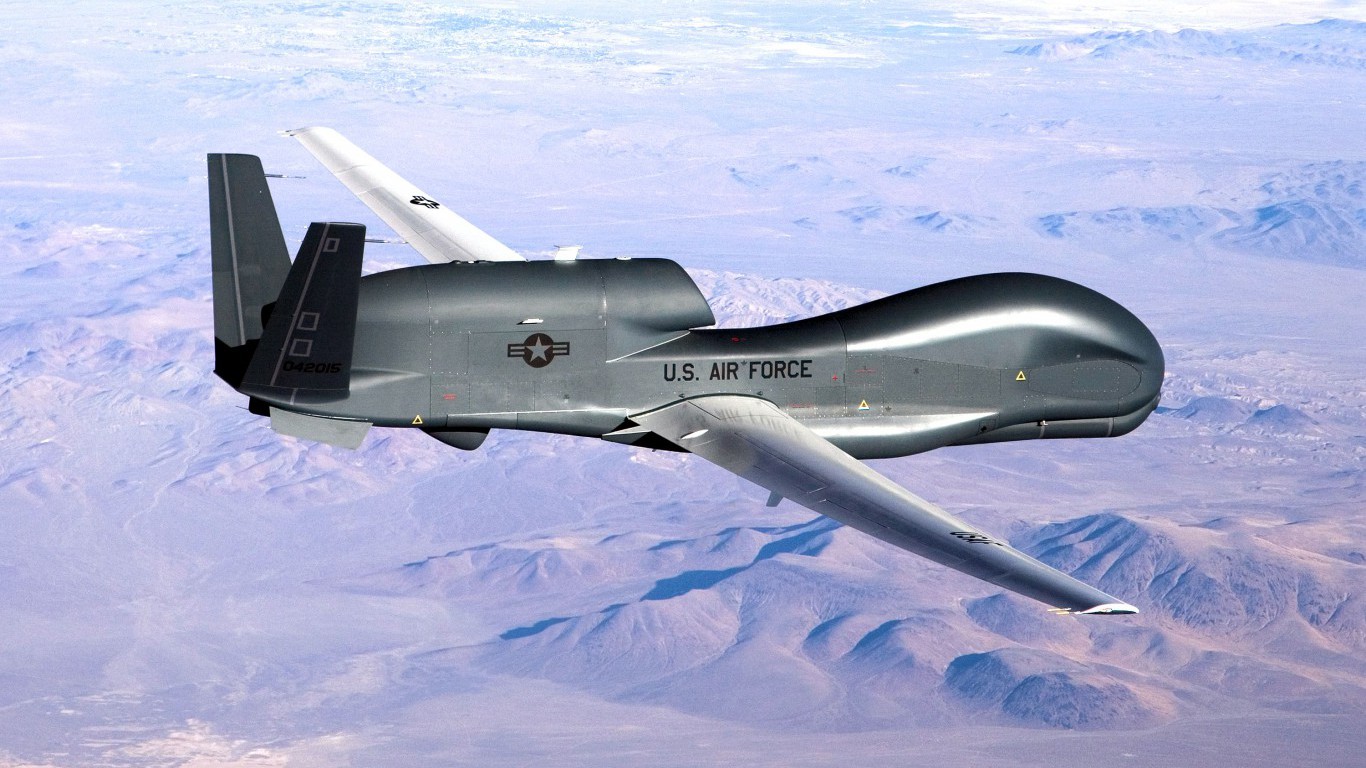
That is probably true. Just two weeks ago, a drone attack on Saudi oil processing plants forced a shutdown of about 5% of daily global crude oil production. Crude prices spiked more than 10% on the first trading day following the attack. That spike would seem small in the event of an all-out war between the Saudis and the Iranians.
Such a war could remove about 16% of the world’s daily production of crude oil. That’s more than 16 million barrels a day, and there’s not enough global spare capacity to fill a gap of that size. Crude prices would indeed spike to “unimaginably high numbers.”
The Crown Prince went on to say that a “political and peaceful solution is much better than the military one,” the same position that the Trump administration has taken regarding the drone attacks. In response to the drone attack, the United States tightened sanctions against Iran, while France, the United Kingdom and Germany issued a statement blaming the Iranians for the drone attack.
The 60 Minutes interview gave the prince a chance to launch another charm offensive. He wants to be viewed as a conciliator who speaks for peace, provided that the rest of the world takes “strong and firm action to deter Iran.”
[nativounit]
When crude oil prices collapsed from nearly $150 a barrel in September 2008 to less than $40 a barrel in February 2009, the Saudis first tried in 2014 to flood the market with crude believing that their ability to produce oil at that price and still make a profit would eventually force prices higher.
They were wrong. By 2016, the price had fallen to around $30 a barrel. So the Saudis, along with the rest of OPEC and several other producing nations, including Russia, began to cut production in an effort to push prices higher. That has sort of worked, lifting prices to around $60 a barrel currently.
The drone attack (almost certainly backed by Iran) underscored a point that Iran wanted to make crystal clear to the Saudis: the United States is not intimidated by a threat to the supply of crude oil the way it was in the 1970s. From that follows the equally clear message that the United States will not support any large-scale military operation with its own forces against Iran.
The Iranians gambled and won: the Saudis clearly got the message. Without a commitment to U.S. backing, Saudi Arabia cannot act on its own. To do so would wreck the Saudi economy and could even threaten the ruling family’s grip on the country.
The Saudis almost have no choice but to offer a measured, conciliatory response to the drone attack. And part of that response is to remind the world that the country’s oil supply is critical to the world’s economy. Left unsaid is that it is far less critical than it was 50 or even 10 years ago.
[recirclink id=581086]
[wallst_email_signup]










 Top Gaining Stocks
 Top Losing Stocks