


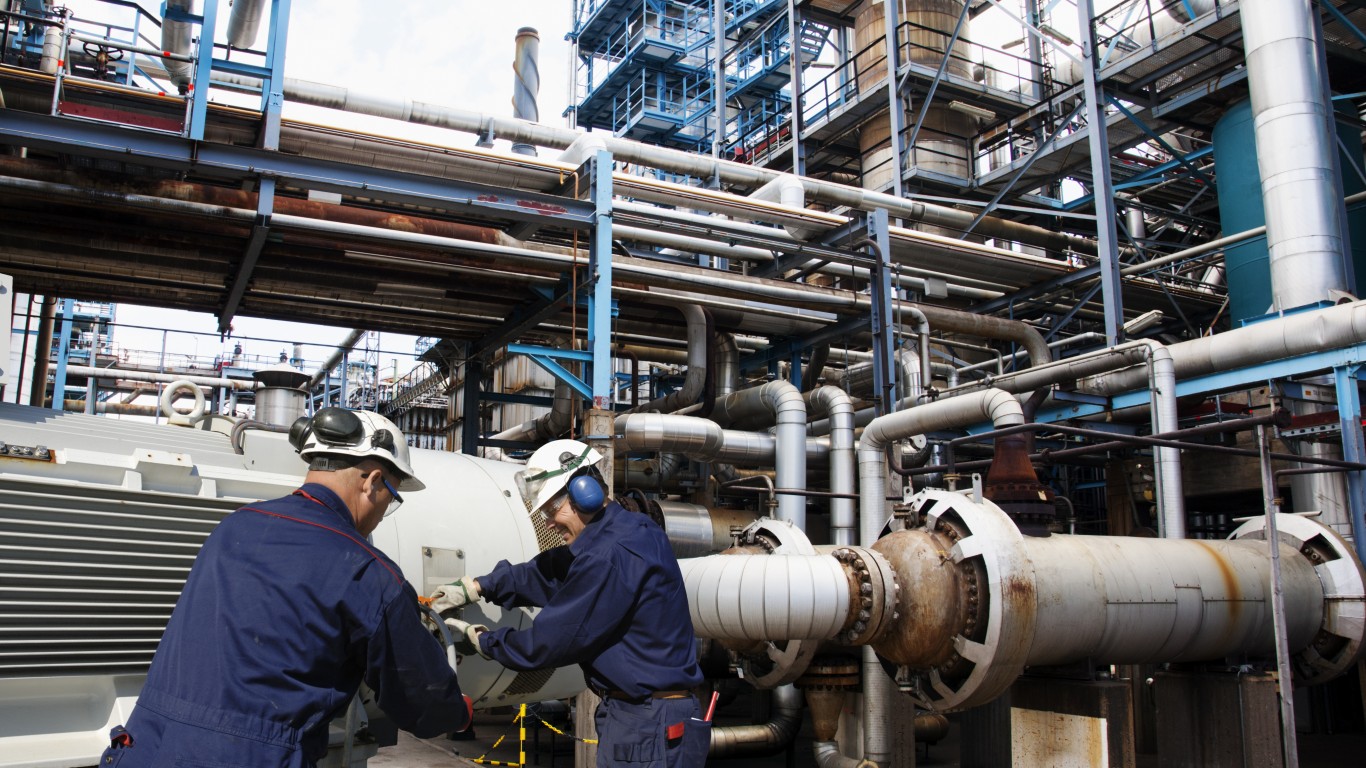
For the first time ever, rating firm Moody’s Investors Service has slapped a negative outlook on the energy midstream (pipeline) sector. While the firm does not identify individual stocks, Moody’s believes the sharp declines in oil and natural gas production “compromis[es the sector’s] aggregate credit quality.”
Moody’s projects midstream EBITDA will decline by at least 5% this year, lower than the firm’s previous forecast for growth in a range of −5% to 5%. That’s the level required for a stable rating.
The risk to oil and refined product pipelines is down to variable throughput volume. Volumes have declined as producers have shut in wells and refiners have cut production of gasoline and jet fuel.
Natural gas gathering and processing infrastructure is exposed to both direct and indirect price risk, while interstate natural gas pipelines that operate with regulated, fee-based contracts have little price or volume risk.
[nativounit]
To add some data to that last point, Plains All American Pipeline L.P. (NYSE: PAA | PAA Price Prediction), which operates nearly 18,000 miles of oil and natural gas liquids (NGLs) pipelines, traded down more than 12% Thursday afternoon. Kinder Morgan Inc. (NYSE: KMI), which operates approximately 70,000 miles of natural gas pipeline infrastructure, traded down by about half that amount. Kinder Morgan also operates about 13,000 miles of additional pipelines that transport carbon dioxide and refined products.
Midstream firms that rely on oil and gas exploration and production customers face more credit risk due to the “deteriorating credit quality” of those customers. Moody’s points out that in the 2015 to 2016 downturn in energy markets, midstream contract cancellations were uncommon. Today, however, the production companies “will ratchet up demands for contractual concessions from the midstream operators, particularly if the economic contraction deepens.”
Capital spending among midstream companies is projected to drop by around 20% to 30% in 2020 through 2021 compared to 2019 spending. EBITDA growth will turn negative this year as well, although Moody’s projects growth to return by a single-digit percentage in 2021.
The country’s largest midstream company, Enterprise Products Partners L.P. (NYSE: EPD), operates nearly 20,000 miles of NGL pipelines and 19,400 miles of natural gas pipelines along with about 5,300 miles of oil pipelines.
For the year to date, Plains stock is down by nearly 44%, Enterprise shares are down nearly 30%, and Kinder Morgan shares are down more than 22%.
[recirclink id=712771][wallst_email_signup]






 Top Gaining Stocks
 Top Losing Stocks