Rising Temperatures Could Kill 17% of Sea Life by Century’s End

Photo of Douglas A. McIntyre
By Douglas A. McIntyre Updated Published
This post may contain links from our sponsors and affiliates, and Flywheel Publishing may receive compensation for actions taken through them.
Rising Temperatures Could Kill 17% of Sea Life by Century’s End

© Jag_cz / iStock

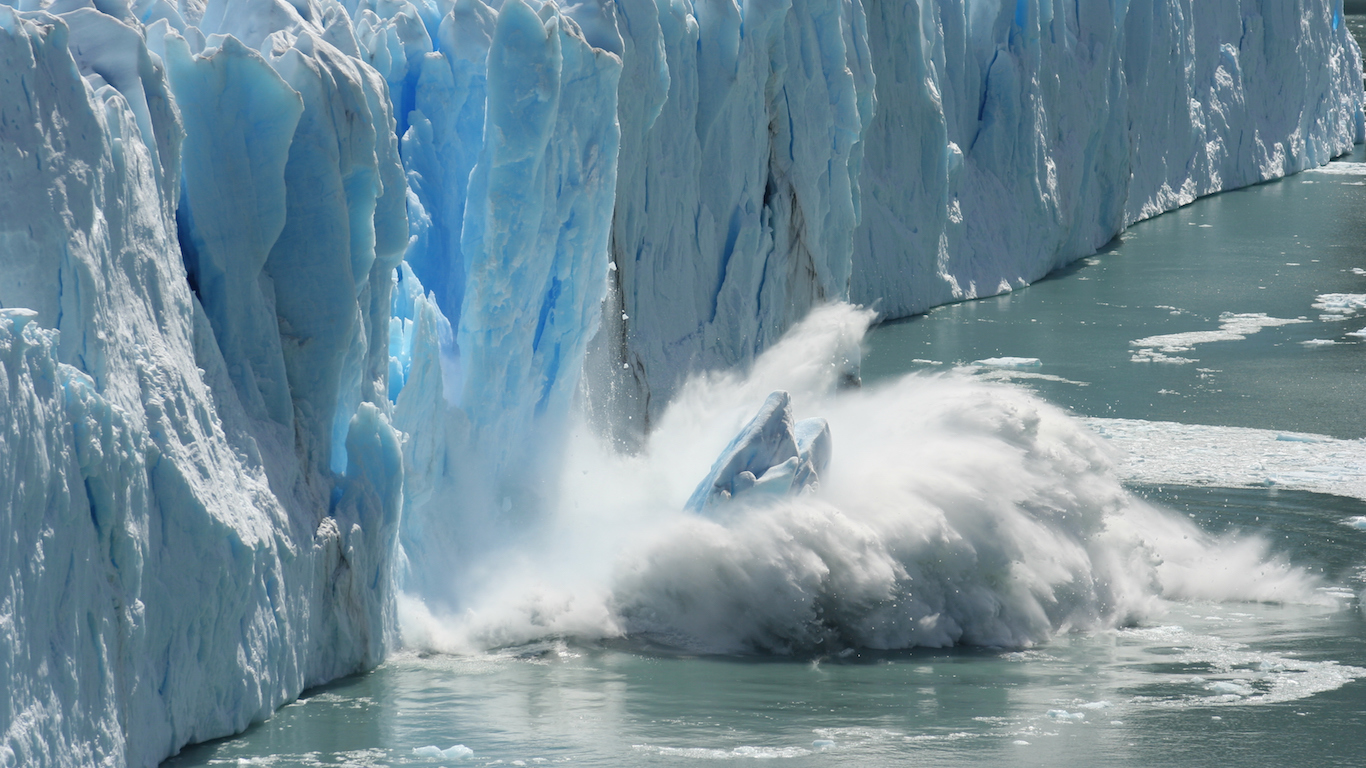
A new study published in the Proceedings of the National Academy of Sciences reports that global warming could trigger the death of 17% of sea life by the end of the century. The study carries the name “Global ensemble projections reveal trophic amplification of ocean biomass declines with climate change.”

The research involves computer models because of the weakness of any individual study. To solve this, the writers of the paper set a methodology which took into account multiple models. “To address these single-model limitations, we present standardized ensemble projections from six global marine ecosystem models forced with two Earth system models and four emission scenarios with and without fishing.”

The range of potential death of sea life by the end of the century ranged from 5% to 17% based on the level of global warming. For every one degree Celsius of warmings (1.8 F) over the period, the rate of death rises 5%. The effects or projected fishing by humans was backed out of the numbers. The measure of total species living in the ocean is labeled “biomass.” The percentage drops in sea life are based on that measure. This sea life is becoming part of a list of the animals being driven into extinction.

One of the study’s authors William Cheung, of the University of British Columbia told the LA Times.”We will see a large decrease in the biomass of the oceans. There are already changes that have been observed.”

University of Victoria biology professor Julia Baum, commented on the study to the AP, “The potential ramifications of these predicted losses are huge, not just for ocean biodiversity, but because people around the world rely on ocean resources. Climate change has the potential to cause serious new conflicts over ocean resource use and global food security, particularly as human population continues to grow this century.” Some nations are a larger part of this problem than others, and in many cases are among the countries increasing CO2 emissions the fastest.


Photo of Douglas A. McIntyre
About the Author Douglas A. McIntyre →

Douglas A. McIntyre is the co-founder, chief executive officer and editor in chief of 24/7 Wall St. and 24/7 Tempo. He has held these jobs since 2006.

McIntyre has written thousands of articles for 24/7 Wall St. He is an expert on corporate finance, the automotive industry, media companies and international finance. He has edited articles on national demographics, sports, personal income and travel.

His work has been quoted or mentioned in The New York Times, The Wall Street Journal, Los Angeles Times, The Washington Post, NBC News, Time, The New Yorker, HuffPost USA Today, Business Insider, Yahoo, AOL, MarketWatch, The Atlantic, Bloomberg, New York Post, Chicago Tribune, Forbes, The Guardian and many other major publications. McIntyre has been a guest on CNBC, the BBC and television and radio stations across the country.

A magna cum laude graduate of Harvard College, McIntyre also was president of The Harvard Advocate. Founded in 1866, the Advocate is the oldest college publication in the United States.

TheStreet.com, Comps.com and Edgar Online are some of the public companies for which McIntyre served on the board of directors. He was a Vicinity Corporation board member when the company was sold to Microsoft in 2002. He served on the audit committees of some of these companies.

McIntyre has been the CEO of FutureSource, a provider of trading terminals and news to commodities and futures traders. He was president of Switchboard, the online phone directory company. He served as chairman and CEO of On2 Technologies, the video compression company that provided video compression software for Adobe’s Flash. Google bought On2 in 2009.

Continue Reading

Top Gaining Stocks

CBOE Vol: 1,568,143
PSKY Vol: 12,285,993
STX Vol: 7,378,346
ORCL Vol: 26,317,675
DDOG Vol: 6,247,779

Top Losing Stocks

LKQ
LKQ Vol: 4,367,433
CLX Vol: 13,260,523
SYK Vol: 4,519,455
MHK Vol: 1,859,865
AMGN Vol: 3,818,618