



One company that has been a champion for investors has been Johnson & Johnson (NYSE: JNJ | JNJ Price Prediction). The company has grown and grown over the years with sales of consumer products, pharmaceuticals and medical products and devices. It has had the earnings power to join the elite club of just a few companies that have increased their dividend for more than 50 consecutive years.
Johnson & Johnson has an entire history overcoming adversity, and it seems more than just an assumption that the public will buy its products for decades into the future. That said, the company’s shares traded lower despite beating earnings. It turns out that there are some issues outside of earnings that shareholders are having a hard time quantifying.
Several issues need to be considered, and the magnitude of these is such that its shareholders just haven’t had to face this many risks all at once in many years. Neither Johnson & Johnson nor its shareholders will be able to place most of the blame on China or a softening global growth picture.
Sales of medical devices fell by 4.1% to $6.49 billion. This was ahead of estimates, but specialty surgery revenue and general surgery revenue both fell even as advanced surgery sales rose. Johnson & Johnson has lost some surgery market share to pure-play device companies that are more keenly focused. The company’s consumer products revenue rose more than 4% to $3.54 billion, slightly above its projections.
[nativounit]
Total 2019 earnings guidance was put at $80.8 billion to $81.6 billion, up marginally from the prior range of $80.4 billion to $81.2 billion but only in-line with the $81.25 billion consensus revenue estimate. Johnson & Johnson’s earnings guidance of $8.53 to $8.63 per share comes with a midpoint just under the consensus estimate of $8.60 per share.
Johnson & Johnson has legal and financial risks tied to the opioid crisis as well. An Oklahoma suit against the company comes with a risk that goes beyond a lack of transparency over how it marketed the drugs. A group called the Investors for Opioid Accountability is engaging companies with any ties to the opioid epidemic for corporate governance reforms and the group reportedly has been successful in scoring independent board positions at AmerisourceBergen, Cardinal Health, Endo, McKesson and others.
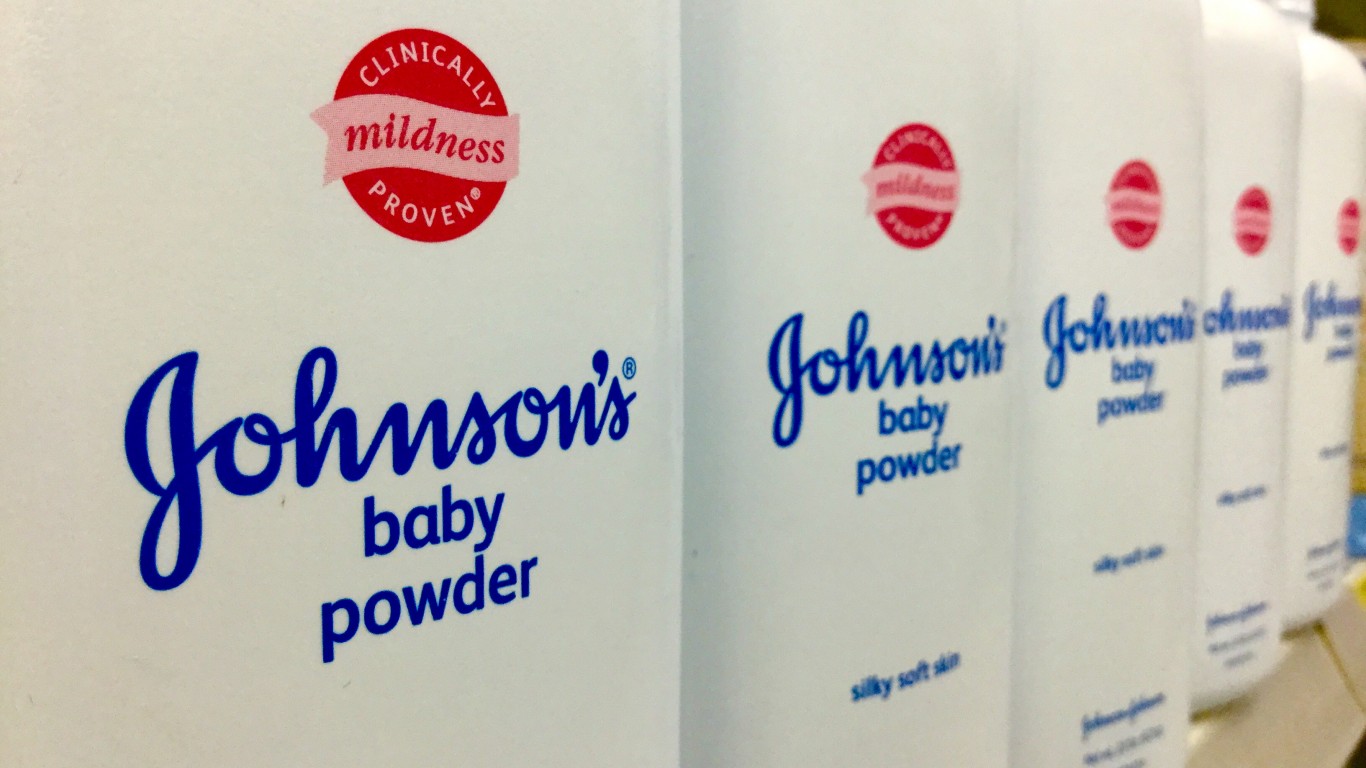
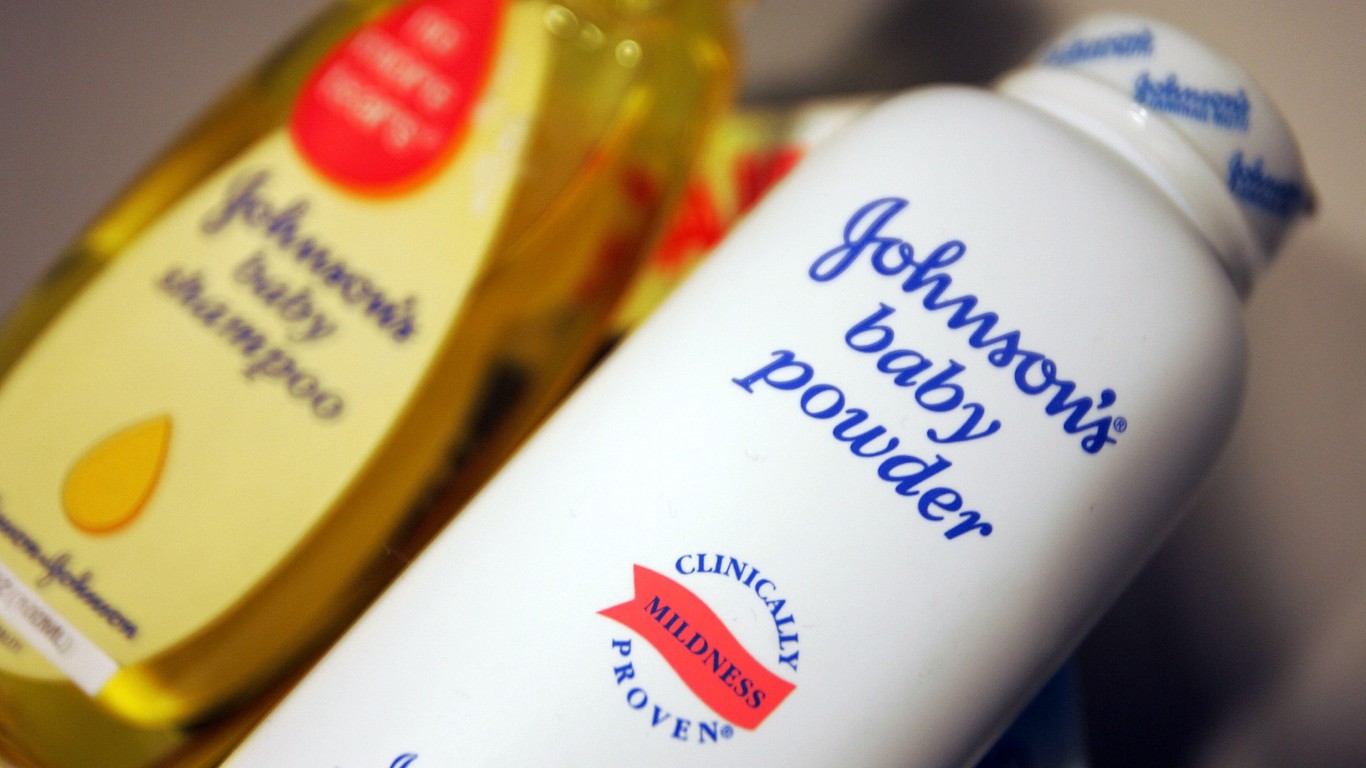
The other large factor is Johnson & Johnson’s open-ended risk to talcum powder lawsuits. Late in the prior week, the U.S. Department of Justice launched a probe into Johnson & Johnson’s knowledge of cancer risks tied to talcum powder. That reporting was deemed as “nothing new” after the company’s prior disclosure in February, despite the shares being knocked down by over 5%. The company has denied that its talcum powder contains asbestos and has denied that it causes cancer. Regardless, Johnson & Johnson has lost lawsuits on the matter.
Whether or not foreign exchange risks are real, this is something that has been debated for years. Still, Johnson & Johnson was hit hard after factoring in foreign exchange rates as about half of its sales are outside of the United States, and nearly half of its overseas pharmaceutical growth was cut in half due to currency effects.
Johnson & Johnson also has just experienced a chart violation that technical analysis investors will point to. Its stock was fine last week, but the big news-related drop last week suddenly knocked its share price down under the 50-day moving average and under the more important 200-day moving average. That same sort of violation was seen during the “sell in May” panic but had been reversed in June’s rapid snapback rally. Having two such violations in less than 60 days may not be the best supporting argument for the Johnson & Johnson bulls.
[recirclink id=559720]
The so-called ESG investing community, which invests in environmental, social and governance themes, also has a massive exposure to Johnson & Johnson in its exchange-traded funds and indexes. What if that investing theme keeps increasing and Johnson & Johnson finds itself on the wrong end of it?
Dividend investors are unlikely to have extensive worries at this point regarding asbestos and talcum powder because Johnson & Johnson is currently not even paying out half of its adjusted earnings per share as dividends at the same time it has been repurchasing its own common stock. Its $350 billion market cap also should be a huge buffer, as will its dozens of other products and categories.
Johnson & Johnson shares were trading at roughly $138.50 on Friday before the Bloomberg report of a criminal probe, but the company refuting the news as “new” did not help it recover the losses. Its shares were down another 1.7% at $132.40 late on Tuesday as well.
[wallst_email_signup]









 Top Gaining Stocks
 Top Losing Stocks