


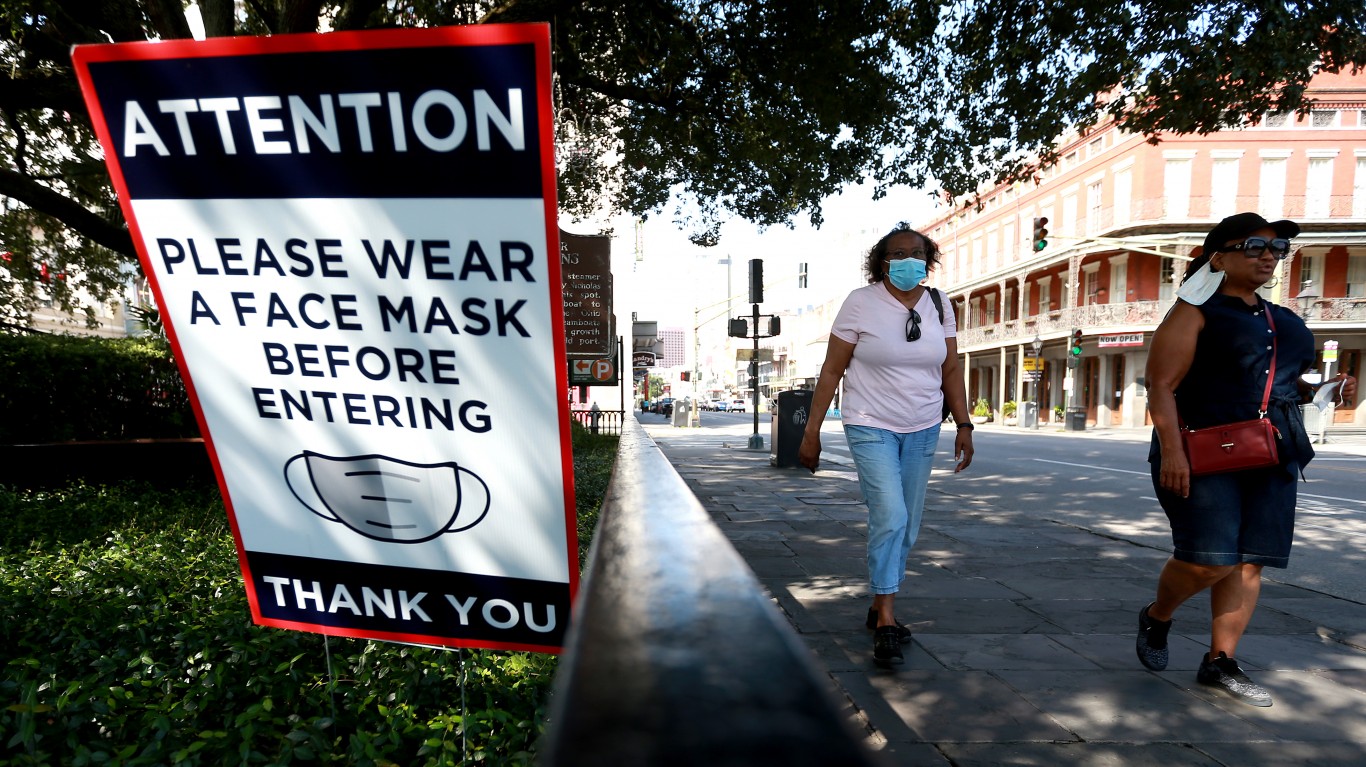
The rate of the spread of COVID-19 had slowed across America. Despite a new surge, increases in daily fatal and confirmed cases are still about half what they were three months ago. Nevertheless, 576,265 Americans had died as of Friday, which is about 20% of the world’s total. The global death total just moved above a staggering 3 million. Confirmed cases have reached 32,185,302 in the United States, or about 23% of the global number. Hospitalizations, which were over 100,000 a day during the peak wave, have dropped into the thousands.
Variants have become a large part of the conversation among public health officials and epidemiologists. One variant, first identified in the United Kingdom and known as B.1.1.7, is more transmissible than the strain that was dominant in the United States over most of the pandemic. The Centers for Disease Control and Prevention (CDC) also officially tracks these other variants: B.1.351, P.1, B.1.427 and B.1.429. Worries are that some may be more deadly than others and that vaccines may not protect against one or more variants.
Scientists believe that new variants will continue to appear, some of which may originate in America and others that may come from overseas. Tuesday, it was announced that “Scientists at the Texas A&M University Global Health Research Complex (GHRC) have identified a variant of the COVID-19 virus — ‘BV-1’ — that could present a new challenge to public health.”
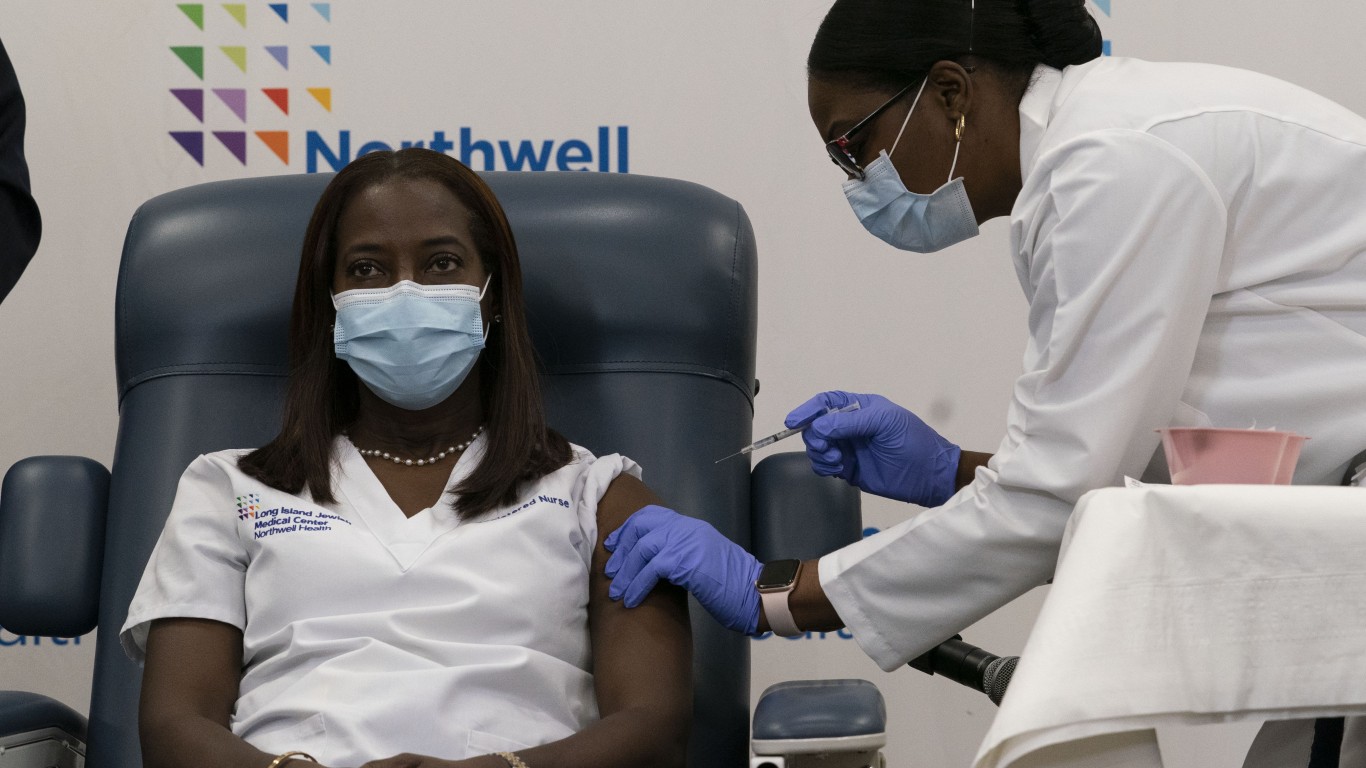
At this point, according to The New York Times, 41% of Americans have been given at least one dose of a vaccine, and 27% are fully vaccinated. As of Wednesday, 286,095,185 doses have been delivered, and from those 222,322,230 shots have been given, or about 78%.
[nativounit]
There has been a debate among scientists and doctors about when people will need additional doses. Some of this has to do with how effective vaccines are against variants.
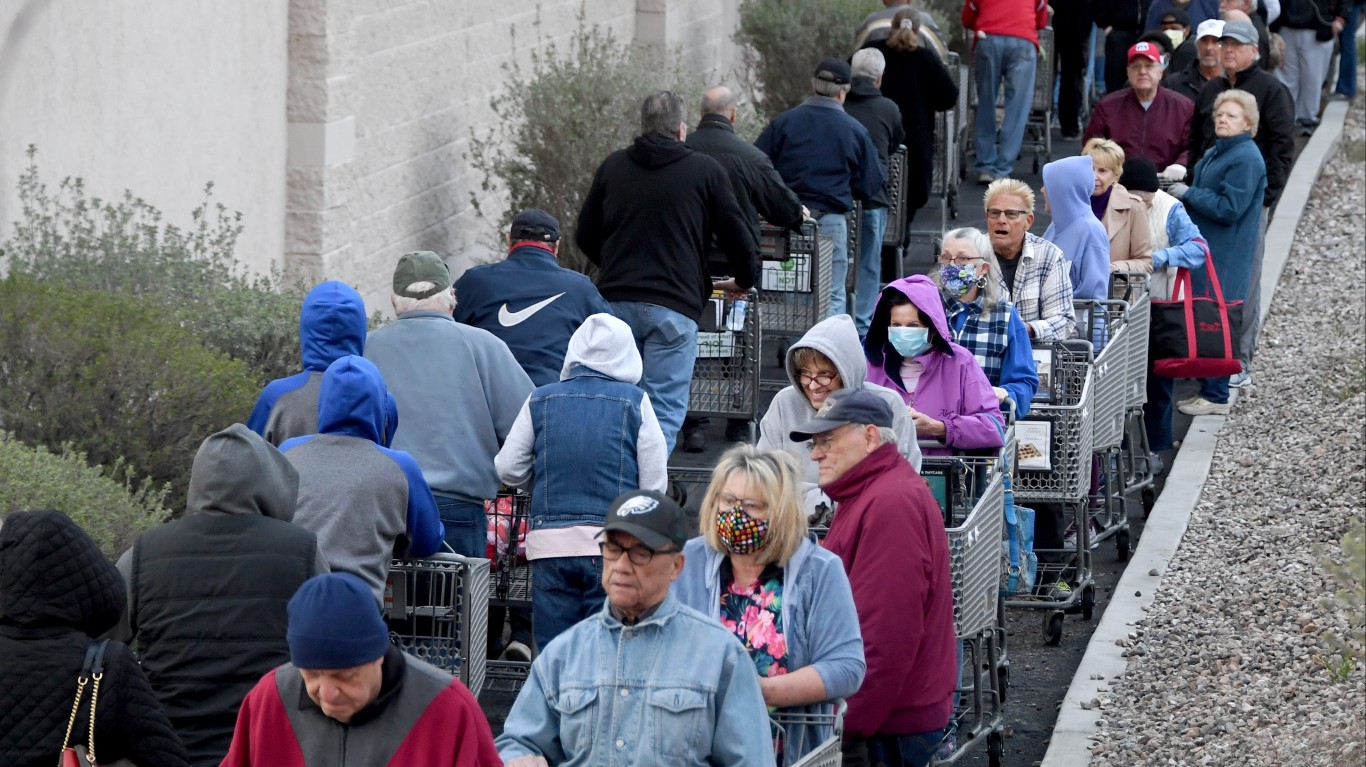
While vaccines are a major weapon against the spread of the disease, there are several others that have been in place for over a year. The most important of these are mask-wearing and social distancing. The social distancing rule is that people need to be six feet apart for protection. Now, it turns out that this critical warning may not have been entirely accurate.
Massachusetts Technology Institute did a test of how far people needed to be apart to be protected from spread. The findings were surprising. According to a rigorous study by scientists:
These models are all based on the premise that the space of interest is well mixed; thus, the pathogen is distributed uniformly throughout. In such well-mixed spaces, one is no safer from airborne pathogens at 60 ft than 6 ft.
The added:
We demonstrate how this bound depends on the rates of ventilation and air filtration, dimensions of the room, breathing rate, respiratory activity and face mask use of its occupants, and infectiousness of the respiratory aerosols.
In other words, one size does not fit all. While one indoor space with standard social distancing may be safe, many others may not be.
What does this mean? Certainly, that extra caution is warranted while people are inside and that there is still a great deal to be discovered about how the disease is spread.
Click here to read COVID-19: This Is The City In Every State With The Most Cases
[wallst_email_signup]




 Top Gaining Stocks
 Top Losing Stocks