


The rate of the spread of COVID-19 had slowed across America. Despite a new surge, increases in daily fatal and confirmed cases are still about half what they were three months ago. Nevertheless, 577,224 Americans had died as of Saturday, which is about 20% of the world’s total. The global death total just moved above a staggering 3 million. Confirmed cases have reached 32,244,617 in the United States, or about 23% of the global number. Hospitalizations, which were over 100,000 a day during the peak wave, have dropped into the thousands.
Variants have become a large part of the conversation among public health officials and epidemiologists. One variant, first identified in the United Kingdom and known as B.1.1.7, is more transmissible than the strain that was dominant in the United States over most of the pandemic. The Centers for Disease Control and Prevention (CDC) also officially tracks these other variants: B.1.351, P.1, B.1.427 and B.1.429. Worries are that some may be more deadly than others and that vaccines may not protect against one or more variants.
Scientists believe that new variants will continue to appear, some of which may originate in America and others that may come from overseas. Tuesday, it was announced that “Scientists at the Texas A&M University Global Health Research Complex (GHRC) have identified a variant of the COVID-19 virus — ‘BV-1’ — that could present a new challenge to public health.”
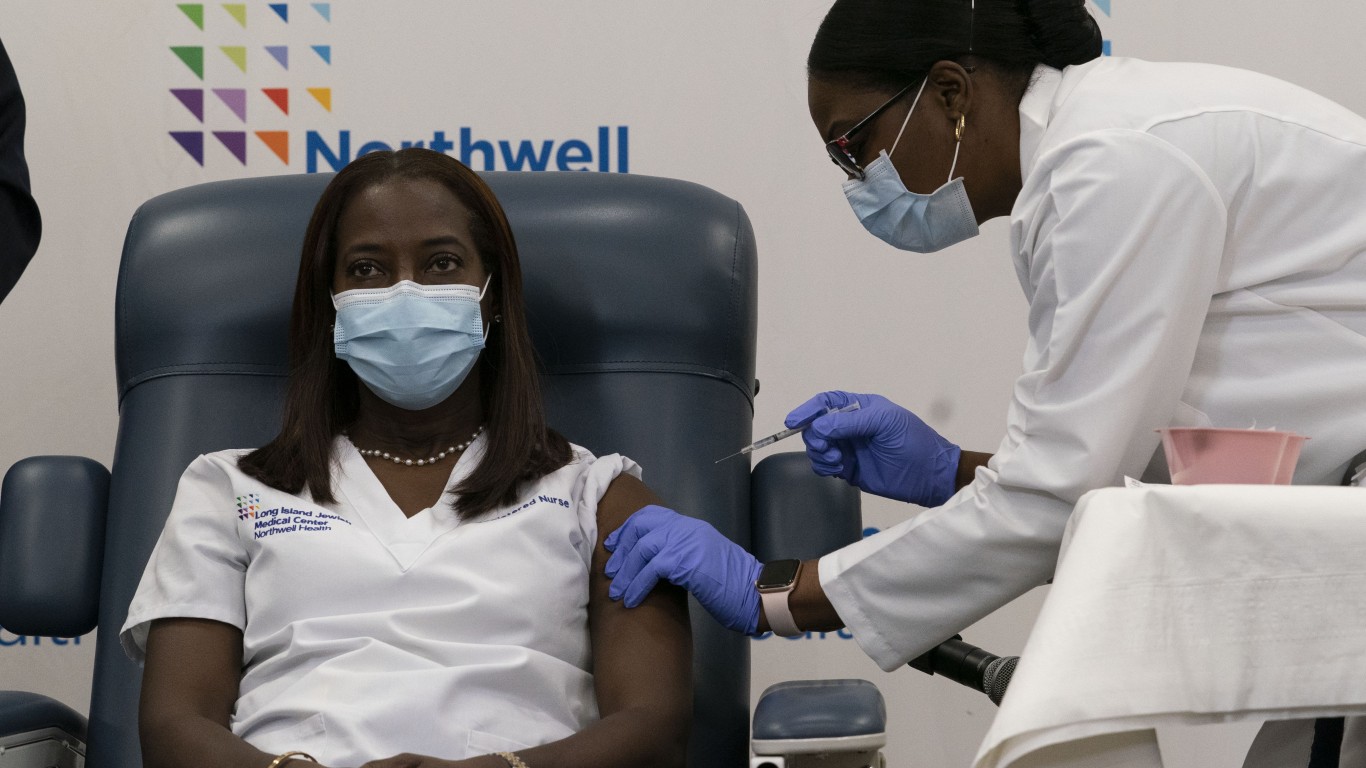
At this point, according to The New York Times, 42% of Americans have been given at least one dose of a vaccine, and 28% are fully vaccinated. As of Friday, 290,685,655 doses have been delivered, and from those 225,640,460 shots have been given, or about 78%.
[nativounit]
There has been a debate among scientists and doctors about when people will need additional doses. Some of this has to do with how effective vaccines are against variants.
The rise in cases across much of the U.S. and the fact that a large part of the population has led to worries about a “fourth wave” of the disease. The first wave was during last March and April, and decimated the New York City area, Chicago, Detroit, and Massachusetts. The second wave, in the summer, spread to other large areas, primarily Texas and Florida. The third wave was the worst. It came after people traveled over the Thanksgiving and Christmas holidays, and spread across a very large part of America. A fourth wave, if there is one, is happening now.
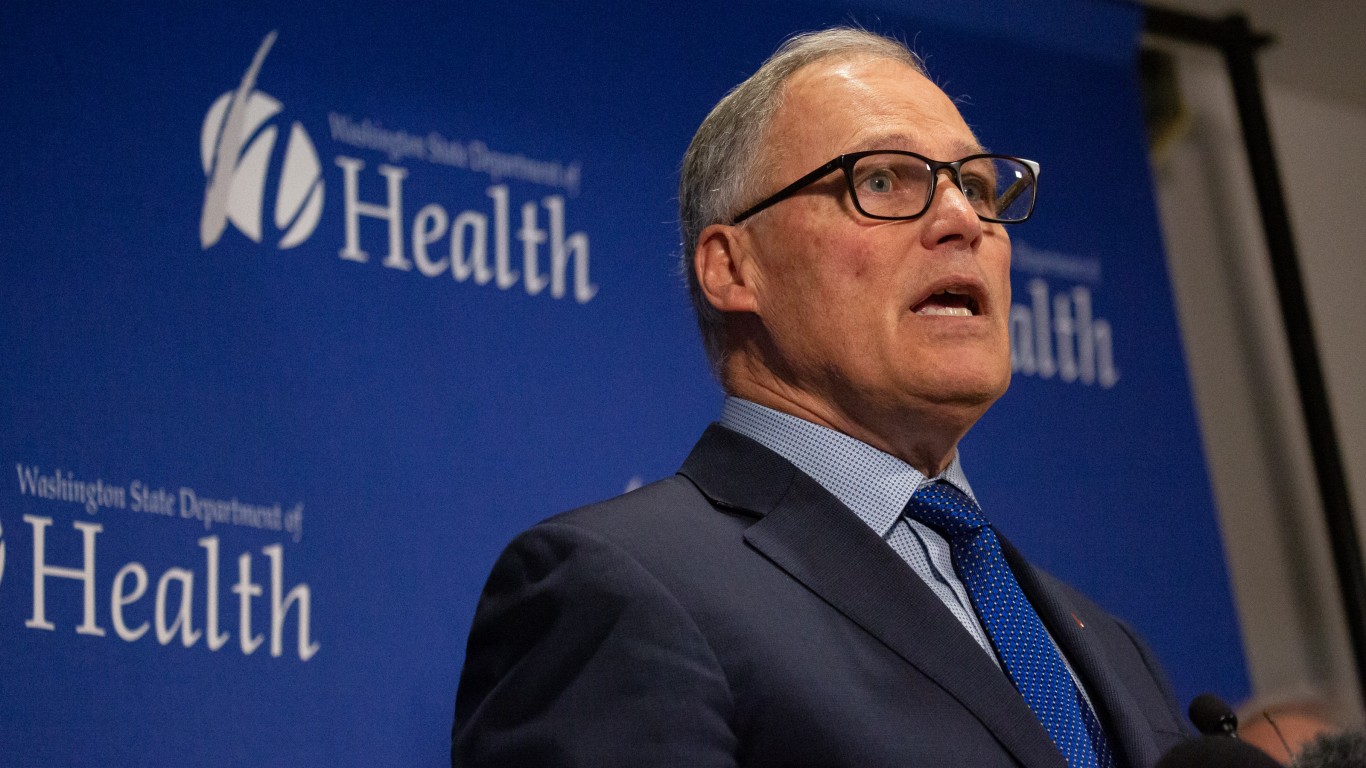
One state’s officials claim it has already been hit with a fourth wave. This is Washington State, where the first case of COVID-19 was detected in January of 2020. According to Axios, Gov. Jay Inslee said his state had become overwhelmed by the disease again. He commented: “And we are starting unfortunately at a higher level than where the other waves started from.”
Since waves have no official definition, essentially his statement was an acknowledgment of the state’s deepening trouble. Have other states been hit by a fourth wave. If Washington has been there is a strong case to be made that others have been as well. The best example is Michigan, the hardest-hit state in the nation. Regardless of what term is used parts of the U.S. have rapidly deteriorating situations.
Click here to see which city in each state has the most COVID-19 cases.
[wallst_email_signup]









 Top Gaining Stocks
 Top Losing Stocks